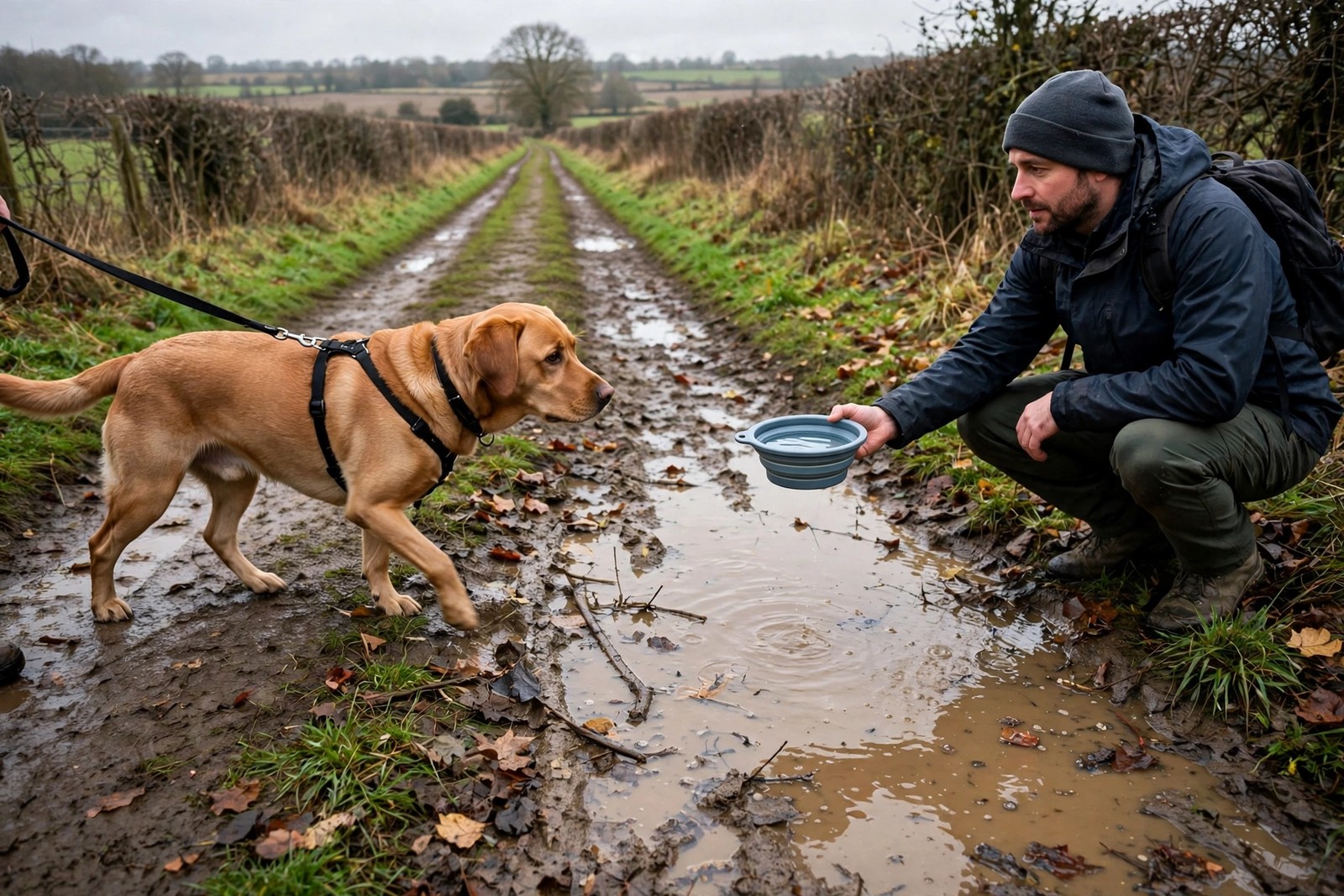
A puddle looks like water and behaves like a collecting point. Rain washes faeces, urine, eggs, and larvae from surrounding soil, pavements, and field edges into the same shallow pool a thirsty dog laps from, and anything already living at the margins, including slugs and snails, contributes to the mixture. That is why puddle drinking deserves more than a shrug on walks: the exposure is real, the organisms involved are specific, and the precautions are simple once the names are understood. They are set out below exactly as a vet would want them separated, because parasites and bacteria are not interchangeable risks.
Giardia and Roundworm Eggs
Giardia is a microscopic parasite that lives in the gut and is shed in faeces as hardy cysts, which survive in wet ground and water and are swallowed by the next dog that drinks there. Shared puddles near popular dog-walking spots are efficient meeting points for it. Roundworm eggs arrive by a similar route: eggs passed in faeces persist in soil for long periods, rain moves them into standing water and mud, and a dog drinking or licking muddy paws afterwards can take them in. Neither organism announces itself at the puddle. Signs, when they follow, are the non-specific gut signs of loose stools, gas, variable appetite, or a dog that seems not to thrive, and they have many other causes besides, which is why signs route to the vet for investigation rather than to a conclusion at home.
Lungworm Larvae and the Slug Connection
Lungworm reaches dogs indirectly. Slugs and snails pick up larvae from the environment, and those larvae wait inside the slug or snail until a dog swallows the host, whether deliberately, while grazing wet grass, or by drinking from water where slugs and snails gather around the margins. Puddles in damp, slug-friendly ground are therefore a lungworm setting even though the water itself is not the source. Dogs that retrieve toys left overnight in wet gardens meet the same route away from walks. Because the parasite's later effects involve breathing and circulation rather than the gut alone, coughing, reduced exercise tolerance, or unusual tiredness after a puddle-and-slug season is history worth reporting to the vet in full, with dates.
Leptospirosis: the Bacterial Risk
Leptospirosis is often grouped with the puddle parasites, and the grouping needs correcting: it is a bacterial infection, not a parasite. The bacteria are shed in urine, notably by rats and other wildlife, survive in water and wet soil, and enter through mucous membranes or broken skin when a dog drinks or wades. It can damage kidneys and liver and can also affect people, which raises the stakes of the same muddy puddle a parasite-only view would underestimate. Vaccination against it is a standing conversation to keep current with your vet, matched to the dog's exposure, alongside the ordinary discipline of steering dogs away from stagnant water near rat runs, farmyards, and overflowing drains.
Safer Habits on Walks
Prevention is mostly choreography. Carry fresh water and a travel bowl on longer walks and offer it before the dog goes looking, so puddles lose their appeal at the moment thirst peaks. Call the dog away from drinking rather than treating it as a harmless habit, and choose routes that avoid standing water near livestock and drains where that is practical. Dry paws and legs after muddy walks to reduce licking afterwards. If diarrhoea persists beyond a day or two, or vomiting, lethargy, blood in the stool, or a marked change in thirst follows a puddle-heavy period, book the vet and report the puddle history explicitly, since it shapes what the vet investigates. Keep a dated note of such episodes and where they happened. KinsLe stores that episode history inside Pet Passport, ready to hand over at the appointment.