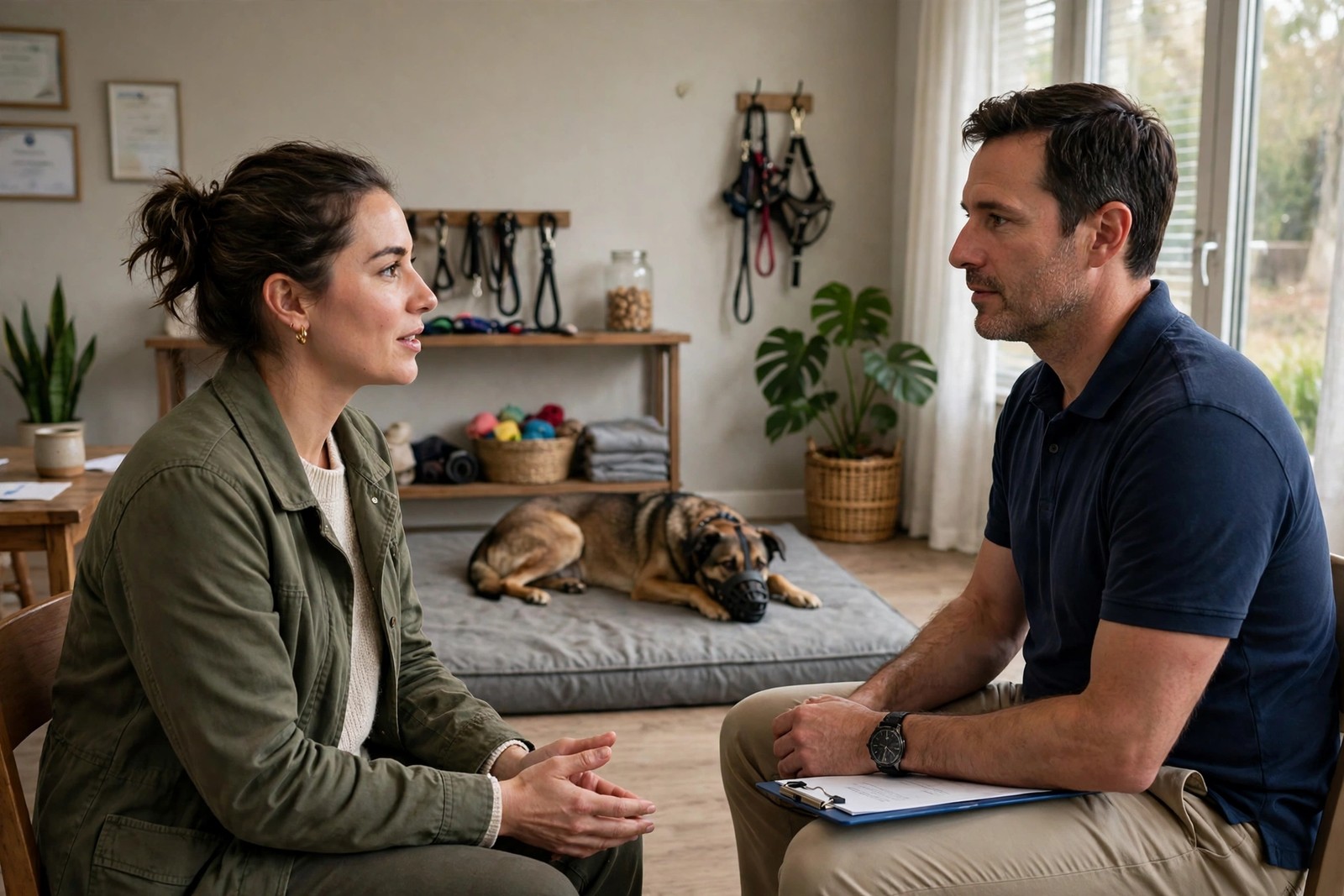
For a bite history, hire for behaviour expertise rather than general obedience marketing. A dog who has bitten needs an assessment of triggers, context, health, arousal and safety risk, not a standard class and not a quick lesson in walking politely. The professional's qualifications, insurance and methods matter because poor handling can suppress warning signals without reducing danger.
The levels of help, in plain terms
A veterinary behaviourist is a veterinarian with further behaviour training and can consider medical contributors and any vet-led treatment as part of the case. A certified clinical animal behaviourist works on behaviour cases, usually takes a detailed history, and should liaise with your vet. A trainer may be excellent for teaching skills, but for a bite case you need a trainer whose recognised qualifications and experience are specifically in behaviour work, who works under veterinary referral where required, and who knows when a case belongs with a clinician instead.
Ask which professional body they belong to, what qualification they hold, when they earned it, whether they carry professional insurance, and how they keep their knowledge current. A vague claim to be experienced with aggressive dogs is not a qualification. Ask for the names of the credentials so you can verify them with the issuing body.
What a competent first assessment looks like
Expect questions before handling: when the bite happened, who was present, what the dog did in the minutes before, whether warnings were seen, where on the body the bite landed, whether it broke skin, and what has changed since. Expect a discussion of management first, including lead, muzzle training done gradually and positively, safe separation at home, and rules for visitors, because safety cannot wait for a training programme to work.
Be cautious if the professional wants to meet the dog in a provocative setup at once, describes the dog as dominant and in need of being shown who is in charge, or promises to fix aggression in a set number of sessions. A competent professional explains uncertainty, outlines how progress will be measured, gives you a written plan, and tells you honestly if the risk or complexity is beyond their scope.
Methods are a safety issue, not a preference
Ask directly, and get the answer in writing, about tools and methods. For a bite case, look for reward-based training, desensitisation and counter-conditioning carried out below the point where the dog reacts, and careful changes to routines and environment. Walk away from shock collars, prong collars used to punish reactions, leash corrections for growling, flooding, or any approach that relies on fear or pain. Punishing a growl can remove the warning while leaving the motivation, which makes a later bite harder to predict.
Also ask how they will work around children, other dogs and visitors during the programme, what homework they expect from you, and how they will communicate with your vet. Bite work fails when each professional hears a different version of the incident, so shared notes matter.
Checks to complete before you book
Verify credentials, check insurance, read the contract, understand cancellation and session terms, and ask whether they have handled cases with a similar context, such as bites around food, handling, strangers at the door or other dogs. Similar context matters more than a general claim about years in business, because the trigger shapes the plan and the risks.
Prepare your own record before the first call: dates, triggers you noticed, injuries, veterinary treatment, and any official reports, written factually and without minimising. Share it exactly as written, and keep management in place while you wait for the appointment; a dog under assessment should not be placed in the same situation to see whether it happens again.
In KinsLe's Pet Services Directory, you can review local trainers and behaviour professionals side by side, note the qualifications and services each one lists, and arrive at those first calls with your bite record ready to share.