
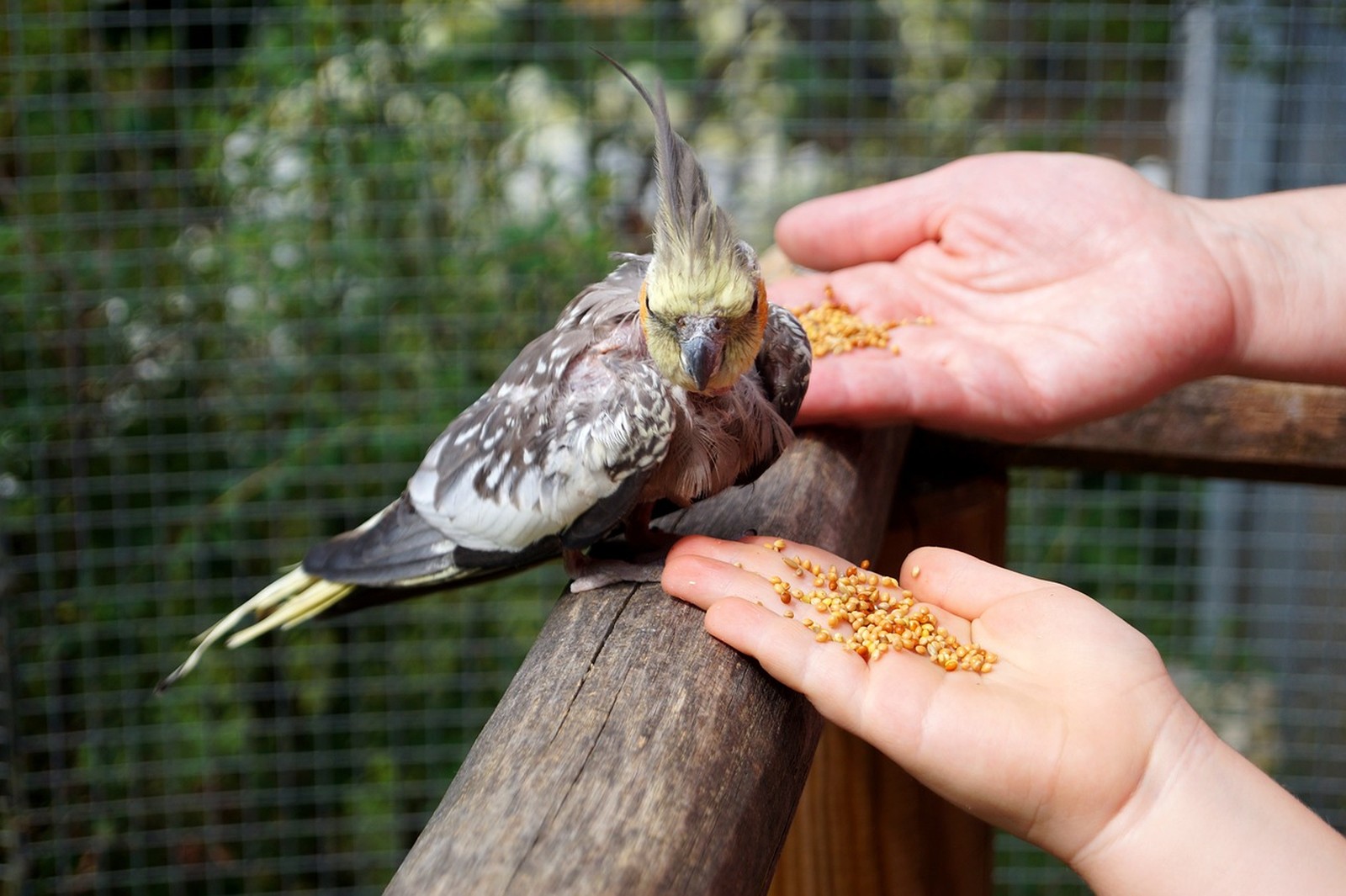
A fully flighted cockatiel in a family living room is a bird with a real skill to practice: flying to you on cue, across real distance, past real distractions. Recall games turn that skill into the best play of the day, but they only work in the right order — the room made safe first, the games built in small rewarded steps, and every session kept short enough to end while the bird is still winning. Done that way, a cockatiel learns that flying to a person is reliable fun with a seed at the end of it.
Make the Living Room Safe First
Safety comes before the first flight, every single session. Turn ceiling fans off — off, not low — because a flighted bird gaining height can reach blades faster than anyone can react. Shut doors and windows, and check them out loud with whoever else is home so nobody opens one mid-flight. Cover mirrors and exposed windows, because a cockatiel can mistake reflected or visible open space for a flight path and strike glass at speed. Send other pets out of the room entirely; a friendly dog watching from the couch is still a predator-shaped distraction at the moment a small bird lands low.
Set landings in mind too: clear the play stand, chair backs, and other destinations of anything that would startle a landing bird, and block gaps behind heavy furniture.
Short Recall Flights to Hand or Stand
The core game is simple. Start with the bird on a perch a short distance away — a step or two, not a room's length. Call its name and your recall cue, show the seed reward, and pay the instant it lands on your hand or its stand. Repeat at that easy distance until the flight is eager and direct, then add distance gradually: across a sofa, then half the room, then the full diagonal. Each new distance should feel like a small raise, not a test.
If a longer flight fails, shorten the distance again without fuss and get a win, because distance in recall is earned in layers.
Target-Stick Hops and Station Training
Target-stick work builds precision in smaller pieces. Present a stick, reward the bird for touching or following it, then use it to direct short hops from perch to stand and stand to hand. Because each hop is tiny and clearly indicated, a young or cautious cockatiel can succeed constantly while quietly learning to fly exactly where it is asked — the steering skill that makes long recalls across a cluttered room reliable.
Station training completes the set: one specific stand or perch becomes the bird's home base, rewarded heavily until flying to the station on cue is the easiest game it knows. A solid station gives every recall session a starting line, gives the bird a known safe landing when something startles it, and gives family members a shared destination for games.
Short Sessions, Ended on Success
Keep sessions to a few minutes of active flying, and stop on a success while the bird is still keen. A cockatiel's attention and enthusiasm are the training fuel; drilling past them produces sloppy flights and a bird who starts avoiding the game. Several short sessions across the day teach far more than one long one, and the seed rewards stay high-value precisely because the game ends before they get ordinary.
One Cue for the Whole Family
Write the household plan down: the recall cue word, the station, the reward, and who runs practice on which day, with each family member using exactly the same cue and sequence when it is their turn. A bird recalled with three different words by three different people learns three unreliable games instead of one solid one. As distances grow, KinsLe helps the household track which games landed well, and Care Teams gives each family member a turn running sessions with the shared cue.