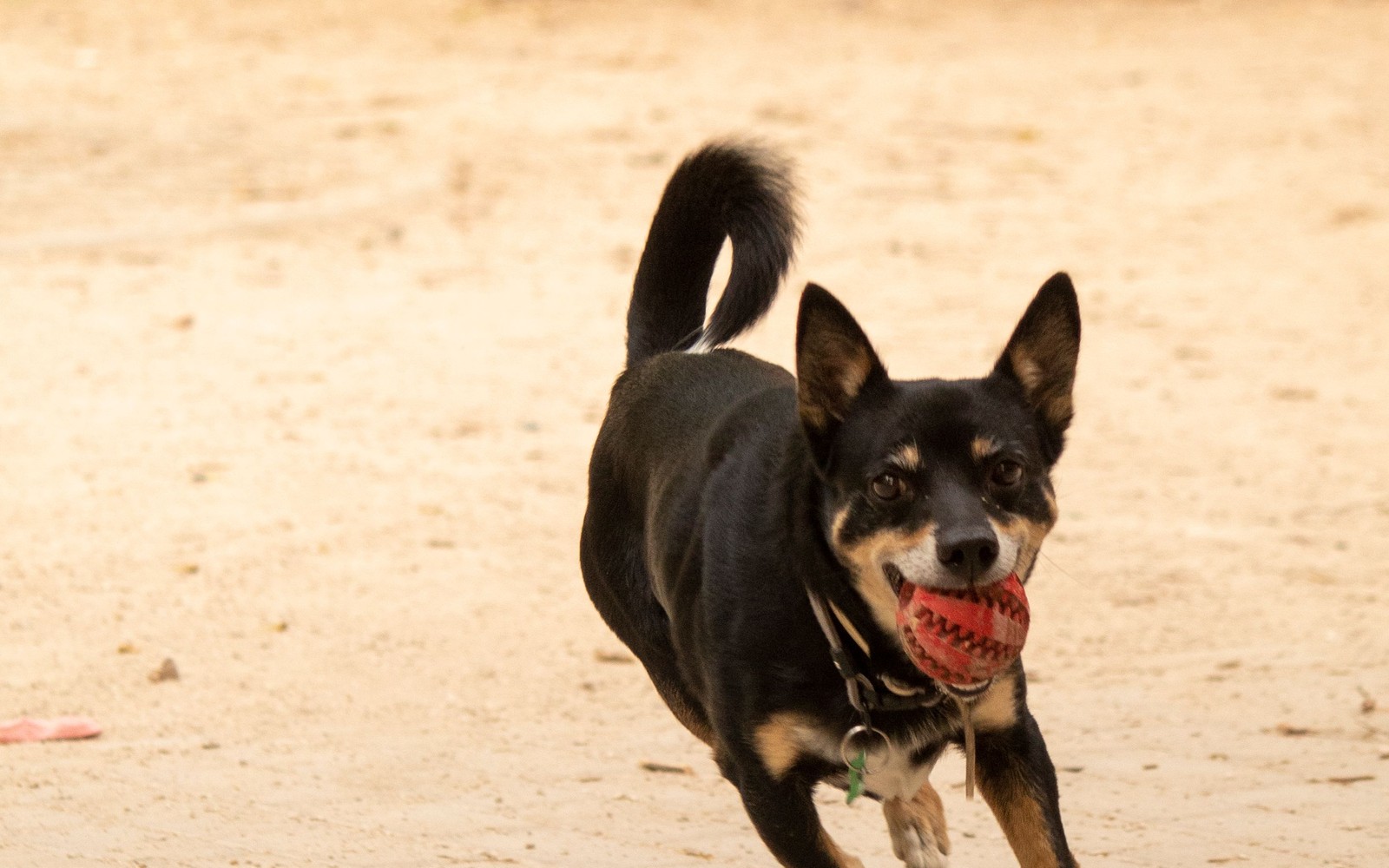
Before going off leash, your dog needs two recall skills: an everyday recall they answer on the first call — even in the middle of play or a good sniff — and a separate emergency recall cue, trained on its own and always paid with exceptional rewards. Practice both in gradually harder environments and reward every voluntary check-in generously. A recall that works "eventually, after a few calls" is not an off-leash recall.
The everyday recall: first call, every context
Your standard cue — your dog's name plus "come," or a whistle pattern — should produce an immediate turn and a fast return in the garden, in a fenced field, during play with known dogs, and past interesting smells. Build it like a staircase: master each level before adding difficulty, and never let a training session end with you calling repeatedly while your dog ignores you. If that happens, the environment was too hard; go collect your dog calmly, and train an easier level next time.
Two habits protect the cue's value. First, never call your dog to end something wonderful without adding something wonderful — leash up, then play or feed, so coming to you doesn't predict fun stopping. Second, never call a dog you know won't come, then get angry when they arrive; a recall followed by a scolding teaches a dog to stay away.
The emergency recall: a separate, sacred cue
Choose a distinct word your dog hears for nothing else — "NOW," a special whistle, any word you won't say in conversation. Train it in the easiest setting: say it, then produce a jackpot — a shower of top-tier food, sardines, roast chicken, whatever makes your dog's eyes widen — for a full twenty or thirty seconds of feasting. Repeat a few times a day for several days, then test it in slightly harder spots, always paying the jackpot.
Rules that keep the emergency cue powerful:
- Use it only in genuine need, or rare refresher reps — never for routine calls
- Always pay extravagantly, even if your dog was slow; the cue must never predict disappointment
- Don't dilute it by testing it weekly at the dog park; a handful of perfect reps builds a lifetime habit
- Make sure everyone who walks your dog knows the word and the rule that it means instant jackpot
Used well, this cue is the one that pulls a dog off a scent trail at the edge of a road — and it earns that power by being rare and always magnificent.
Proofing and honest limits
Gradually proof both cues around the distractions your actual life contains: the beach, the woodland path, the field where rabbits live. Keep a long line on during proofing stages, and log the failures as information — if mid-play recall collapses, play is your next training level, practiced with a friend's dog under controlled conditions.
Some dogs, through breed drive, youth, or history, take a year or more to earn open-space freedom, and a few are safest on long lines for life in unfenced areas. That honesty protects your dog far better than optimism.
Your safety net while recall is still building
Until recall is truly solid, keep identification and a backup plan working as hard as your training. The Lost Pet Alert System on KinsLe costs nothing in any profile: if your dog ever gets loose, the alert appears on the map and a person who finds your dog can contact you directly through the profile. Your dog's unique QR ID on their profile gives anyone who finds them a fast way to reach you, too. Training gives you control; the safety net gives you a second chance. Want more recall games and proofing plans? Should your dog slip away during proofing and stay missing, pull up the Lost Pet Alert System on KinsLe instead — your dog's listing sits in map view at no charge for that profile, and whoever finds your dog can reach you by direct message through it.