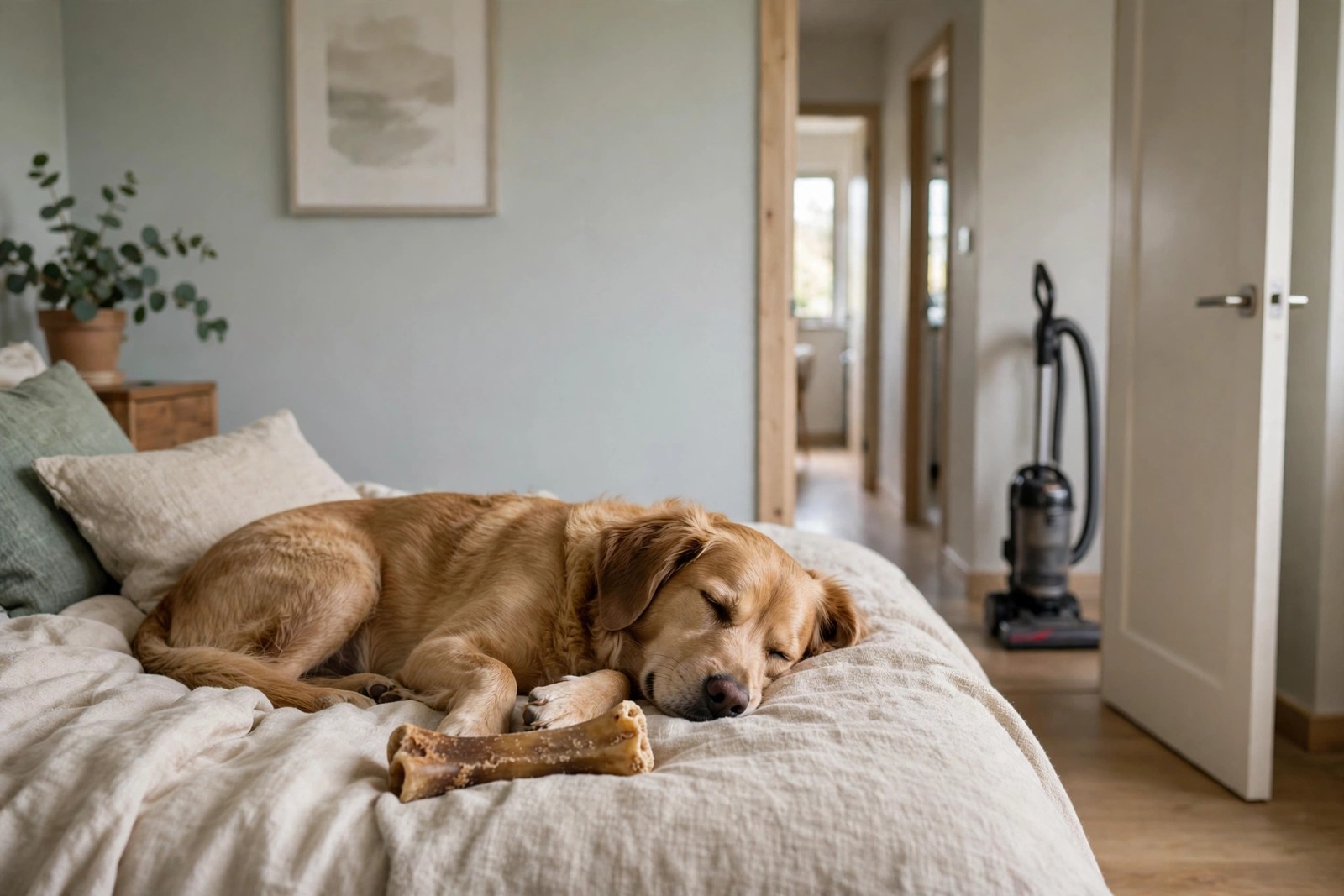
It looks irrational only if you measure fear in decibels. Your dog measures a sound by what it predicts and how close it gets, and on both counts the vacuum and the thunderstorm are opposites. Thunder can rattle the windows and still be, from your dog's point of view, weather happening far away to nobody in particular. The vacuum is a loud machine that advances on your dog, retreats, changes direction, and tours the exact spots where your dog sleeps.
Why the Vacuum Scores So Much Worse
Start with proximity and movement. The vacuum approaches your dog, follows your dog from room to room as the cleaning proceeds, and makes sudden turns when it meets furniture, which reads as unpredictable pursuit to an animal who cannot know the pattern is just a floor plan. Its motor adds a high, strained whine quite unlike thunder's low rumble, and it stirs up dust and smells as it goes, so the event arrives through ears and nose at once.
Then add what the vacuum predicts in many homes: furniture dragged around, chairs stacked, people striding about in an unusual, purposeful way, and the dog repeatedly asked to move out of the way. Cleaning day rearranges your dog's territory and displaces your dog from resting places one after another. A dog who retreats, barks at the machine, or tries to bite its head is responding to that whole package, not auditioning for drama.
Why Thunder Can Be a Non-Event
Thunder is distant, directionless, and, crucially, learned. A dog raised hearing storms that never once resulted in anything happening to that dog files thunder under background, the way you sleep through a familiar train line. There is no approaching object, no visual threat to track, and no change in your behavior that matters once the novelty has worn off. This is also why the reverse pattern exists in other houses: a dog caught outside in one frightening storm, or one whose owners panic at thunder, can fear storms and ignore the vacuum completely. The lesson is not that one sound is scarier, but that history and behavior around a sound decide its meaning.
Help in Stages: Escape First, Then Staged Sound
Give your dog a genuine escape room on cleaning days, a room the vacuum will not enter, with a bed, water, and a chew, and let retreating there always work; never vacuum a dog out of a corner or follow a retreating dog with the machine for a joke. That management alone is a complete and respectable answer for many households.
If you want to reduce the fear itself, work in stages on non-cleaning days. Move the switched-off vacuum around while your dog watches from a distance and pair its appearance with food. Then run it briefly in a far room with the door between, again pairing the distant sound with good things, and stop while your dog is still relaxed. Only over many short sessions bring the running vacuum closer, and let your dog's recovery, not the floor's cleanliness, set the pace. If fear spreads to other household noises, or your dog panics, drools, or injures itself trying to escape, talk to your vet and a qualified behaviorist rather than pushing the stages harder. With KinsLe Care Teams, you can assign cleaning-day duties across the household, one person vacuuming while another settles the dog in the escape room, each marked complete with a timestamp, so the plan holds whoever is home.