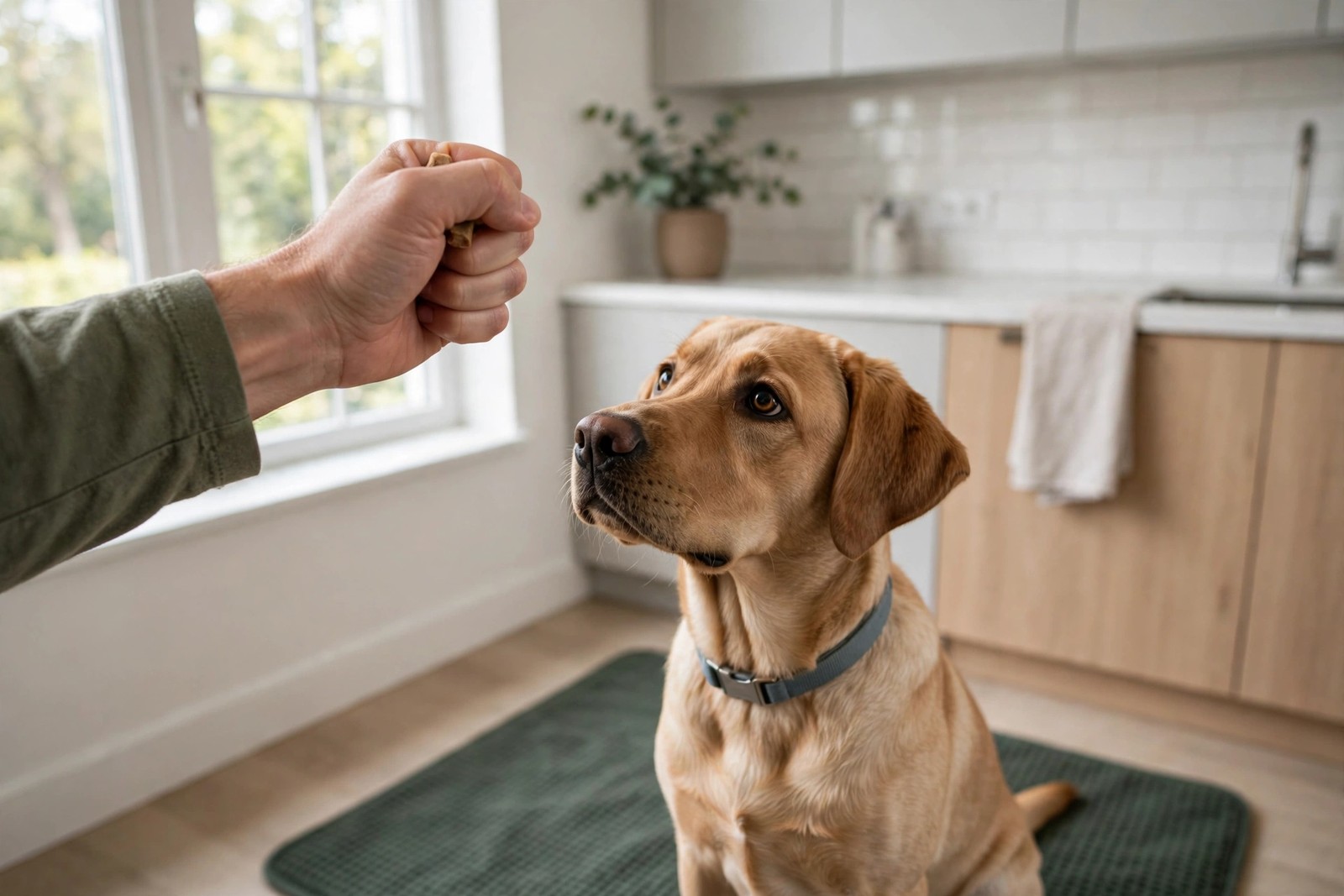
A teenage dog who snatches is not defiant; adolescence brings a bigger body, faster reactions and a brain that has temporarily misplaced its brakes, while every successful grab — a sandwich off the counter, a biscuit out of a small hand — pays the behaviour generously. Games work because they rehearse the exact opposite transaction, hundreds of small times: the dog wants food, waits, and waiting is what makes food arrive.
The Closed-Fist Game: Waiting Opens the Hand
Hold a treat in a closed fist at the dog's nose height. Your dog will lick, nudge and paw at the fist; say nothing, and keep the hand still and boring. The moment the dog pulls back, hesitates, or looks away, open the hand flat and let the dog take the treat from your open palm. Repeat until backing off becomes the dog's first move, then progress in small steps: treat on an open palm that closes if the dog lunges, treat on the floor under your cupped hand, then treat on the floor beside your foot with a lead on for safety. Each stage teaches the same sentence — food appears when you create distance from it — which is precisely the sentence a counter-surfer needs to learn.
Mat Settle While Food Moves
Teach a settle on a mat first, away from meals: reward the dog heavily for lying on the mat and staying while you stand, then walk, then move around the room. Now add food to the picture at a distance the dog can handle — a covered plate carried across the far side of the room, a family member eating a snack several metres away — and pay the settle generously and often. Shrink the distance over many short sessions, never in one brave leap. If the dog breaks, stares hard, or starts whining, the distance was too small; increase it and rebuild. This game transfers directly to real mealtimes, because the dog has practised the family eating while good things arrive for staying put.
Wait-and-Release Games That Generalise
- Doors and gates: ask for a wait, open the door a crack, close it calmly if the dog surges, and release with a clear word only when the dog is still; the garden itself becomes the reward for waiting.
- Thrown toys: hold the collar lightly, throw the toy, and release only when the dog's body softens and attention returns to you for a breath; chasing starts from calm, not from lunging.
- Trading games: offer a dull item, trade it for something better from your hand, then return the original item too, so giving things up predicts gain rather than loss — a foundation skill for a dog who grabs first.
Management While the Games Take Hold
Training takes weeks; management protects people today. Clear counters completely, because one stolen roast chicken outweighs twenty training reps in the dog's accounting. Children carry food high and still, never at snout height, never while running, and an adult — not a child — holds the lead or manages the dog during meals and parties until the mat settle is reliable. Baby gates that keep the dog out of the food-preparation zone are not defeat; they are what prevents rehearsal of the very habit you are retraining.
Keep every game session short — a few minutes, ended while the dog is still succeeding — and expect the teenage dip: progress that looked solid can wobble for a week and return. What carries a household through is consistency, because a rule one person enforces and another waives teaches the dog to try harder with the softer person. Setting the games as shared duties in KinsLe Care Teams, with the current stage of each game noted, keeps every adult and older child running the same version of the plan.