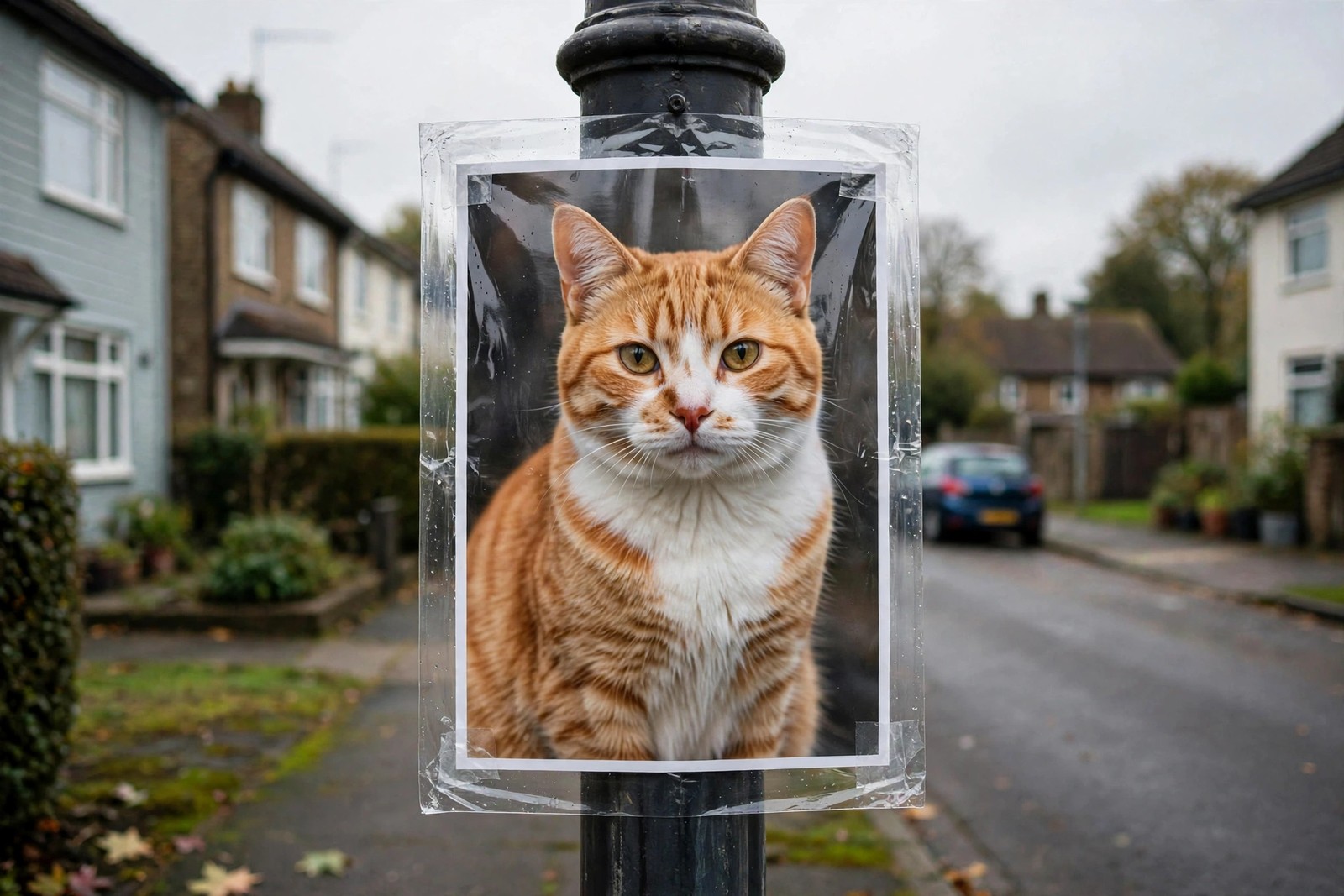
A lost cat poster has seconds to do its work — the time a passer-by glances at a lamppost, or a driver slows at a junction. Everything on it should serve one goal: a stranger recognises your cat, knows where and when it vanished, and can reach you in one step. Cluttered posters with tiny photographs and paragraphs of biography fail at that distance, however much love went into them.
The Photograph and the Heading
Use one large, sharp, recent photograph that shows the cat's face and body markings together, printed in colour, taking up at least half the page. A sleeping kitten picture or a group shot where your cat is one of three will not help anyone identify an adult cat under a hedge. Above it, print LOST CAT in the largest, boldest letters the page allows, on a bright background colour that stands out against the board or post behind it. Slip each poster into a clear protective sleeve with the opening facing down, so rain does not end the search in the first shower.
The Description and the Last-Seen Details
Keep the description to what a stranger can check at a glance: main colour and pattern, the markings that set this cat apart — a white chin, a kinked tail, one black ear — plus size, sex, whether the cat wears a collar, and whether it is microchipped. Then give the last-seen information plainly: the street or the two cross streets of the area, and the date the cat was last seen. Use the neighbourhood, not your exact home address; people need to know where to look, not where you live. Add temperament in a line if it changes how people should act — an indoor cat new to the outdoors will usually be hiding close by and silent, not roaming and answering calls.
The Contact Line and Do Not Chase
Print one mobile number, large, and nothing that competes with it. Under it, add the instruction that protects a frightened cat: please do not chase — note the place, and call or message straight away. A chased cat runs further and hides deeper, and an indoor cat may not come even to its owner in daylight, so sightings with a location are worth more than capture attempts. If you offer a reward, say so simply, without naming an amount on the poster. Make smaller flyers with the same photograph and number for letterboxes on the streets around the last-seen point, since most cats are found close to home, and knock on doors on those streets asking neighbours to check their sheds and garages while you wait.
Put posters at junctions, shop windows with permission, and the routes dog walkers use, log where each one went, and take them down once your cat is home. Beside those lamppost copies, post the same photograph, description and last-seen area through KinsLe's Lost Pet Alert System — it costs nothing from her profile, appears where searchers check the map, opening a direct message route from a finder to you.