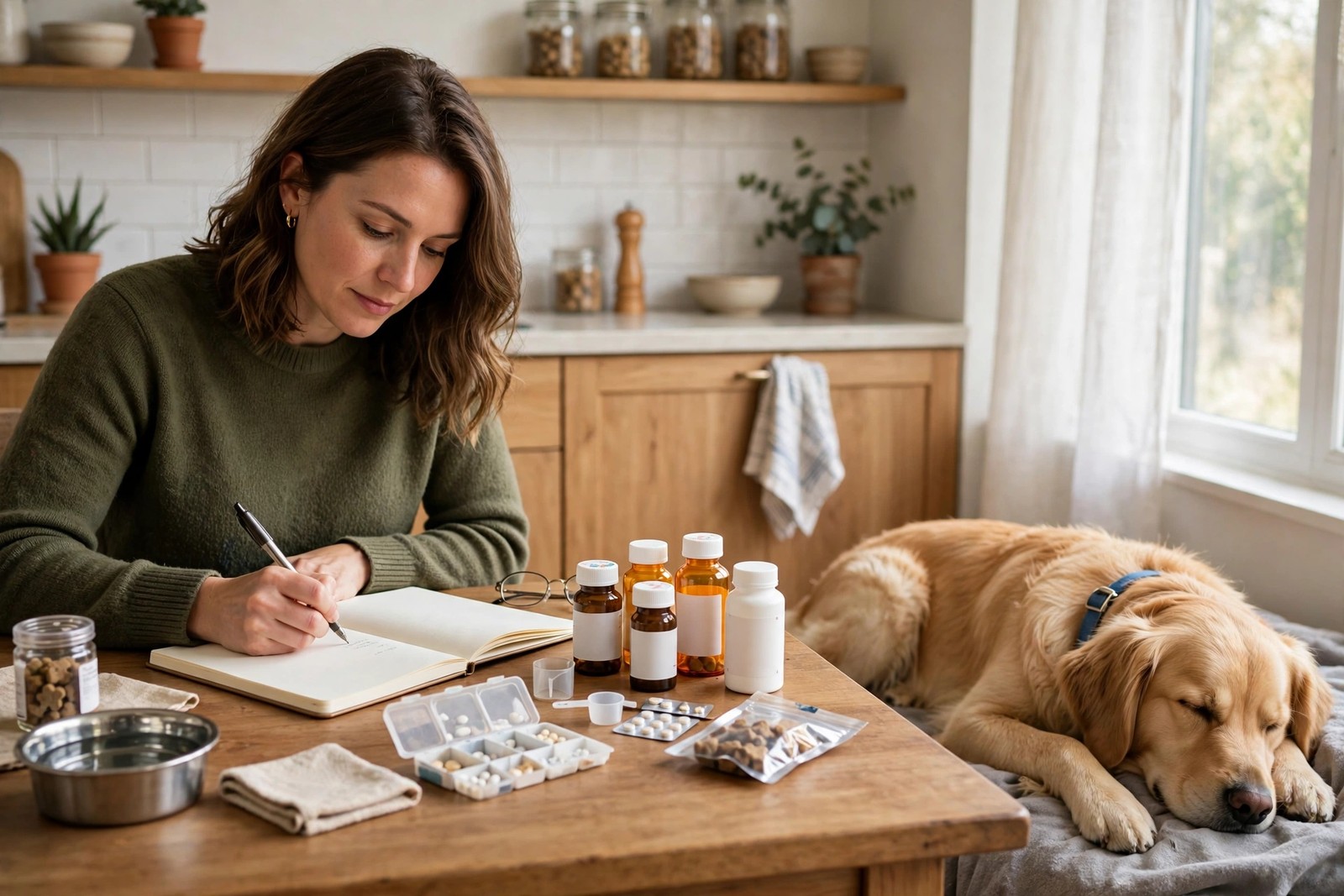
A medication list fails when it says only 'one tablet twice daily.' Twice daily from when, for which dog, prescribed by whom, and what happens if a dose is vomited back? Write the list so a competent stranger could follow it at midnight without phoning you for the missing half of every instruction.
One Complete Entry Per Medicine
For each medicine, record its full name, the strength, and the amount to give, copied exactly from the dispensing label. Add the frequency and clock times that fit your routine, the route — by mouth, in the ear, on the skin, or in the eye — and whether it is given with food, before food, or on an empty stomach. Write the start date, the finish date or review date, and what the medicine treats in plain words, such as a skin infection or joint pain. Include the prescribing clinic, the vet's name if known, and the clinic phone number, plus a note of where the medicine is stored and its expiry date.
The Safety Lines People Forget
Write down, in your vet's own advice, what to do about a missed dose and what to do if a dose is spat out or vomited, because those instructions differ between medicines and guessing is where double doses happen. List side effects worth watching for, exactly as your clinic described them — for example loss of appetite, unusual sleepiness, vomiting, or diarrhoea — and state clearly which signs mean stop and phone the clinic or an emergency vet straight away. Add your dog's known drug allergies and any past bad reaction, in bold at the top, where nobody can miss it.
Supplements, Preventives, and the Given Log
Include flea, worm, and heartworm preventives where they apply, with the product type and the date last given, plus supplements, medicated shampoos, and ear cleaners; emergency vets ask about all of them. Keep medicines in their original labelled containers, photograph each label for the file, and never rely on a weekly organiser alone, because it carries no name or strength. Add a simple given log with date, time, and initials, so a dose is never repeated by a second person who assumed it had been missed.
Handing the List Over
Walk your sitter through one real dose before you leave: how you hide a tablet, how your dog takes liquid, and what 'swallowed' actually looks like with this dog. Date the list, replace it the day any prescription changes, and throw the old version away so two lists never circulate. KinsLe's Pet Passport holds the current medication list within your dog's portable records packet, meaning the sitter at home and the emergency vet at midnight are both reading the same dated version.