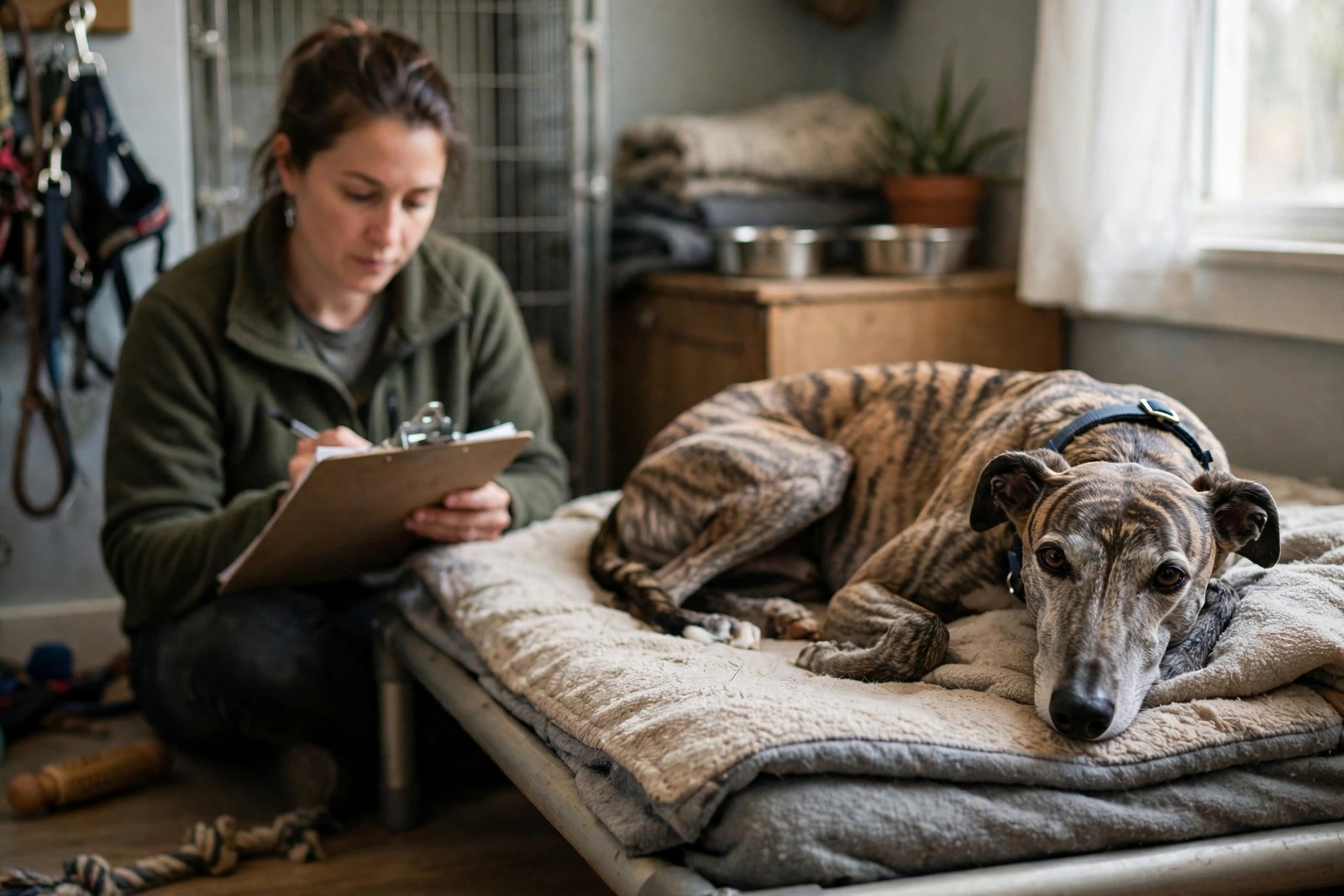
A retired Greyhound arrives with a documented past, unlike many rescue dogs, and the rescue usually holds more of that record than a new owner realises. Your job at the meeting is to ask for it in an organised way: career first, injuries second, and home experience third. Each answer changes daily care, from how fast exercise should build to whether a cat-owning home is safe, so take notes and ask for copies of any veterinary paperwork the rescue can share.
Start With the Racing Record
Ask how many races the dog ran and over what period, because a dog retired after a handful of starts has had a different physical life from a dog who raced for several seasons. Ask why the career ended. Common reasons include reaching retirement age, a drop in performance, loss of interest in chasing, kennel space pressures, and injury, and each carries different information. A dog retired for fading interest often settles into pet life readily, while a dog retired through injury needs the follow-up questions below. Ask which track or tracks the dog raced at and whether the rescue has the dog's racing name, because records, breeding, and past results are often traceable through that name. Finally, ask about temperament in kennels: how the dog behaves at feeding, at turnout, and around neighbouring dogs, since kennel staff see the dog daily and their observations are practical rather than polished.
Ask About Injuries One by One
General questions earn general answers, so name the injury types. Ask whether the dog has had any fracture, and if so, which bone, how it was treated, and whether the leg moves normally now. Ask about muscle injuries, especially strains to the thigh and shoulder, and whether hard running still causes soreness or stiffness the next day. Ask about toes and nails, because toe dislocations, nail damage, and corns on the pads are familiar Greyhound problems that affect walking comfort on hard ground. Ask whether the dog takes any medication now, whether exercise should be limited in distance or speed during the settling period, and whether the rescue's veterinarian has flagged anything for monitoring, such as teeth that need attention or a heart murmur that needs a check. Write down the answers with dates where the rescue can give them, and ask which veterinary practice treated the dog if records might transfer.
Then Ask About Life Outside the Kennel
A racing Greyhound may never have lived in a house, so ask what the dog has actually experienced. Has the dog spent time in a foster home, and if so, can you hear the foster's account of stairs, slippery floors, televisions, vacuum cleaners, and being left alone? Foster reports are unusually valuable because they describe the dog in a real home rather than a kennel routine. Ask how the dog was assessed with cats and with small dogs, and how that assessment was done, because a dog who ignores a calm cat indoors may still react to a cat running outdoors. Ask about children, visitors, and traffic exposure in the same specific way. Finally, ask what the rescue recommends for the settling weeks: feeding times carried over from kennels, a muzzle for early garden turnout if the rescue advises one, and what support the rescue offers if problems appear.
Keep the Record Together
The answers you gather form the dog's health and history file, and they are worth storing carefully rather than leaving in a notebook. Filing the career summary, treatment details, and veterinary paperwork inside KinsLe's Pet Passport means the record travels with the dog to every vet visit and stays complete if care is ever shared.