
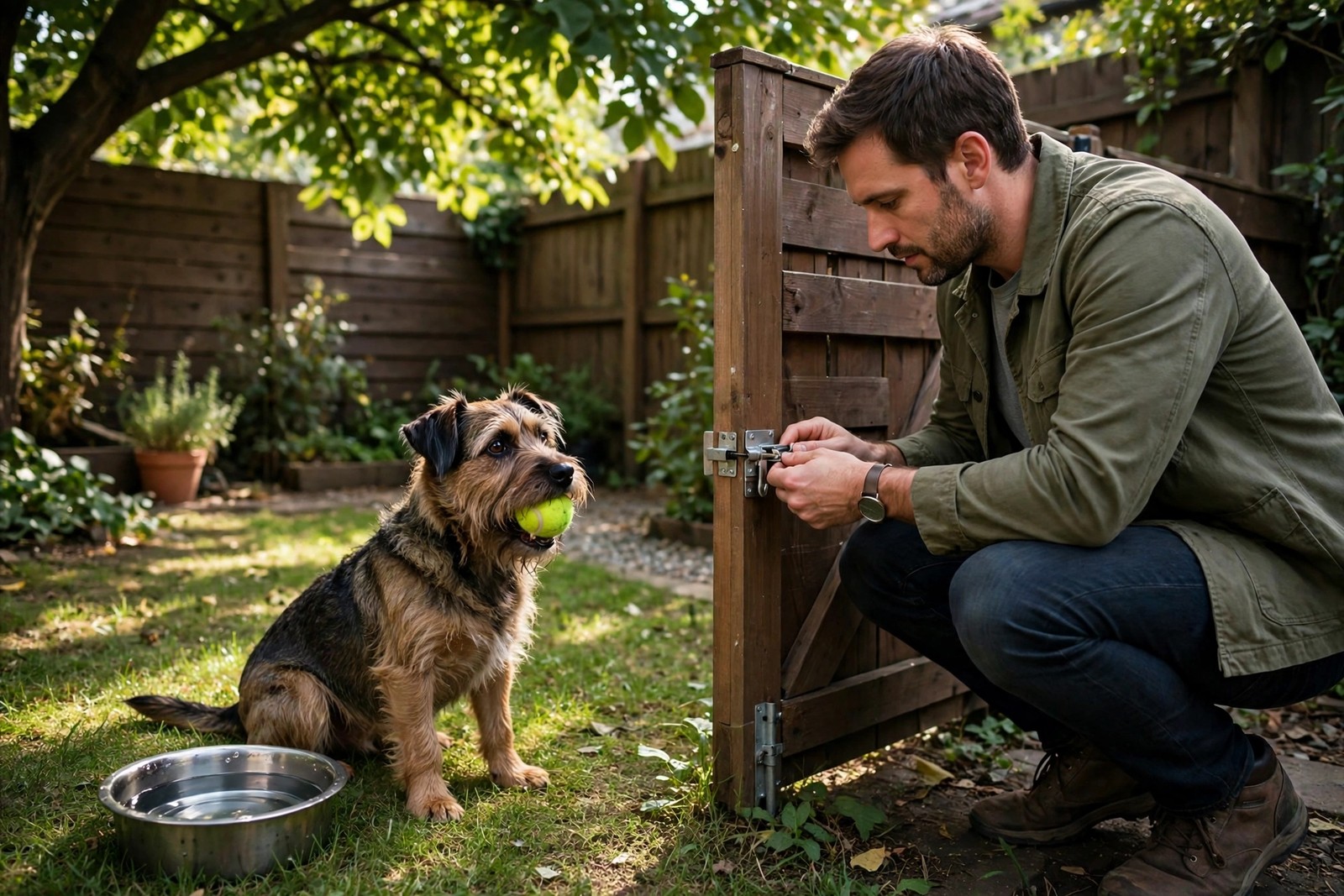
Run through the yard before she goes out: test each gate latch by hand, walk the fence line looking low for digging and gaps, clear anything harmful within reach, and set out water in real shade.
Gates, fence, and the escape routes
Start with the gates: physically push and pull each one to confirm the latch caught, since a gate that looks closed but is resting on the latch is an escape waiting for one bump. Walk the fence line with your eyes at dog level, looking for loose boards, storm damage, gaps that opened as soil shifted, and fresh digging at the base. Check the spots dogs actually use — corners, the stretch beside the neighbor's dog, and anywhere squirrels run the top rail. A hole dug halfway on Tuesday is finished by Thursday if nobody notices it.
Remove what a bored dog finds
An unsupervised dog entertains itself, so clear the hazards first:
- Garden chemicals, fertilizers, and tools left out from weekend projects.
- Hazardous items like hoses with sharp nozzles, broken toys, splintered sticks, and anything small enough to swallow.
- Stagnant water in buckets or planters, and any standing water that has turned green.
- Toxic plants within reach and fallen fruit or debris from trees.
Also confirm outdoor toys are intact — a chewed-apart toy becomes a swallowing risk long before it looks destroyed.
Shade, water, and weather limits
Fresh water in a clean, tip-proof bowl is non-negotiable, and real shade — not a sliver that moves off the dog by noon — matters in warm weather. Then apply the weather rule honestly: in very hot or very cold conditions, yard time should be short and supervised regardless of how secure the space is. Heat builds dangerously fast for flat-faced, thick-coated, senior, and overweight dogs, and cold snaps are hard on small, short-coated, and elderly dogs. If you would not sit out there comfortably for the whole stretch, your dog should not be left out there alone for it either.
Alone time should still be checked time
"Alone in the yard" works best in reasonable stretches with periodic check-ins — a glance through the window, a listen for unusual barking, a look-in if things go suddenly quiet, since quiet sometimes means an escape project is underway. Dogs who are anxious, fence-reactive with the neighbor's dog, or committed diggers may never be good candidates for long unsupervised yard time, and that is fine: shorter, supervised outings serve them better.
Your backup if the check ever misses something
Even careful owners get beaten by a blown-open gate or a fallen branch on the fence, so a backup matters.
So keep the two-minute check as your routine; in KinsLe, the Lost Pet Alert System can place a missing dog onto the map display, where the person who finds her can reach the owner by message.