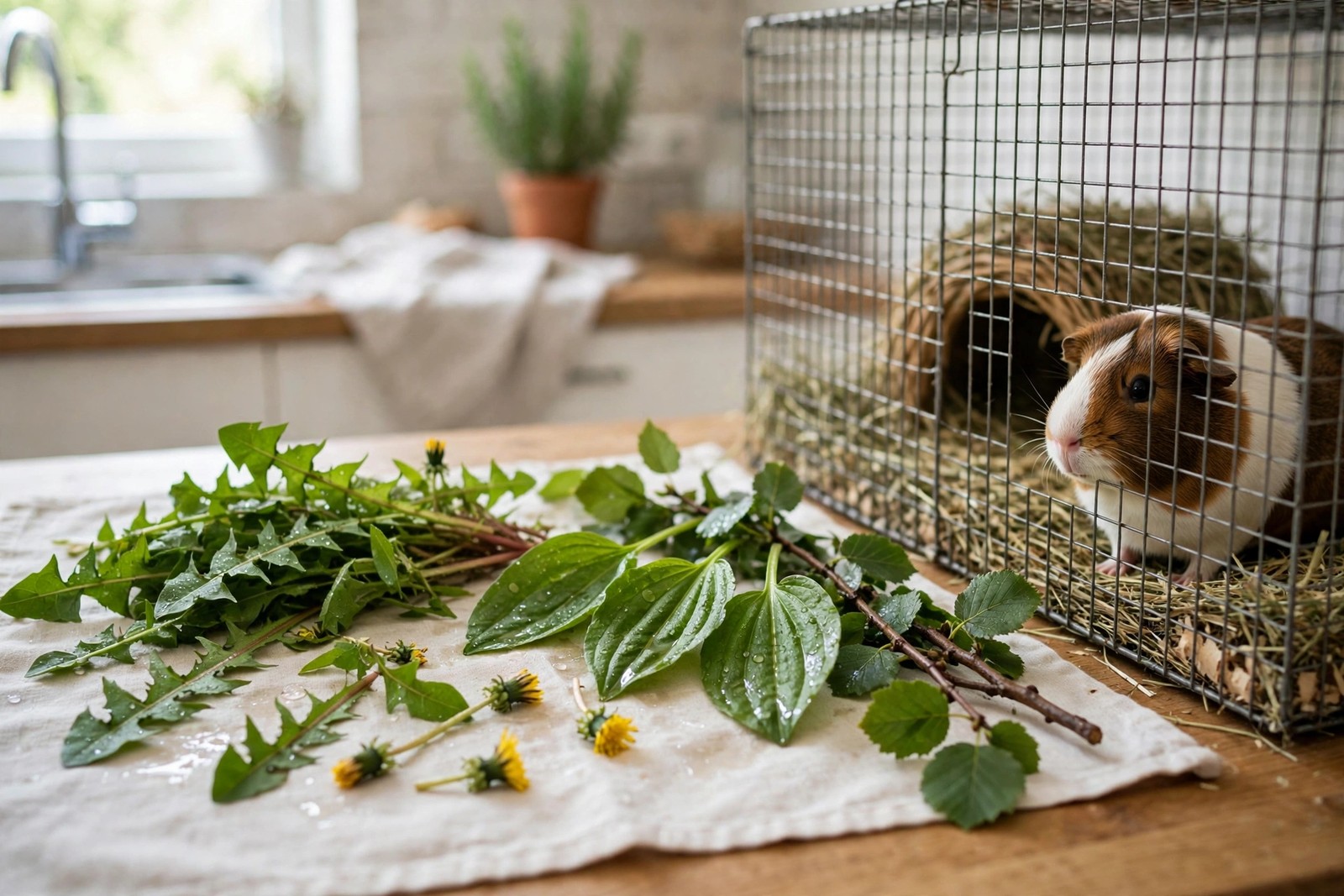
Wild food can enrich a small mammal's diet — dandelion, ribwort plantain, and clover are relished by many rabbits and guinea pigs — but wild gathering removes the safety checks that shop-bought greens have already passed. Three questions decide whether a handful is a treat or a risk: are you certain what it is, are you certain where it grew, and is it suitable for this particular animal?
Identify It, or Leave It
Never feed a plant you have identified only as probably safe. Several common toxic plants grow beside harmless ones, and lookalike errors are the main danger in foraging. Learn the whole plant — leaf shape, stem, flower, and growth habit — not a single leaf in isolation. Leave anything you cannot name confidently, and build a short personal list of plants you know well rather than gathering widely.
Treat these as firm avoids: buttercup, foxglove, yew, laburnum, ivy, hemlock, daffodil and other bulbs, and the leaves of potato and tomato plants. With branches, identity matters just as much — willow, apple, and hazel are widely used for gnawing, while yew and laburnum wood are dangerous, and resinous conifer wood, mouldy bark, heavy lichen, and any painted, treated, or preserved timber should never be offered. Check branches for sharp thorns, cracks hiding insects, and bird droppings, and cut away damaged sections.
Judge the Ground, Not Just the Plant
A correctly identified plant can still be the wrong handful. Roadside verges carry traffic dust, salt, and grit; field edges and tidy park lawns may have been treated with weedkiller or fertiliser you cannot see; and popular dog-walking routes add urine and faecal contamination at exactly pet height. Gather from ground you know: your own untreated garden is best, or quiet land well away from roads and cropped fields, with the landowner's permission. Avoid gathering after nearby spraying, from recently mown municipal grass, or from anywhere the plants look scorched, spotted, or unnaturally lush. Pick clean, undamaged leaves from higher on the plant rather than the mud-splashed base.
Wash, Inspect, and Serve Promptly
Rinse gathered greens thoroughly under clean running water, leaf by leaf, checking for slugs, insects, eggs, and slime as you go, then shake or pat them dry. Wash branches too, scrubbing off soil and droppings, and let them dry before use. Serve gathered food the same day where possible — wilted, warm, or bag-stored greens deteriorate quickly — and remove uneaten forage from the enclosure within a few hours so it cannot ferment or attract flies.
Match the Animal in Front of You
"Small mammal" is not one digestive system. A rabbit or guinea pig thrives on leafy forage, a hamster should meet new greens in far smaller quantities, and a ferret, as an obligate carnivore, has no need for gathered greens or gnaw branches at all. Introduce any new wild food one plant at a time, in a small first portion, and watch appetite, droppings, and behaviour over the following day before making it a regular item. Soft droppings, a reduced appetite, or a quiet animal means stop that plant and return to the usual diet; an animal that stops eating altogether needs a veterinarian promptly, because gut slowdown in rabbits and guinea pigs becomes serious quickly.
Keeping the testing orderly is where a household system pays off: with KinsLe's Care Teams, the person who gathered dandelion on Tuesday can log the washing and the first small serving as completed, timestamped duties, so a partner does not unknowingly serve a second, larger portion of a plant still on trial.