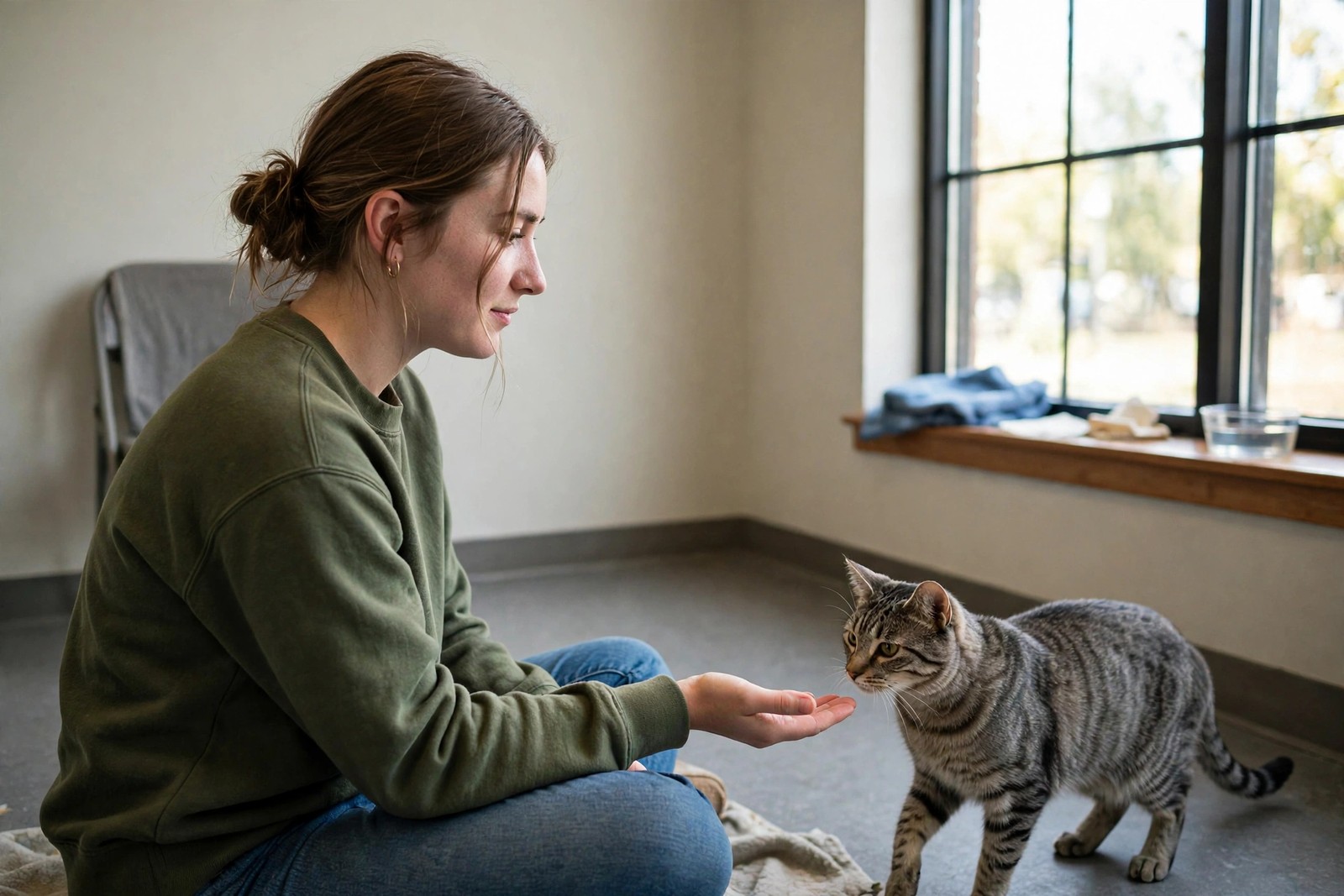
A first meeting is short, and a shelter is a strange place for any cat, so the goal is not to fall in love on command. The goal is to gather honest information: how this cat responds to a calm stranger, how the cat recovers from small surprises, and what the people who care for the cat daily have actually observed. A meeting handled slowly tells you far more than one spent coaxing a frightened animal out of a corner.
Watch First, From a Distance
Begin by simply looking, before anyone opens a door or offers a hand. Note the cat's posture in the enclosure: resting in the open, loafing with paws tucked, watching the room with soft eyes, or pressed into the back of a hide box. Look at ears, tail, and breathing. A cat who is curled tight with ears flattened and pupils wide is telling you about stress in that moment, which may say more about the shelter than about the cat's home personality.
Give the situation time to change. Many cats who look shut down in a noisy kennel row soften noticeably in a quiet meeting room after several unhurried minutes. Watch whether curiosity appears at all: a slow turn of the head toward a voice, a stretch, a move toward the front of the space. Recovery after a startling noise, such as a door closing down the hall, is especially informative, because a cat who settles again within minutes is showing resilience you can build on.
Let the Cat Make the Approach
Resist the urge to reach in and stroke. Sit sideways, keep your hands low and still, and let the cat close the distance. A cat who approaches, sniffs, and rubs a cheek against your hand is offering contact on terms the cat controls, and that consent tells you more than any amount of tolerated petting. If the cat sniffs and retreats, that is still a good meeting; pressure now only teaches the cat that you ignore signals.
Read what follows touch carefully. Brief strokes along the cheek and chin are usually better received than a hand looming over the head or reaching for the belly. Watch for skin twitching, a tail starting to thump, ears rotating back, or the head whipping around toward your hand; those are requests to stop, and stopping promptly is the correct response. A hiding cat is information, not a verdict: shyness in a shelter often belongs to the setting, and many reserved cats become affectionate, settled companions once home, given weeks rather than days.
Ask the Questions That Matter
Staff and volunteers who feed and clean for the cat daily know things no single visit can show you, so ask directly and write the answers down. Ask about history as far as it is known: where the cat came from, how long in care, and any previous home notes. Ask about the health checks already completed, whether a veterinarian has examined the cat, and whether any condition needs monitoring or follow-up.
Cover the practical daily ground as well. Ask about litter habits and whether the tray is used reliably, what food the cat currently eats and how eagerly, and how the cat tolerates handling, carriers, and being picked up. Ask about behavior with other cats, dogs, and children where that is known, and accept honestly when the answer is unknown. Finally, ask about the return policy without embarrassment: a responsible rescue would rather take a cat back than have a failed match endured, and knowing the terms protects everyone, including the cat.
Take the History Home With You
Whatever is known should not stay behind in a shelter filing cabinet. Transferrable Profiles on KinsLe is built for this moment, since the Transferrable Profiles record on KinsLe moves a cat's documented history, health notes, and routines to the new owner at adoption. Before you sign, ask staff to load the known history into the Transferrable Profiles file on KinsLe so the cat arrives with a past you can read.