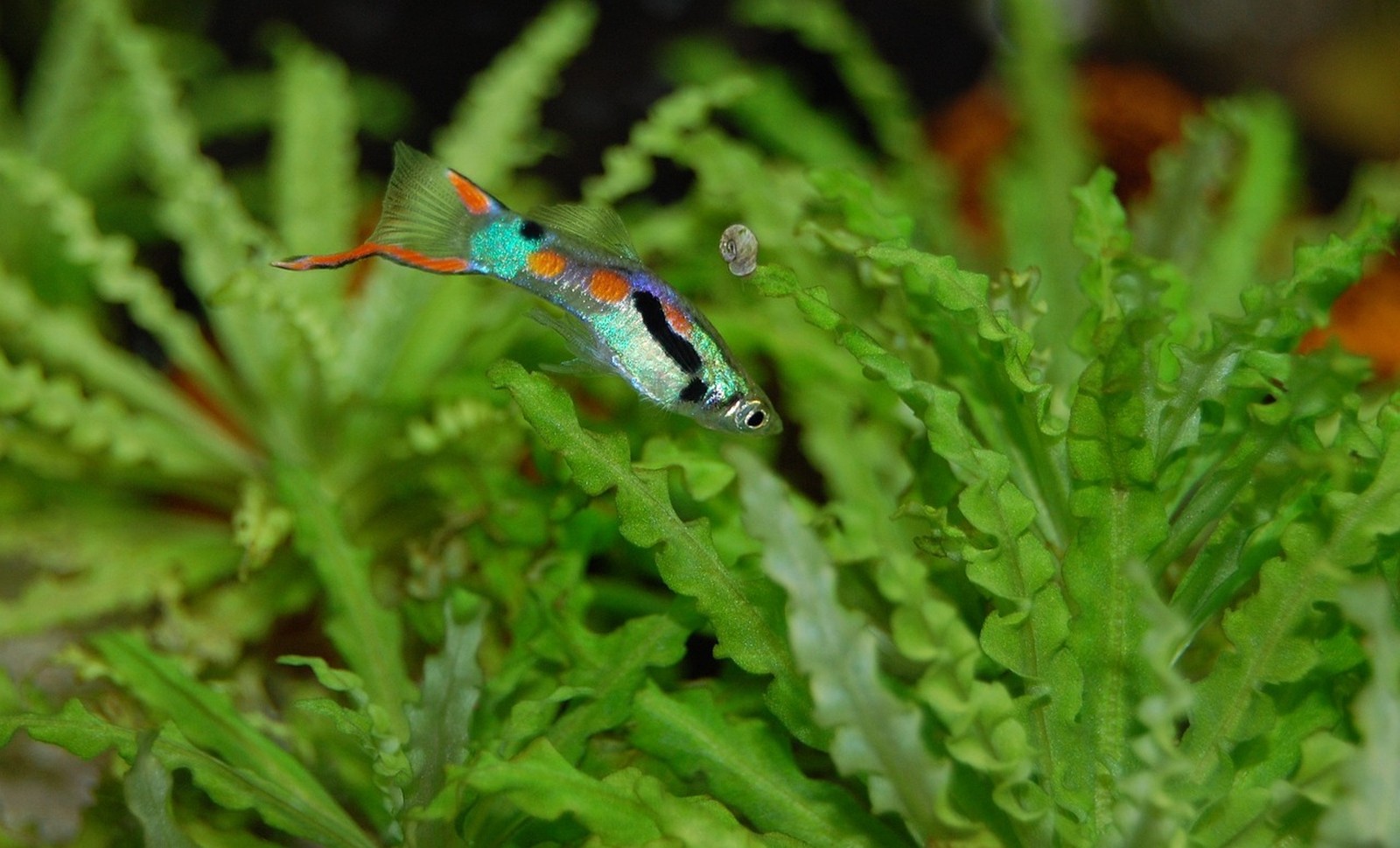
Guppy fry are born able to swim and feed, so a batch that keeps failing in its first days is usually reporting a tank condition rather than bad luck. Start with the water every fry shares, then the equipment around them, then the two most overlooked causes in a community tank: the adults themselves and the filter intake.
First Check: The Water Itself
Test the water before changing anything else. Ammonia and nitrite are the two readings that matter most for newborn fry: both should sit at the safe mark on your test, and any reading away from that mark is a finding, not a detail. New fry are small, their waste is small, but a tank cycling unevenly, an overfed corner, or a filter that has stalled can push readings up exactly when a batch arrives. The response to a reading that is off is small water changes with conditioned water, repeated alongside retesting until readings hold steady at the safe mark, rather than one dramatic overhaul that swings conditions twice in a day.
Second Check: Temperature Stability
Fry tolerate a steady temperature far better than a wandering one. Check that the heater is actually holding the tank steady by reading a thermometer placed away from the heater itself, morning and evening, since a heater can cycle, stick, or quietly fail while its light still glows. Stability is the target here; chase a steady reading before adjusting anything.
Third Check: The Parents
This is the check new keepers most often skip: adult guppies eat fry. A healthy batch can be reduced steadily by its own parents and tankmates, and losses blamed on water sometimes end at an adult's mouth. The fix is cover and separation, in whatever form fits the tank. Dense plant growth, real or artificial, gives fry hiding depth where adults cannot easily follow, especially thickets that reach the surface where fry gather. A separate fry space, whether a nursery area or a second small tank fed from the same routine, removes the pressure entirely and lets you watch feeding and growth directly.
Fourth Check: Feeding the Fry
Fry need food fine enough for very small mouths, offered little and often through the day. Coarse flakes that adults demolish may pass fry by entirely, leaving them underfed in a tank that looks well fed. Offer finely crushed or fry-sized foods in small amounts several times daily, and watch whether the fry actually eat, gathering at the food with full bellies afterward. Uneaten food left sinking is its own hazard, since it fouls the water the first check just cleared, so small and observed beats generous and assumed.
Fifth Check: The Filter Intake
Finally, look at the filter with a fry's size in mind. An uncovered intake that an adult ignores can draw in newborn fry, and losses with no bodies found sometimes end there. Cover the intake with a sponge sleeve or similar guard so water passes and fry cannot, and check the guard during cleaning, since a clogged cover quietly starves the filter of flow. The record is what turns these checks into answers across batches. The tank log in the Pet Passport record on KinsLe keeps each batch's readings, heater checks, and outcomes together, so a keeper can see whether failures track a water reading, a season of temperature drift, or an adult who has learned to hunt.
When the Checks All Pass
If water holds at the safe mark, temperature is steady, fry are covered, fed, and safe from the intake, and batches still fail, that is the point to take the record to a fish shop with experienced staff or an aquatic vet. Bring the log rather than a memory: dates of batches, readings, and what changed between them. Pet Passport on KinsLe keeps tank readings and changes together in one record, ready to show a fish shop or a vet when fry keep failing.