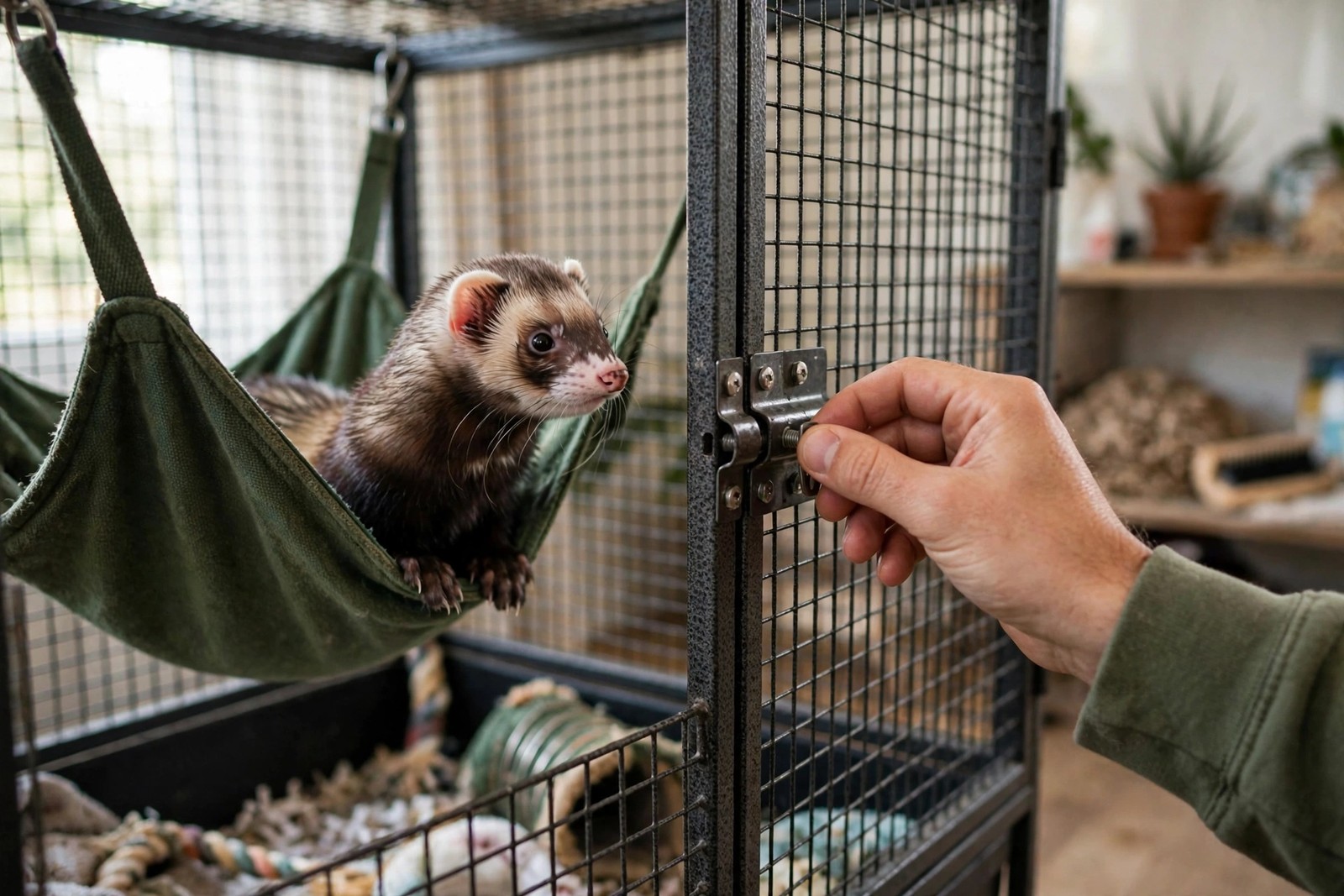
A strong ferret tests a cage the way water tests a roof: patiently, at the weakest point, usually at night. Ferrets push with their whole body, work latches with their paws, and can flatten through a gap that looks impossibly small. A monthly hands-on inspection, done slowly with the ferret elsewhere, catches the wear before the escape.
Latches: Wear, Springs, and Full Closure
Open and close every latch ten times. It should engage fully with the same resistance each time, not click shut only when you press it home. Look for grooves worn into plastic latches, because a ferret's repeated pawing rounds the catch until it slips under load. Feel spring tension on spring-bolt latches: a tired spring returns slowly and lets a determined push walk the bolt back. Check for chew marks and hairline cracks on any plastic part, and replace a doubtful latch rather than adding tape or wedging it, which a ferret treats as a puzzle with a prize inside.
Doors and Hinges Under Load
Close each door and push hard from inside at the bottom corner, the point a ferret braces against and shoves. Watch for flex: a door that bows enough to open a gap at the corner has failed this test even if the latch holds. Check hinge pins for bending and play, door alignment after the cage has been moved or deep-cleaned, because a slightly mis-seated door is the classic post-cleaning escape route, and any feeder or water-bottle doors, which are often flimsier than the main doors and are worked just as hard.
Bars, Mesh, Welds, and Coating
Run a cloth along the bars; it snags on popped welds, sharp ends, and flaking coating that your eyes skip over. Look for individual bars bent outward, mesh stretched or frayed where it joins the frame, and gaps widened at corners and around door frames, the exact places a ferret has been prising. Check for rust, especially where water bottles drip, since rusted bars weaken and rough coating can be chewed. Inside, check the clips holding levels and ramps, litter-pan fixings, and any hammock hardware a ferret might work loose and then use as a step toward a weak door.
Act on What You Find
Replace worn latches with sturdy metal equivalents, add a secure secondary clip to a door your ferret targets, and retire a cage section with broken welds rather than wiring it shut. Note which door your ferret attacks most and inspect that one weekly. If an escape still happens, act in the first hours and search hiding places close by. KinsLe's Lost Pet Alert System lets you send a free alert to nearby Circle of Love members, and a finder or neighbour who spots your ferret can message you directly through the alert.