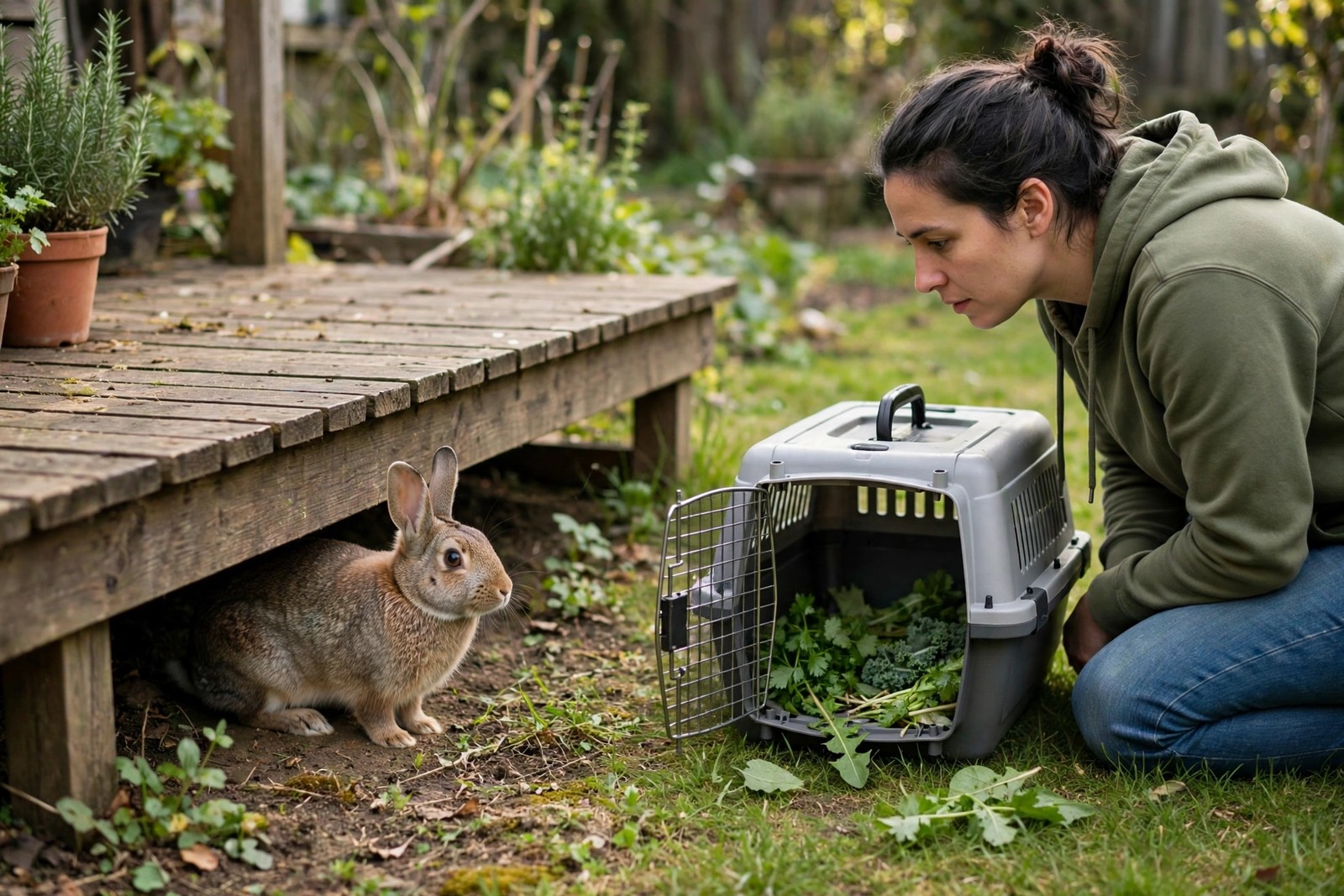
The instinct is to run after a loose rabbit, and it is the one move that makes everything worse. Rabbits are prey animals: a chase reads as a predator, and a frightened rabbit will bolt, squeeze under fencing, or freeze in cover you walk straight past. Think like the rabbit instead — it wants a hiding place, close to home, with food nearby.
The First Hour: Contain and Search Close
Note exactly where you last saw the rabbit, then close garden gates and block gaps under fences to shrink the search area. Search methodically within your garden and the nearest neighbouring ones, with permission: under sheds, decks, steps, woodpiles, and parked cars, inside dense shrubs, and behind bins, using a torch even in daylight because a still rabbit in shadow is nearly invisible. Speak quietly, move slowly, and keep dogs and excited children indoors. Most loose rabbits are found within a short distance of where they escaped, so search the boring hiding places twice before widening the circle.
Luring, Herding, and Trapping
Set an open carrier or pen where the rabbit was last seen, with favourite greens, a piece of banana or apple, hay, and a familiar-smelling blanket inside, then sit low and still nearby and let curiosity work. Rustling the usual food bag can draw a rabbit who knows that sound. If luring fails, use two or three calm helpers holding exercise-pen panels to form a slowly shrinking funnel toward the carrier, guiding rather than grabbing; a thrown towel can help only at very close range. A humane live trap baited with strong-smelling herbs, checked very frequently and never left unmonitored in heat or cold, is the overnight option many owners succeed with.
Search Again at Dawn and Dusk
Rabbits are most active at dawn and dusk and often emerge to feed then, even after hiding silently all day, so repeat the full search at both times before concluding the rabbit has gone. Tell neighbours the same day, ask them to check their sheds and garages and to phone rather than chase, and put a simple notice with a photo through nearby doors. Notify local vets and rescues in case the rabbit is handed in, and keep the home garden gate, carrier, and food station in place for several days.
After Recovery, and Next Time
Once caught, let the rabbit settle somewhere quiet with hay and water, check for injuries, grazes, or flystrike risk in warm weather, and see a vet promptly if the rabbit is hurt, limp, or refusing food. Then fix the actual escape route, because a rabbit remembers it. KinsLe's Lost Pet Alert System sends a free alert with your rabbit's photo to nearby Circle of Love members, and a neighbour who spots a rabbit hiding under their deck can message you directly instead of trying to catch it alone.