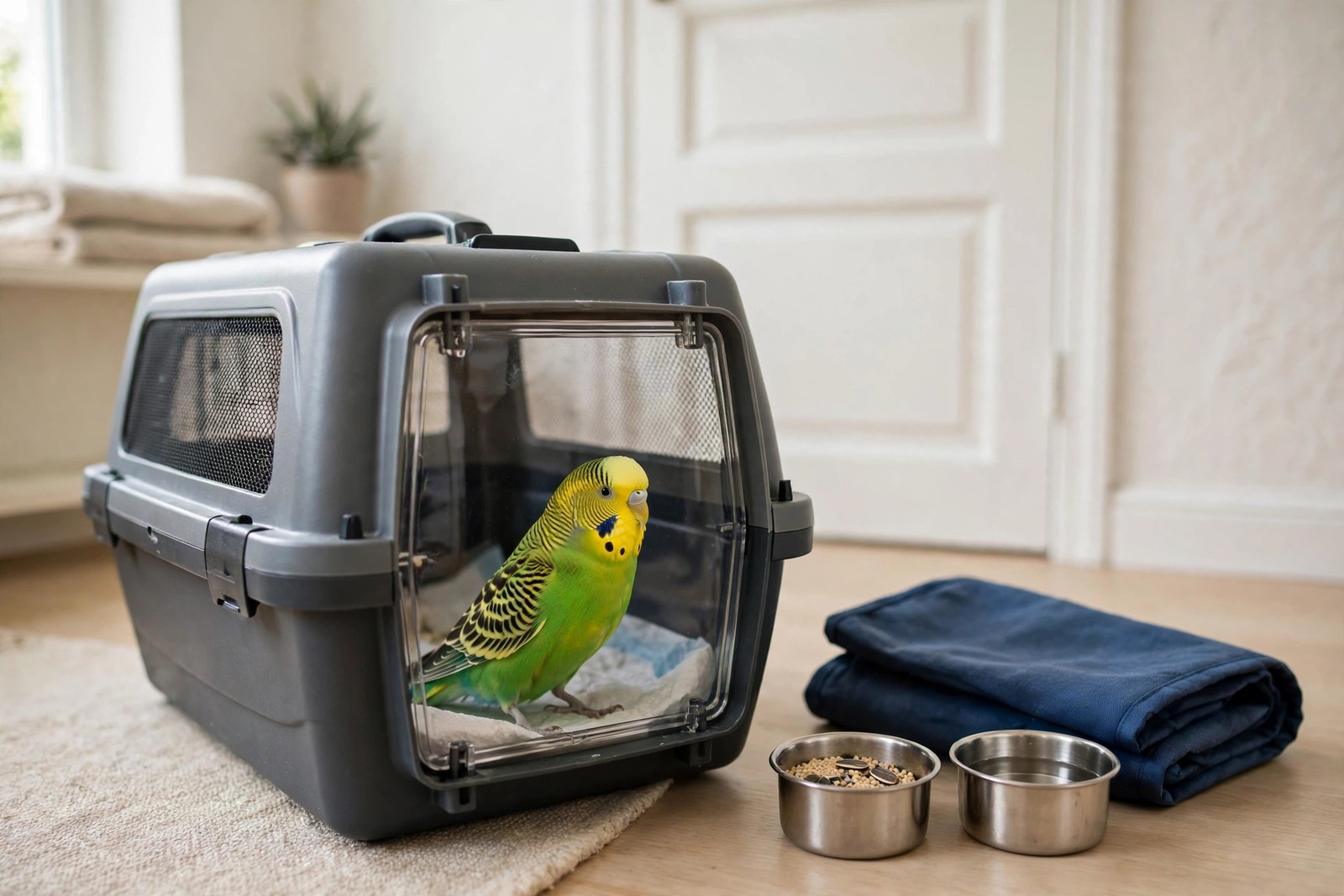
With birds, this question has a blunt answer: out. A bird's respiratory system moves air through its body with an efficiency mammals cannot match, which is superb for flight and terrible around fumes. Paint vapour, aerosol sprays, oven cleaner, bleach-based products, and strong solvents can injure or kill a bird in a room where a person notices only a headache. Plan the bird's absence before you plan the decorating.
Relocate Before the First Lid Comes Off
For painting, the safest option is a short stay in another home — a trusted friend or family member away from the work entirely. If that is genuinely impossible, move the cage to the room furthest from the painting, close its door, and seal the gap beneath it; but treat that as a fallback for small jobs, not a plan for a whole flat. Move the bird in its cage or a secure travel carrier, with its usual food, water, and a familiar cover, and settle it before work begins so the move itself is calm. Never leave a bird in a garage where a car runs, or in a freshly cleaned room to keep it out of the way.
For strong cleaning, the same logic applies room by room. Take the bird out of a bathroom being cleaned with bleach-based spray or a kitchen while oven cleaner works, and keep it out until the room has been aired and surfaces rinsed and dried. Never spray anything — polish, air freshener, disinfectant, hairspray — in the airspace around a cage, and never use a spray cleaner on the cage, perches, or bowls with the bird anywhere nearby.
Ventilate Until the Smell Is Truly Gone
Dry to the touch is not safe to breathe. Bring your bird back only when the worked rooms have been ventilated thoroughly — windows open, air moving through — and no paint or chemical smell remains when you stand in the room and breathe normally. That can mean considerably longer than the tin's drying time, particularly in cold weather when windows stay shut, with low-odour paint still giving off vapour as it cures, and with small birds such as finches, canaries, and budgies, which are the most vulnerable of all. Rinse any cleaned surface the bird might walk on or chew, wash food and water dishes that sat out anywhere near the work, and wash your own hands and change a paint-covered shirt before handling your bird.
Watch a returned bird for the first hours: open-mouth breathing, tail bobbing with each breath, a changed or lost voice, fluffed sitting, and unusual quiet are warning signs. Move the bird into fresh air at once and contact an avian veterinarian urgently — breathing problems in birds deteriorate fast and are never a wait-and-see.
Make the Stay Elsewhere Simple
A borrowed home is safest when its host follows bird rules they may never have needed: no sprays near the cage, no smoking or scented candles in the room, doors and windows closed before the cage opens, and the same lights-out time your bird expects. Write those rules down rather than assuming a kind person will guess them. That handover is exactly what KinsLe's Care Pass is for — your bird's host gets temporary, time-limited access to its feeding routine, sleep cover, favourite foods, and your veterinarian's details, without needing an account of their own, so the painting gets finished and your bird's care never depends on anyone's memory.