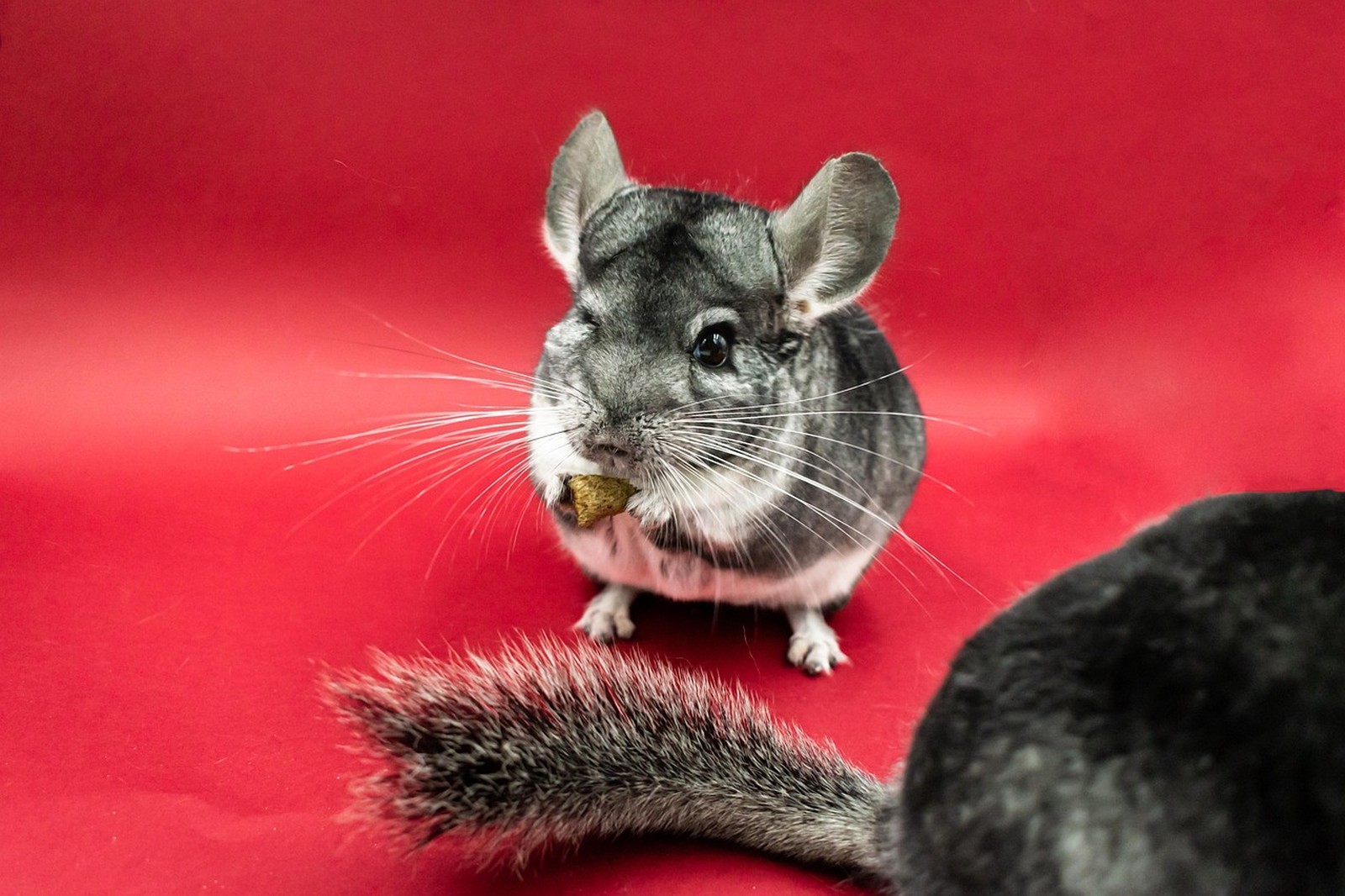
A chinchilla's digestion is built for a spare mountain diet: dry grasses, constant chewing, and very little richness. Feed to that design and feeding becomes simple. Grass hay forms the base of the diet and should be available freely at all times, a measured portion of chinchilla pellets adds the concentrated nutrition, and fresh water completes the daily picture. What matters just as much is what stays out, because a chinchilla's gut handles rich, sugary, or wet feeding poorly, and digestive upset in a small animal turns serious quickly.
Grass Hay, Freely Available
Hay is not a side dish for a chinchilla; it is the main event. A constant supply of good grass hay, such as a clean timothy or meadow grass hay, keeps the gut moving and wears the teeth down as the chinchilla chews for hours each day. Chinchilla teeth grow continuously, and the long, grinding chewing that hay demands is a large part of how those teeth stay at a working length. Fill the hay supply fresh daily, pull out soiled or damp portions, and store the bale dry so it never reaches the cage musty. A chinchilla who always has hay available grazes in the small, frequent bouts its digestion expects, rather than filling up in one large meal and then waiting empty for the next feeding hour.
Measured Pellets and Daily Water
On top of hay, offer a measured daily portion of plain pellets made for chinchillas, following a consistent amount rather than a heaped, free-filled bowl. Pellets concentrate vitamins and minerals that hay alone may not supply evenly, but they are rich compared with hay, so more is not better: a bowl that is always full encourages a chinchilla to fill up on pellets and skimp on the hay its teeth and gut need most. Choose a uniform pellet rather than a mixed blend with colored pieces and seeds, because chinchillas pick out the sweetest parts of a mix and leave the rest, quietly unbalancing the diet. Refresh drinking water daily, check that the bottle spout flows freely, and scrub the bottle regularly; a chinchilla who cannot drink will quickly stop eating as well.
Foods That Put Digestion at Risk
Keep the diet plain and dry, because chinchilla digestion tolerates richness badly. Sugary treats, dried fruit, nuts, seeds, and sweetened drops all load a gut designed for dry grass with sugar and fat it handles poorly, and a feeding pattern heavy on fresh produce brings more water and fermentable material than that gut expects. The results can include soft droppings, bloating, and a chinchilla who stops eating, which is an emergency in a small mammal rather than a wait-and-see complaint. Treats, if you offer them at all, stay rare and plain: a tiny piece of a simple, unsweetened option offered occasionally, not a daily handful. Introduce any new food in very small amounts over many days, and never change the whole diet suddenly, because abrupt changes are a classic trigger for digestive trouble even when the new food itself is suitable.
Split the Feeding Duties Clearly
Chinchilla feeding fails most often through household drift: one person fills the pellets, another tops them up again, and a third offers a sweet treat because nobody knew the first two had fed already. Write the feeding duties down as named jobs instead. One person refills and refreshes the hay each morning, another measures the day's pellets in the evening, and everyone in the house shares the same short list of what the chinchilla may and may not be given, with treats counted rather than offered freely. Check droppings and appetite as part of the routine, since a drop in either is the earliest sign the diet needs a second look or a veterinarian's input. Consistency from every feeder protects the digestion that the right foods started.
Shared in KinsLe, Care Teams assign hay refills, pellet measuring, and water checks to specific people so the chinchilla's plain diet stays exact.