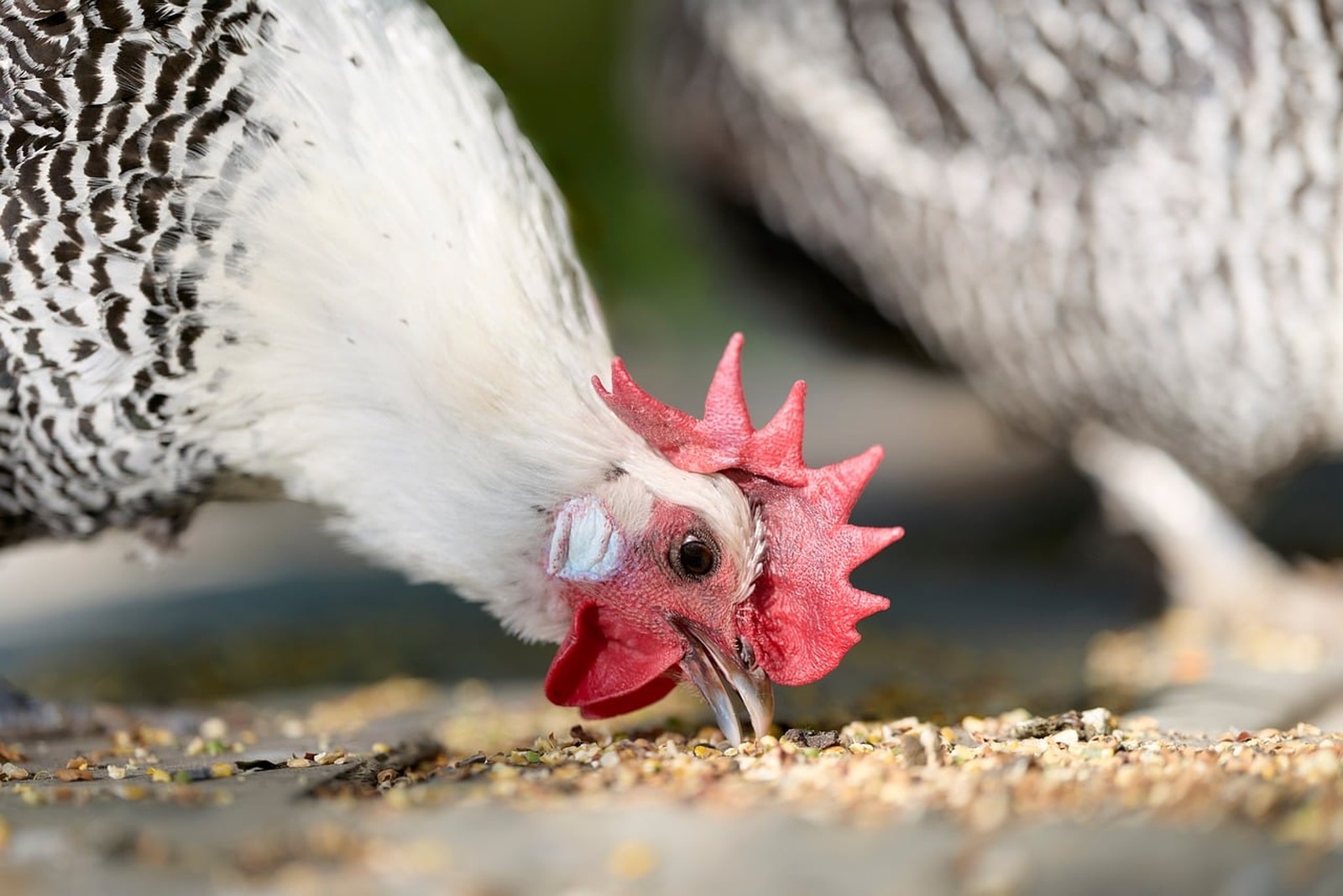
Egg quality is largely decided before the hen reaches the nest box: a shell is calcium, the white is protein and water, and the yolk reflects the hen's overall diet and condition. Owners chasing better eggs often add extras on top of a basic diet, when the levers that move egg quality are three plain ones — a proper layer feed as the foundation, calcium offered separately so each hen doses herself, and grit for hens eating anything that needs grinding. Get those right and the likeliest feed-related causes of thin shells and erratic laying are removed.
Layer Feed Does the Heavy Lifting
Feed a complete layer ration formulated for laying hens, typically around 16% protein, as the main diet, and let it be available freely so a hen low in the pecking order still gets her share at a second feeder if needed. That protein level, together with the vitamins and minerals blended into a layer feed, is what builds firm whites and supports a steady laying rhythm; a diet built on mixed corn or scratch grains alone is short on protein and short on calcium, however enthusiastically the hens eat it. Store the feed dry and sealed against rodents, and change a flock onto layer feed as laying begins rather than weeks later, because shell quality dips quickly when calcium demand rises on a grower diet. Hens usually respond within a few weeks of the diet being put right.
Calcium and Grit in Separate Dishes
Offer crushed oyster shell in its own dish, available at all times, separate from the feed. Hens regulate their own calcium intake well, taking more on days a shell is forming, and free-choice shell supplies the extra calcium a layer feed alone may not. Thin, soft or rough shells are the classic sign to check this dish first: has it run empty, got wet and caked, or been quietly removed during a coop clean-out? Grit is the second dish and does a different job: hens have no teeth, and insoluble grit — small, hard stones held in the gizzard — grinds whole grains, seeds and fibrous scraps. Hens ranging on stony ground pick up much of what they need, while hens in a run on soft soil, or fed whole grains and scraps, should have grit provided in a separate dish.
Water, Treats and Kitchen Scraps
Water is a feed ingredient: an egg is mostly water, and even a day of frozen, empty or fouled drinkers shows up in laying within days. Keep clean water available at all times, check drinkers morning and evening in freezing or hot weather, and scrub out slime before it builds. Treats, scratch grains and kitchen scraps are the part of the diet to ration deliberately: hold them to a small share of the day's intake, offer them later in the day after the hens have eaten layer feed, and skip anything mouldy, salty, or on the unsafe list for hens — raw dried beans and green potato peelings belong on the never-feed list. A flock filled up on bread and corn is a flock quietly underfed on protein and calcium, whatever the egg basket suggests this week.
What Food Cannot Fix
Feed sets the ceiling, but three common causes of poor eggs are not dietary: age, daylight and moult. Hens lay fewer, though often larger, eggs as they age past their first laying season; laying slows as days shorten, because laying is driven by day length as much as by diet; and a hen in moult diverts protein to feathers, not eggs. Chasing those patterns with richer feed achieves little beyond fat hens; records of eggs collected daily show you when laying picks back up on its own. KinsLe's Care Teams turns the feeding side into a shared routine: the daily layer feed, oyster shell, grit and water checks can be assigned to whichever family member or helper is on hen duty, each check marked complete with a timestamp, so the diet you planned is the diet the hens get.