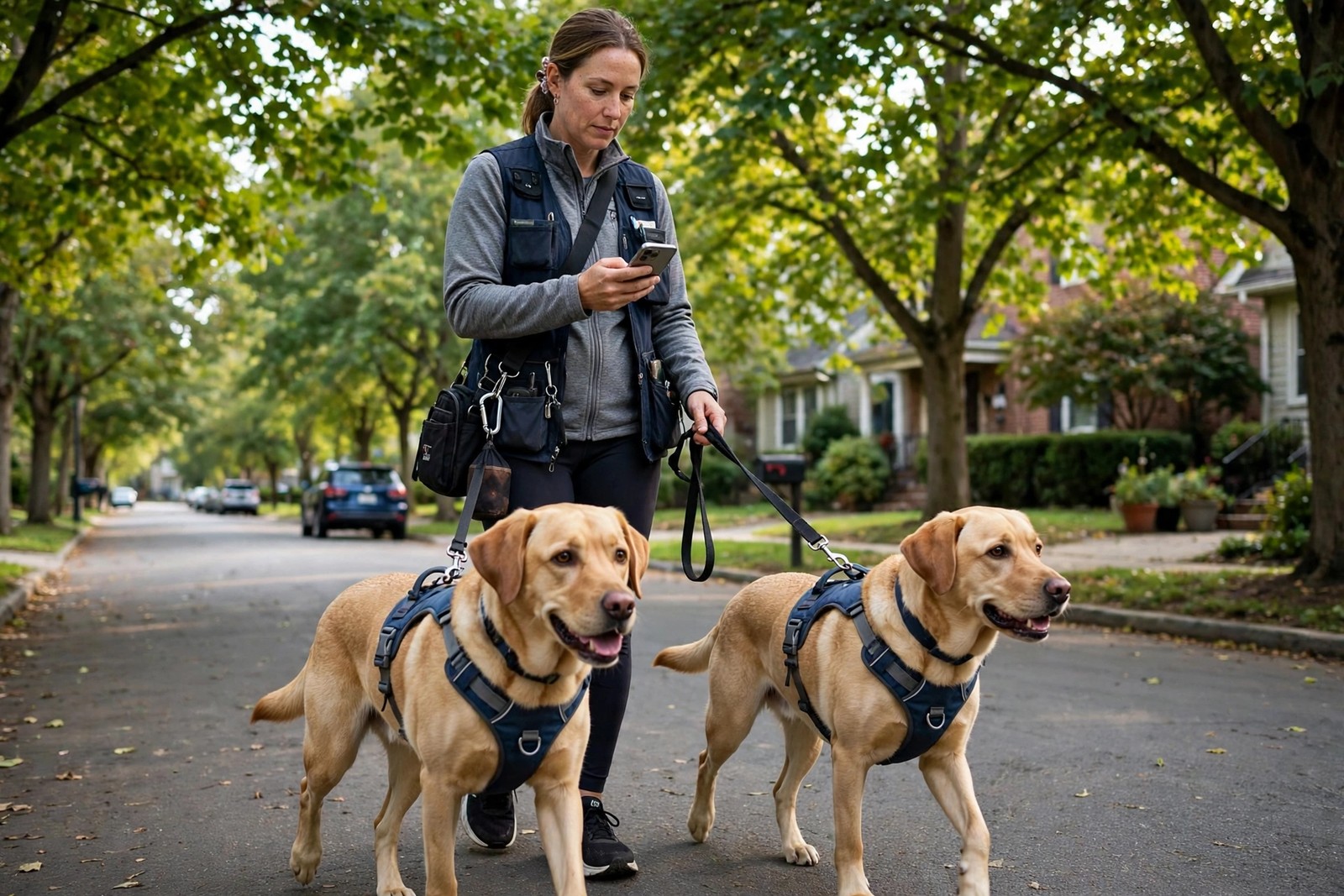
A dog walker holds your house key, your dog's safety on roads and in parks, and an hour of your dog's day that you will never see. Choose one on verifiable criteria, not on a cheerful social page. The questions below separate a professional who can prove their standards from a well-meaning stranger with a lead.
Credentials, Insurance, and References
Ask to see current insurance — and bonding where it is offered — that covers animals in their care, transport, and your keys, and ask what happens if your dog is injured or injures another dog while out with them. A professional answers without defensiveness and can explain their emergency plan: canine first-aid knowledge, the nearest veterinary practice on their routes, how they would transport a hurt dog, and who they phone first. Take up references from existing clients with dogs like yours, and actually call them; ask specifically about reliability in bad weather, honest reporting of incidents, and whether the dog comes home settled.
Experience should match your dog, not dogs in general. A walker brilliant with spaniels may be the wrong choice for a strong, reactive adolescent or a frail senior who needs a slow sniffy circuit, so describe your dog's triggers, strength, and health limits and judge the quality of the questions that come back.
Groups, Leads, and Off-Lead Rules
Group size decides how much attention your dog gets. Ask for the maximum number walked together, how groups are matched for size and temperament, and whether solo walks are available for dogs who need them — many dogs should start solo regardless. Settle the lead rules in advance: your dog stays on a lead or long line, is never let off except inside a genuinely secure field, and then only with your written consent. Ask what equipment they use, whether they will use the harness you provide, how they handle an encounter with an off-lead dog rushing yours, and whether they use any corrections — a walker whose methods you would not use yourself should not be alone with your dog.
The Trial Walk and Everyday Reporting
Meet first with your dog present, then book a trial walk and watch the start of it: calm handling, no lead-yanking, attention on the dogs rather than a phone, and a dog that returns relaxed, tired in a good way, and keen to go again next time. Agree the practical details in writing — walk length and pace suited to your dog's age and the weather, water offered, muddy paws towelled, feeding or medication if any, and exactly how your keys are stored and labelled.
A report after every walk should be standard, not a favour: the route or a map record, toilet breaks, water, any incidents or unusual behaviour, and a photograph. So should the backup plan — who walks your dog if your walker is ill, and how much notice you get for cancellations. Vague answers, huge packs in a van, guaranteed instant availability, or reluctance to do a trial are all reasons to keep looking.
Finding walkers who can pass these tests starts with a proper shortlist: KinsLe's Pet Services Directory brings local dog-walking services together in one place, so you can compare who actually serves your neighbourhood and arrive at that first phone call with names, rather than starting from a random search and a prayer.