
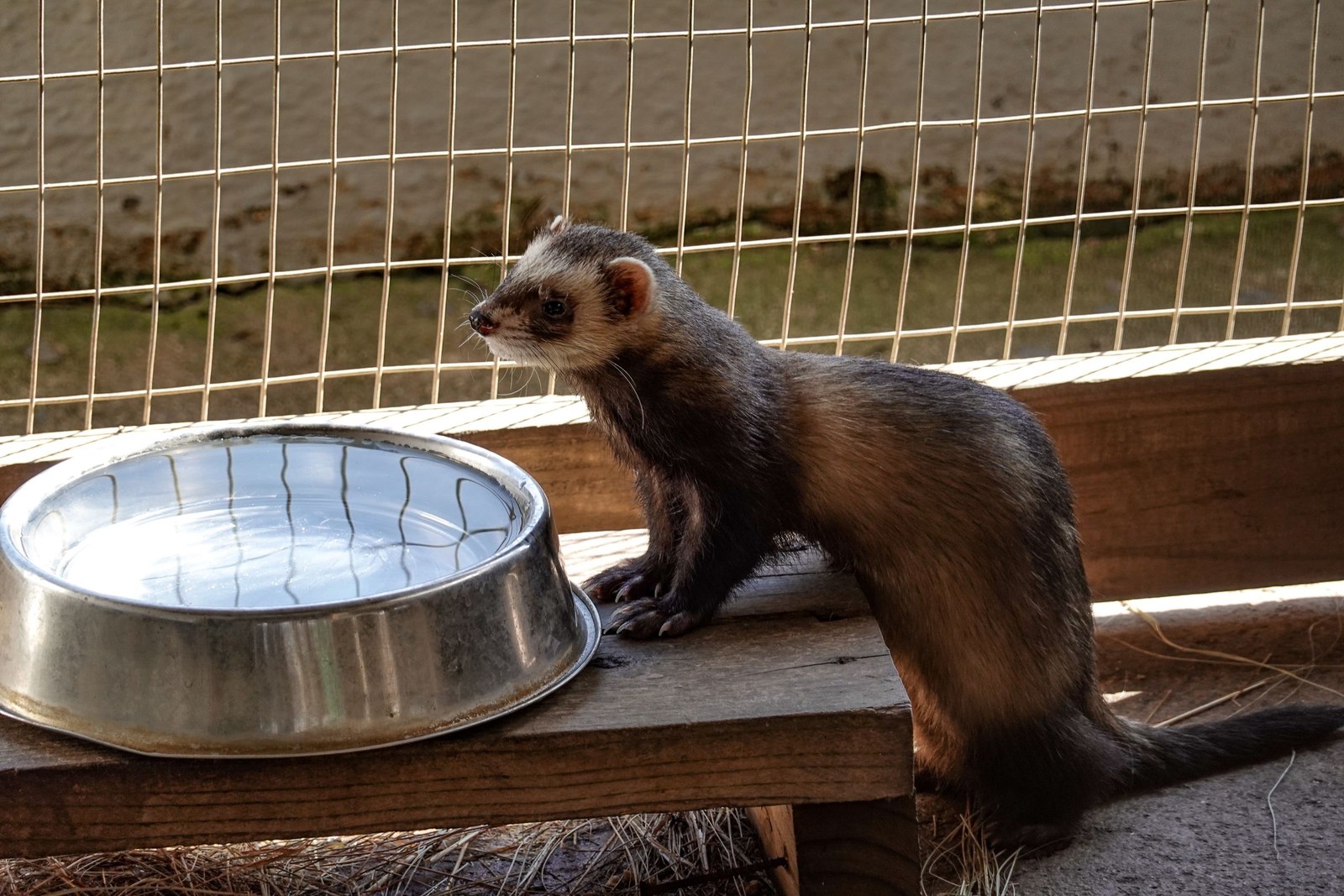
A ferret's cage should feel like a small apartment for a champion napper: multiple levels, a cozy dark sleeping area with hammocks or sleep sacks, a litter tray, sturdy food and water dishes, and a few safe toys to rotate — all checked often for chewing damage. Ferrets may be chaos incarnate while awake, but they sleep 14 to 18 hours a day, so the quality of the sleeping setup matters more than almost anything else in the cage. Build the cage around comfort, cleanliness, and the certainty that a bored ferret will test every object in it.
Sleeping Quarters Come First
Line the main sleep level with washable bedding: fleece blankets, sleep sacks, or a hammock (many ferrets insist on two — one to sleep in, one to stash toys under). Ferrets burrow into bedding to sleep, so give them layers to tunnel into rather than a bare floor. Old t-shirts work in a pinch, but check any fabric daily for chewed holes and loose threads, which can wrap around toes or be swallowed. Keep at least one full spare set of bedding so laundry day never leaves the cage bare, and wash bedding weekly — ferrets have a natural musk that builds up fast in fabric.
Litter, Food, and Water Layout
Ferrets are not naturally tidy, so place a high-backed corner litter tray where they already choose to go — usually a corner away from the sleeping area — and expect to train with praise and the occasional "relocation" of accidents into the tray. Use paper-based or pelleted litter, never clumping clay or scented varieties. Food and water belong on a separate level or the far end of the cage from the litter tray; heavy ceramic bowls resist tipping, and many owners pair a bowl with a bottle as backup since ferrets love to snorkel in open water. Continuous access to food suits ferrets' fast metabolisms, so a filled, fresh bowl matters.
Levels, Ramps, and Safe Toys
A good ferret cage has two or three levels connected by solid ramps with good grip — not ladders a sleepy ferret can tumble from. Cover wire floors with mats or fleece so small feet do not catch. For toys, rotate a small selection: hard balls too big to chew apart, tunnels, and dig boxes filled with rice or ball-pit balls kept outside the cage for playtime. Avoid soft rubber and foam entirely — ferrets chew pieces off and swallow them, and intestinal blockages are a genuine emergency. Inspect every toy weekly and bin anything cracking or shedding pieces.
Cage Time Is Only Half the Picture
No cage, however well furnished, replaces out-of-cage time: ferrets need several hours daily in a ferret-proofed room to run, wrestle, and explore. Think of the cage as the bedroom and safe base, not the whole world. Secure it well — ferrets are determined escape artists who can squeeze through surprisingly small gaps and learn to work simple latches, so clip-style locks on cage doors are cheap insurance.
One Routine the Whole Household Can See
Ferret care has many small recurring jobs — hammock laundry, litter duty, toy inspections, water checks — and they go better when everyone works from the same page. KinsLe's Family Sharing creates a per-pet care circle with roles, so everyone in the household sees the same ferret care routine and knows who is on which duty. Your ferret's profile carries a unique QR ID, and Lost Pet Alerts are free in every profile if an escape artist ever proves it. Through the Family Sharing view on KinsLe, everyone at home looks at that same cage routine — hammock laundry, litter changes, fresh water, and toy checks — so nothing about the setup lives in just one person's memory.