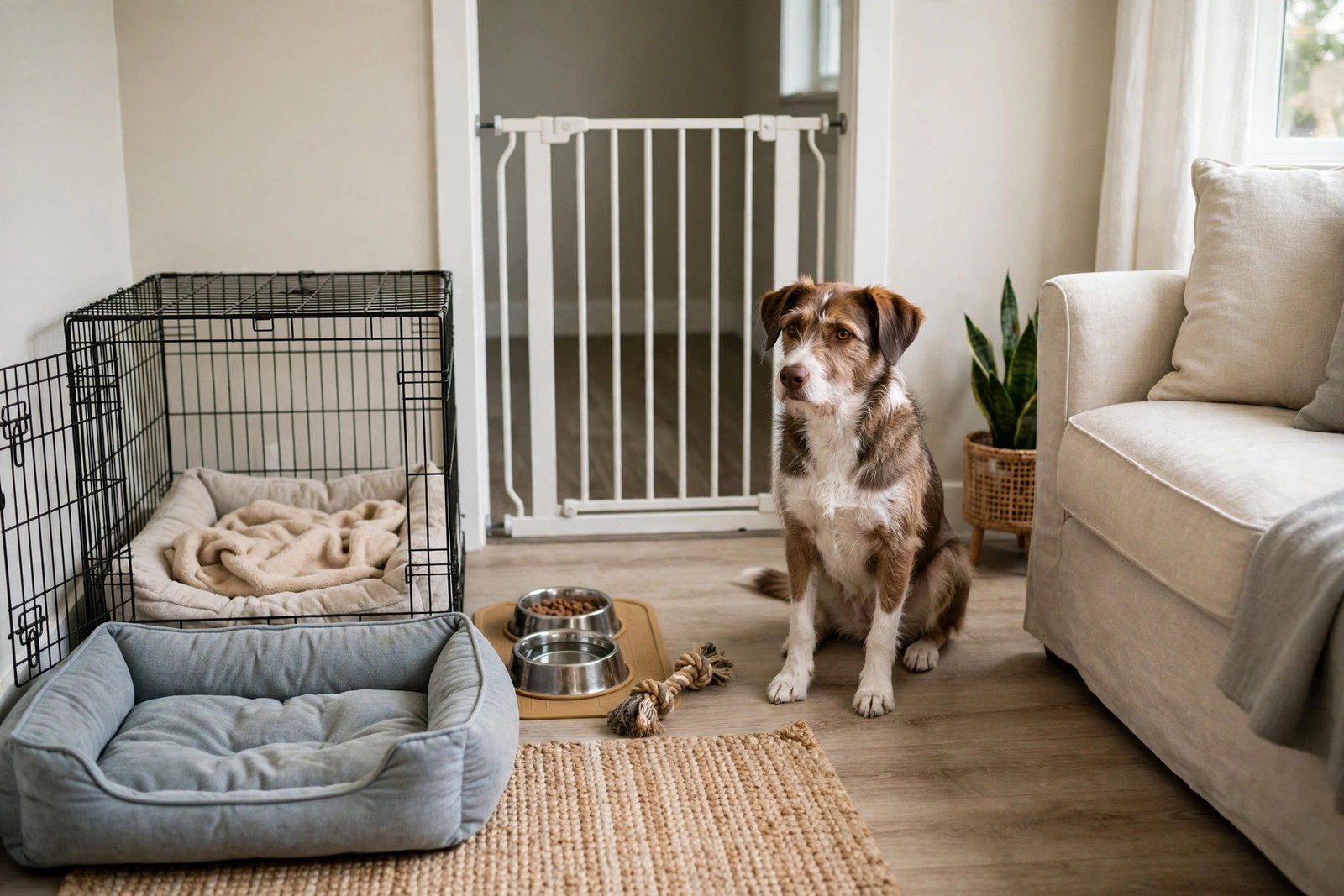
A rescue dog's first days are not about exploring your whole home; they are about learning that one small part of it is safe, predictable, and theirs. Set that up before collection day, register the practical support around it, and agree how the household will behave — and your dog can spend its first week decompressing instead of being managed through improvisation.
Create One Calm Base Room
Choose a quiet room or corner as the dog's base: a comfortable bed, water, a few chew items, and a gate across the doorway so the dog can see household life without being swept into it. An open crate with bedding inside works well as a den for many dogs, provided the door is never used to shut a frightened dog in as a first experience. Keep the base low-stimulation — no stream of visitors, no children climbing in for cuddles, no resident pets crowding the gate. Other rooms can be introduced gradually over days as confidence grows.
Dog-proof that base and the routes to the garden: lift cables, medicines, cleaning products, small chewable objects, and open bins out of reach, put shoes and remote controls away for the first weeks, and check every external door, fence panel, and gate latch as if the dog were already testing them, because a disoriented rescue is the pet most likely to bolt. A garden that contained a settled dog for years may not contain a frightened newcomer on night one.
Stock the Essentials Before Arrival Day
Have ready: food and water bowls, a well-fitting collar or harness the dog cannot back out of, a lead, an ID tag with your number — order it before you collect the dog — waste bags, a long-lasting chew or food puzzle for quiet occupation, and enzymatic cleaning supplies, because housetraining accidents in a new home are normal and should be met with a mop, not frustration. Crucially, bring home a supply of the food the shelter is currently feeding, even if you plan to change it later; an abrupt diet switch on top of a new home is a reliable recipe for an upset stomach, so plan a gradual changeover over a week or more.
Ask the shelter for everything they know in writing: feeding amounts and times, known history, fears and triggers, how the dog has been with other dogs, cats, and children, and any medication or follow-up care. Bring those notes home with the dog, not in a message thread you will lose.
Register the Vet and Book the First Check
Register with a local veterinary practice before arrival if they allow it, and book an introductory check for the first week — sooner if the shelter flags anything. Take the vaccination and microchip paperwork with you, start the chip transfer into your name straight away, and use the visit mainly for a gentle once-over and a baseline weight while your dog learns the practice is survivable. Sort out flea and worming status from the shelter records so nothing is doubled or missed.
Agree the Household Rules and Expect Decompression
Decide before arrival who feeds, who walks, where the dog sleeps, whether sofas are allowed, and what cue words everyone uses, so the dog is not trained three ways at once. Then lower your expectations kindly for the early days: many rescue dogs sleep enormously at first, eat tentatively, and show you only a polite fraction of their personality, with the real dog — for better and occasionally for more challenging — emerging over the following weeks and months. Keep visitors few, routines tight, and toilet trips frequent, especially after meals, naps, and play.
That consistency is easier to hold when the information lives in one shared place: through KinsLe's Family Sharing, everyone at home works from the same profile — the shelter's notes, the feeding changeover, the agreed cues, and the vet details — so a rescue dog learning to trust a household hears one calm, identical story from every person in it.