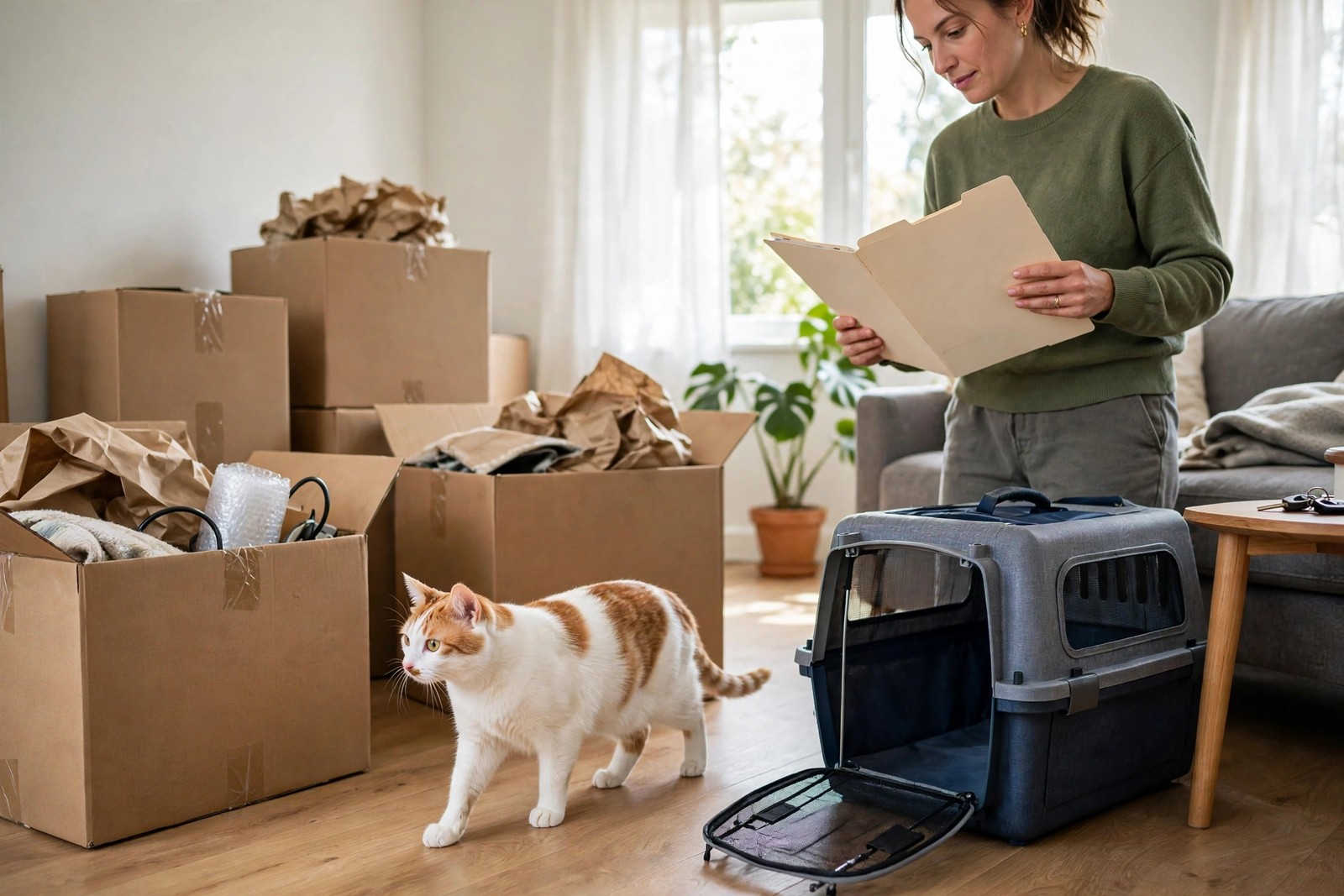
Moving house does not change a single vaccine your cat has had, but it can quietly break the chain that proves it. Records sit on your old practice's system, booster reminders go to an old address, and a cat who needs a cattery or an urgent visit in the new town arrives with no history anyone local can see. Treat the vaccination record as a document that moves with you, and handle the transfer deliberately rather than assuming practices sort it out between themselves.
Get a Complete Copy From Your Old Vet
Before you leave, ask your current practice for a complete copy of your cat's vaccination record, and ideally her wider clinical history too, printed or sent as a file you control. Read it while you can still query it easily: every vaccine entry should show what was given and the date, the next booster due dates should be visible, and your cat's name and microchip number should be correct. If entries are missing, duplicated, or hard to read, ask the practice to clarify or reissue from their system now, because resolving a muddle is far easier with the practice that made the entries than with a new one reading a stranger's paperwork. Keep this copy yourself permanently, not just until the transfer is done.
Register With a New Vet and Transfer the Record
Choose a practice near the new home, register your cat, and hand or send them the record so it is filed on their system before you need it. Ask them to confirm they have received it and that the booster due dates have been picked up, because a record sitting unread in an inbox protects nobody. If the move is short and your old vet stays your regular vet, tell them the new address and phone number anyway, so reminders and the contact details on the record stay current. A first visit for a general check is a good moment for the new practice to scan the microchip, confirm the number matches the vaccination record, and meet your cat while she is well rather than in an emergency.
Update the contact details your old practice holds even if you are leaving them, and do it before the account goes quiet. Booster reminders are often sent by post, text, or email to the details on file, and a reminder sent to your old address in the gap before you register somewhere new is a booster nobody books. The microchip registry is a separate update again, holding your address and phone against the chip number, and changing it does not change anything at the vet, just as the vet's record does not update the registry. Work through both lists in the same sitting so neither is forgotten.
Guard the Dates and Check Local Differences
Moves swallow weeks, and booster dates do not move with them. Note every booster that falls due in the month before or after moving day, and book those appointments, on your vet's advice, before the move takes over your diary or promptly once you are registered at the new practice. Ask the new vet whether anything local changes the picture, because requirements and risks can differ between areas: rabies vaccination is a legal requirement in some places and not others, and a cat who will now go outdoors in a new area may prompt a different conversation than the indoor life she led before. Any change to what she receives or when is your new vet's call, made with her full record in front of them, not a decision to carry over blindly from old reminders. Filing your own complete copy in your cat's KinsLe Pet Passport means her vaccination history stays in your hands through the change of practice, ready for a cattery, a sitter, or an emergency vet in the new town.