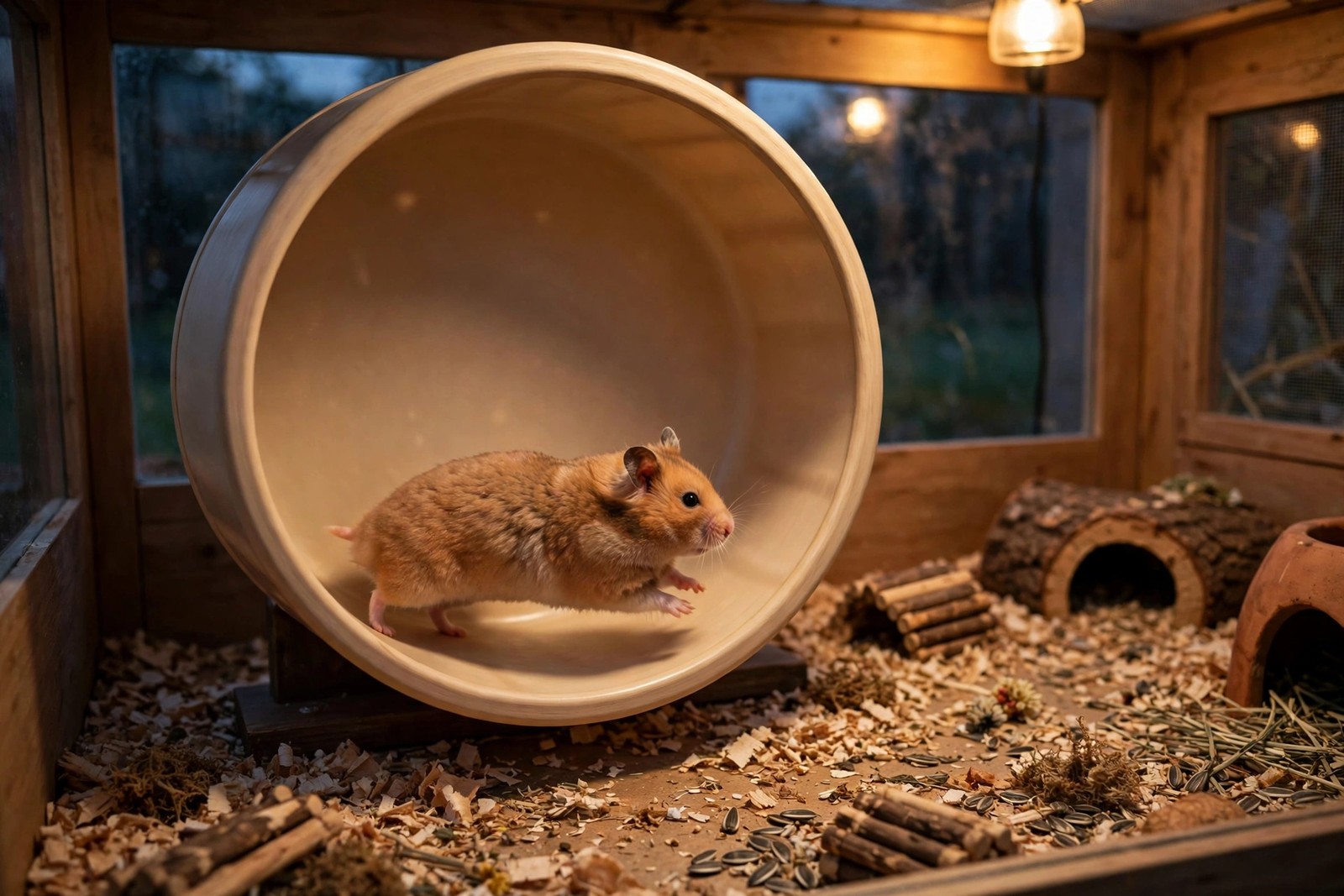
A Syrian hamster needs an exercise wheel at least 11 to 12 inches in diameter, about 28 to 31 cm, and 12 inches is the safer buy for a large adult. Size is judged by posture, not by whether the hamster can squeeze onto the wheel: running correctly, a Syrian's back stays flat, its head faces forward and its body runs straight, with no sideways curve and no head lifted to avoid the wheel's centre hub. A wheel that is too small bends the spine on every stride, and a hamster may cover several miles in a night, so a small bend becomes thousands of strained repetitions. The wheels bundled with starter cages are usually 6 to 8 inches, sized for dwarf species, and they are the single most common piece of Syrian equipment that needs replacing immediately.
Solid Surface, Sound Structure
Diameter is only half the specification. The running track must be solid and smooth, one continuous surface with no wire rungs, no mesh and no crossbars, because a foot slipping between rungs at full speed can be badly injured, and toes can catch in mesh. The wheel should spin freely and quietly on its bearing, stand stable or fix firmly to the cage bars so it cannot topple onto the hamster, and have a closed or well-guarded back so the animal cannot get trapped between the wheel and its stand. Check the width of the track too: a Syrian needs a running surface broad enough for its whole body without rubbing its sides as it runs. Plastic and metal both work when they are solid and washable; a surface fouled with droppings and bedding gets slippery, so a wheel that wipes clean in minutes is the practical choice.
Fitting a Big Wheel Into the Enclosure
An 11 to 12 inch wheel needs headroom. Measure the enclosure's height before buying: the wheel on its stand must clear the lid with space to spare, and deep bedding piled under it can lift or jam it, so many owners place the wheel on a platform or on a cleared area of the enclosure floor. Leave open floor around it rather than packing toys against it, and position it away from the water bottle, which can drip onto the track. Watch the first few evenings closely. A Syrian that runs with a visibly arched back, that runs lopsided against one wall of the wheel, or that stops using a wheel it previously loved is telling you the fit is wrong or the bearing is failing. Replace a worn, wobbling wheel promptly rather than removing it, because a hamster with no wheel loses its main outlet for energy and often takes to bar-chewing or restless climbing instead.
Keeping the Wheel Safe Night After Night
Add the wheel to the evening routine: spin it once by hand to confirm it turns silently and freely, clear any bedding banked against it, and glance at the track for cracks or rough spots that could hurt feet. That check takes seconds, but it catches the slow failures, a stiffening bearing or a loosening stand, before they injure the animal or leave it wheel-less overnight. Note a hamster that suddenly stops running altogether, since a healthy Syrian that abandons its wheel may be unwell or in pain, and a vet visit is the right next step if the change lasts more than a night or two. KinsLe's Care Teams lets you make that nightly spin check and weekly wheel wash a named duty for whoever feeds your hamster, and the timestamped completion keeps the small job from being assumed done by everyone and done by no one.