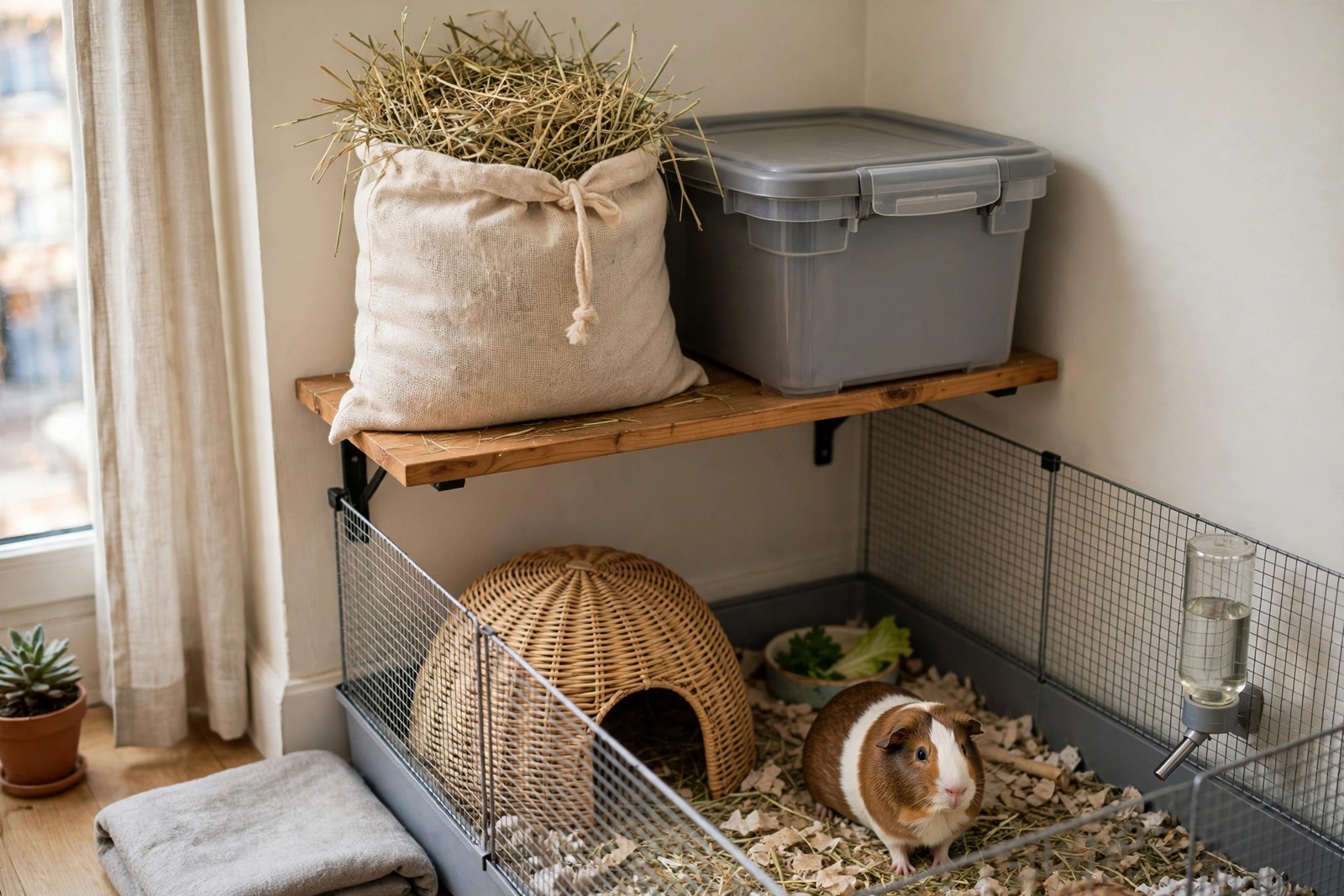
Bulk hay and bedding are the two bulkiest facts of guinea pig life, and in a small apartment they compete for the same few corners as everything else you own. The goal is not a showroom corner but a system: hay kept dry and aired, bedding kept clean and contained, and both stored where the pigs' daily routine can reach them without a furniture-moving expedition.
Hay Needs to Breathe
Hay is dried grass, and it stores best when air can still move around it. A breathable sack, such as a cotton or laundry-style bag, or an open-weave bin keeps hay aired and dry while containing the strands that otherwise migrate across a room. The container to avoid is the sealed plastic bin: hay packed airtight can trap its own residual moisture, sweat in a warm room, and turn musty or moldy from the inside out, and the damage can be well advanced before the lid comes off.
Bedding Wants a Lid and a Raised Spot
Bedding has the opposite brief. Whether your pigs live on fleece or on loose bedding, the stored supply keeps tidiest in a lidded bin, which holds dust and loose pieces in and keeps household moisture and spills out. Raise that bin off the floor on a shelf, a stand, or even a sturdy box, because floors are where mop water, leaks, and cold damp collect first. Fleece bedding waiting for laundry deserves its own washable bag, kept separate from the clean supply, so the clean and used streams never share a container in a small space where they will inevitably be stacked together.
Choosing the Corner
Where storage sits matters as much as what it sits in. Keep hay and bedding away from damp walls, especially exterior walls that run cold and collect condensation, and away from radiators, whose heat dries the air unevenly and warms one side of a sack while the other stays cool. The driest, most temperature-steady corner of the apartment, even if it is an unfashionable one like the top of a wardrobe or a hallway closet shelf, beats a convenient spot against a bathroom wall. Keep the guinea pigs' supply together in that one place rather than split across rooms, because a single storage spot is what makes a quick stock check possible.
Buy for Turnover, Rotate by Opening Order
In a small apartment, the right bale size is the one that fits the space and gets used while it is still fresh. Oversized bargains that take months to finish spend those months aging in a corner. Rotate stock by opening order: the bale or bag opened first gets finished first, and a new purchase waits unopened behind it rather than becoming the one everyone reaches for. A simple marker note on the open sack, with the order it was opened, removes all doubt about which hay is oldest. With the restock list in the Family Sharing notes on KinsLe, the household shares one storage spot and one list, so whoever passes the pet store checks supplies the same way instead of guessing whether hay is needed.
The Bale You Do Not Feed
Storage rules end with a firm one: a musty-smelling or dusty bale is not fed. Mold and heavy dust are not a quality downgrade to use up on less fussy days; they are a reason to discard the bale, check any supply stored against it, and review whether the corner is damper than it looked. Guinea pigs breathe close to their hay all day, buried in it as often as eating it, and their air quality is the hay's quality. Losing one bale to a damp corner is a cheap lesson compared with feeding it and wondering why a pig sounds sniffly.
Family Sharing on KinsLe lets everyone in the apartment check the same supply list before buying, so hay gets reordered before the open sack runs empty.