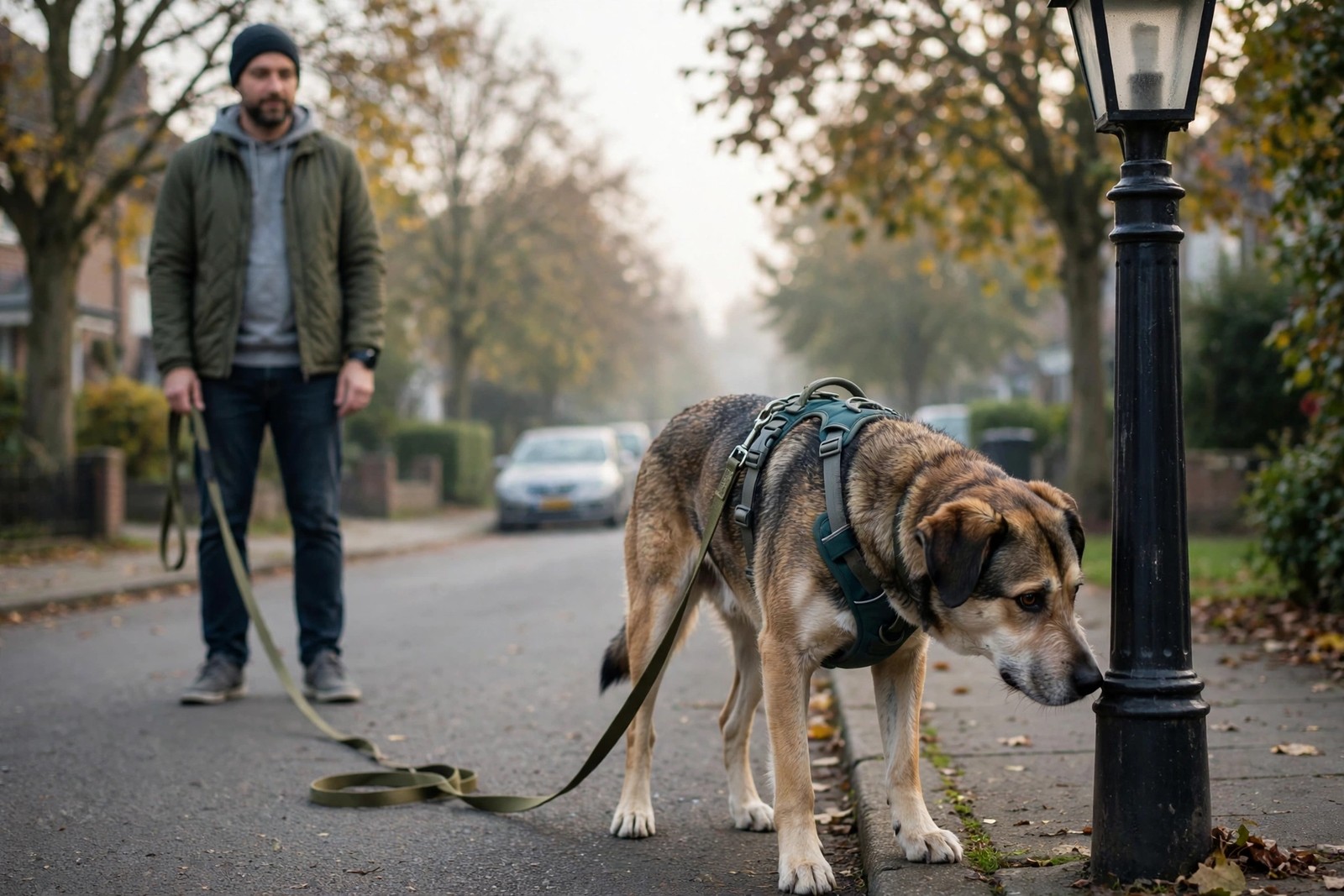
A dog who pulls like a train for the first ten minutes and then walks far better is usually telling you something simple: the start of the walk is when the bladder is fullest and the outdoor smells are newest. Trees and lamp posts are not random targets. They carry scent messages from other dogs, and reaching them, sniffing them, and often urinating beside them is a large part of what the walk is for. Fighting that need head-on makes the whole walk a tug of war; organizing it makes the rest of the walk trainable.
Give Sniffing a Legal Start
Begin every walk with five minutes of free sniffing on a longer lead in one chosen spot, a verge, a patch of grass, or the first cluster of trees on your route. Let your dog choose where to sniff within the lead's reach, stand still, and allow time to toilet. Do not use these five minutes for loose-lead drills. When the sniffing slows on its own and your dog starts checking in with you, the pressure that fuels the train impression has somewhere to go, and you can start the walking part with a dog who can actually listen.
Choose the spot with care: somewhere safe from traffic, not a neighbor's prized flower bed, and consistent enough that your dog learns the walk always begins with this release valve rather than with a battle at the front door.
Turn Trees Into Payment, Not Prizes Won by Pulling
After the sniffing start, walk in short, winnable stretches. Mark and reward a few steps on a loose lead with food, then let reaching the next tree or lamp post be the bigger payment: your dog earns a good sniff there by arriving without dragging you. If the lead goes tight, stop calmly and wait, or turn and walk a few steps the other way, then try again. The rule your dog needs to discover never changes: a tight lead makes trees recede and a loose lead makes trees arrive.
Work tree to tree rather than demanding a whole street of perfect walking. Increase the gap between sniffing stops gradually as loose stretches lengthen. Practice the same pattern on the way home at first if the outbound leg is too exciting, because success on the calmer leg teaches the skill that later transfers to the harder one.
Equipment, Routes, and Honest Expectations
Use a well-fitted harness with a front or back clip that suits your dog, fitted so it does not rub behind the front legs, and a standard lead you can hold securely; a neck collar alone puts the full force of each lunge on the throat. Avoid routes that are one long corridor of triggers while you train, because a quieter street with spaced trees lets you set the gaps your dog can handle. Adolescent dogs and dogs who get one walk a day often pull hardest, so extra sniffing games at home and a calmer departure routine, with the lead clipped on before the front-door excitement peaks, both help.
Pulling that appears suddenly in a dog who previously walked well, or pulling paired with coughing, limping, or frantic behavior that never settles, deserves a vet check rather than more training. Otherwise, expect progress as longer loose stretches, not as a dog who never wants a tree again. With KinsLe Care Teams, you can assign the walk as a duty with the five-minute sniffing start written into it, and the walker marks it complete with a timestamp, so every walker starts the same way you do.