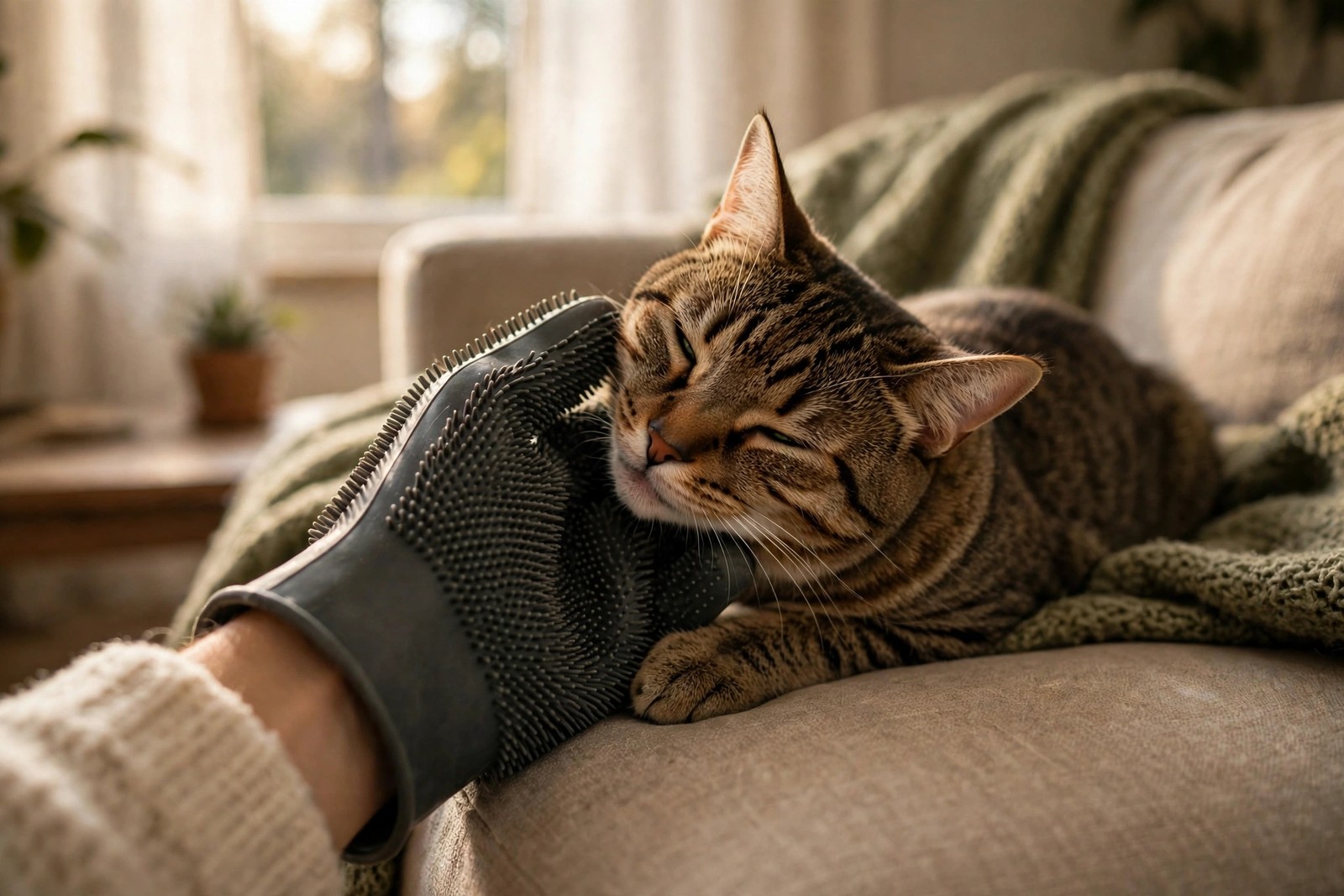
A short coat does not tangle the way a long one does, so the best brush for a short-haired cat is a gentle one: a rubber curry brush or a rubber grooming glove for most cats, with a fine bristle brush as the classic alternative. The job is not detangling. It is lifting loose hair before it lands on your clothes or becomes a hairball, clearing dust and dander from the surface, and spreading the coat's natural oils so a healthy short coat keeps its sheen.
Why Rubber Works So Well on Short Coats
A rubber curry has short, soft nubs that grip loose hair by friction while flexing over ribs, hips and shoulder blades. Because there are no metal pins, it cannot scratch the skin underneath a thin coat, and the stroking motion feels like petting — which is why cats who flee from a proper brush will lean into a grooming glove worn on the hand. Use it in the direction the hair grows, with light pressure, in short sessions. Hair collects on the rubber and peels off in a sheet, which makes a quick weekly groom genuinely quick.
The Fine Bristle Brush and the Comb
A bristle brush with dense, natural-feeling bristles suits cats who enjoy a firmer groom and gives the smoothest finish, polishing the coat after the curry has done the lifting. It is also the kindest choice for kittens and elderly cats, whose skin is thinner and whose coats may be sparse in patches. Keep a fine-toothed metal comb in the kit as well: run it through the coat after brushing during the spring and autumn shed, and check what it collects — gritty black specks can be an early clue to fleas, worth confirming with your veterinarian.
Stiff slicker brushes and aggressive shedding blades are designed for thicker coats. On a short-haired cat they are easy to overuse, scraping skin and stripping out sound hair along with the loose, so if you use one at all, let it be rare, feather-light and stopped at the first sign of flinching.
How Often, and How to Be Welcomed Back
Once a week suits most short-haired cats, rising to twice a week when seasonal shedding peaks. Pick a moment when the cat is already relaxed, brush the back, sides and cheeks — many cats love cheek and chin strokes with the glove — and go carefully or not at all over the belly, tail and back legs, which many cats guard. Stop while the cat is still enjoying it, and pair the end with a treat or play so the brush predicts good things. Watch the skin as you go: flakes, bald patches, scabs or a sudden dislike of being touched are findings for a veterinarian, not for harder brushing. Scheduling that weekly session in KinsLe Care Teams, assigned to whoever the cat trusts most, keeps grooming a steady habit instead of a seasonal rescue when hair is already everywhere.