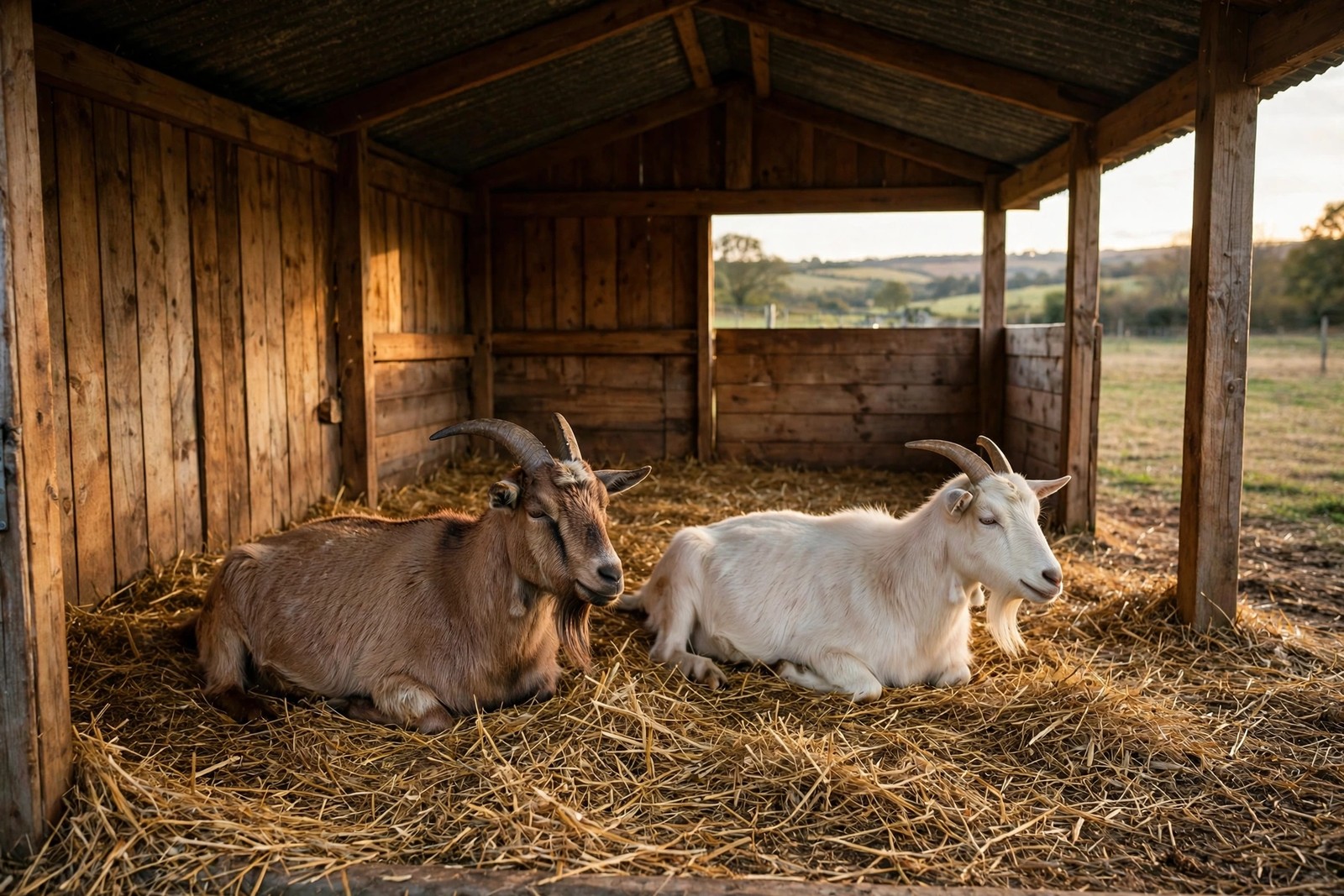
Goats tolerate cold far better than they tolerate wet and draughts, and shelter design follows from that. The shelter must keep rain off their coats and wind off their bodies while letting moisture and ammonia escape, because a sealed, steamy shed breeds the respiratory problems a breezy one avoids. In a mild climate, a sturdy three-sided shelter with a solid roof, sited on high ground and facing away from the prevailing wind and driving rain, can serve year-round. Where winters bring snow, hard frost or weeks of rain, goats need a fully enclosed barn or shed with a door that closes, so the herd can be shut in through the worst weather and through kidding season.
Space, Flooring and Bedding
Allow roughly 15 square feet of indoor space per adult goat, and give large breeds and horned goats more, because crowding indoors is where bullying, injuries and parasite build-up start. Every goat must be able to lie down at the same time without lying in another's space, and subordinate animals need room to move away from the herd's bosses, so corners and a wide doorway matter as much as the headline area. The floor should be raised above the surrounding ground or drained so well that it never sits wet: packed earth or concrete both work when they are kept dry under bedding. Bed with straw or shavings, add fresh material on top between full clean-outs in winter so a deep, dry, insulating pack builds up, and clear it out completely before it becomes damp and compacted, since goats lying on wet bedding lose condition and pick up hoof problems quickly.
Ventilation Without Draughts
Fresh air should enter and leave high up, through vents or gaps under the roof, while the walls stay solid at goat height so no wind cuts through where the animals rest. That combination, open at the top and sealed at the bottom, carries moist air and ammonia out without chilling the herd. Check it in practice on a still, cold morning: the shelter should smell like goats and straw, not sharp with ammonia, and your face should not meet a wall of damp warmth at the door. Keep hay and drinking water under cover where bedding and droppings cannot foul them, and raise feeders so goats cannot stand in them, because a feeder used as a bed contaminates the whole rack of hay. A covered area just outside the door, or a generous roof overhang, gives the herd somewhere to linger in light rain, which goats otherwise refuse to go out in at all.
Details That Separate a Good Shelter From a Poor One
Build and maintain with goat behaviour in mind. Goats rub, climb and push, so fittings must be solid, gates must latch against a determined shoulder, and there should be no gaps where a horned head can wedge, no protruding screws or torn metal edges, and no hay net or rope left where a goat can tangle itself. Keep a separate pen within or beside the main shelter for a doe kidding, a newcomer in quarantine, or a sick goat that needs watching, because borrowing that space from the herd's only shelter never works in an emergency. Walk the shelter after every storm, check the roof for leaks over the bedding, and watch how the herd uses it: goats that crowd one corner are avoiding a draught or a drip you have not spotted yet. KinsLe's Family Sharing keeps your goats' shelter notes, bedding routine and pen assignments on the profile the whole household can see, so a helper checking the herd on a wet night knows exactly what dry, fed and settled should look like.