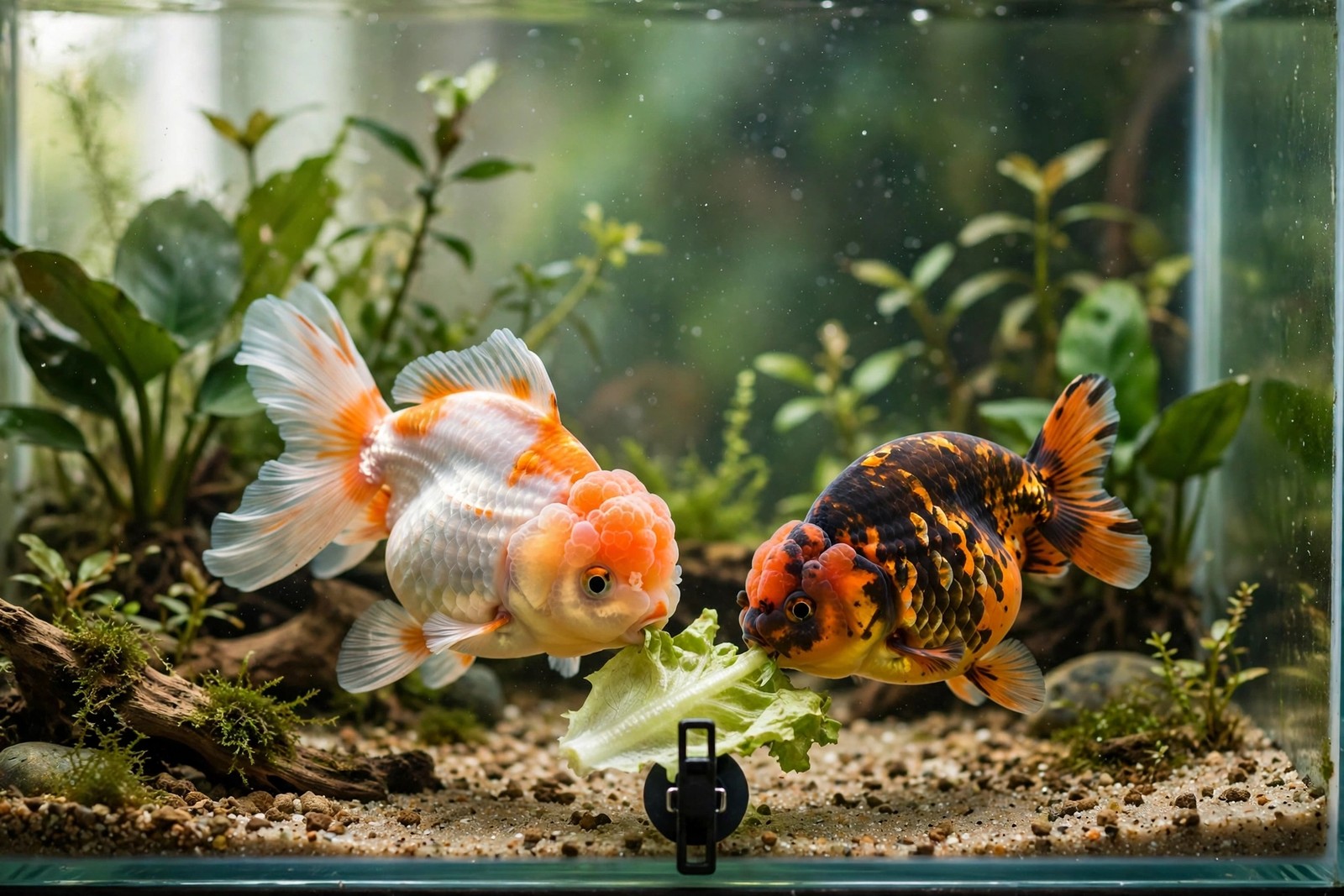
Vegetables are a useful supplement for goldfish, not a replacement for a complete staple food. Goldfish have a long digestive tract suited to plant matter, so soft vegetables add fibre, variety and grazing interest alongside their regular flakes or pellets. The vegetables that work well are specific, and so is the preparation: raw, hard pieces are difficult for a goldfish to tear and digest, while properly softened pieces are eaten cleanly.
Vegetables Goldfish Can Eat
Offer these as the regular rotation:
- Peas — cooked until soft, with the outer skin popped off and discarded. The skin is tough and indigestible, while the soft inner pea breaks apart easily. Peas are the vegetable keepers reach for when a goldfish looks sluggish after overfeeding.
- Zucchini — a thin slice, blanched until it bends easily, then cut into tiny cubes. Goldfish pick at it steadily rather than bolting it.
- Spinach and romaine lettuce — leaves blanched for under a minute until wilted, cooled and torn into small strips. Offer spinach in smaller amounts and less often than the others, and rotate it with lettuce and zucchini rather than serving it daily.
- Cucumber — peeled, deseeded and blanched briefly, then diced small. Unpeeled skin and seeds add mess without nutrition.
- Broccoli — only the soft floret tips, steamed until tender and crumbled fine. Stalks stay tough even after cooking and are usually left uneaten.
Avoid onion, garlic and raw potato, and never offer vegetables cooked in oil, butter, salt or seasoning. Anything from your own plate belongs on your plate only.
How to Prepare Each Serving
Wash the vegetable under running water first, even if it looks clean. Blanch leafy greens in boiling water until just wilted, and simmer or steam peas, zucchini, cucumber and broccoli until a fork presses through without resistance. Drain, then cool the pieces completely in a little tank water — hot food can injure a fish's mouth and gut. Cut or tear everything to a size smaller than the goldfish's mouth, because goldfish cannot chew and will spit out, or struggle with, oversized pieces. For peas, squeeze each cooked pea gently so the two soft halves slip out of the skin, discard every skin, and break the halves smaller for young or fancy goldfish with small mouths.
Judge the portion against the fish's staple meal: a veg serving should be smaller than a normal pellet feed, roughly what the group finishes within a few minutes of grazing. A weighted clip can hold a lettuce piece near the bottom for fancy varieties that swim weakly.
How Often, and What to Remove
Serve vegetables two or three times a week on non-consecutive days, in place of part of that day's staple ration rather than on top of it. Watch the first serving of any new vegetable closely: eager grazing is the green light, while ignored food tells you to soften it further or try a different vegetable next time.
Remove every uneaten piece after a couple of hours. Soft vegetables break down quickly, cloud the water and feed ammonia production in a tank that already carries a heavy goldfish waste load. Check corners, plants and the filter intake when you remove leftovers, because a trapped piece of zucchini can rot unnoticed for days. If leftovers are regular, halve the portion before you change the menu — portion size is usually the problem, not the choice of vegetable.
If a goldfish refuses all vegetables, loses appetite for its staple food as well, or shows stringy pale waste, clamped fins or lethargy, test the water first and speak to an aquatic veterinarian if the signs persist, rather than pushing more new foods.
Keeping a short note of each veg day — which vegetable, how it was prepared and how much came back out — in KinsLe's Care Teams means whoever feeds next follows the same rotation instead of guessing, and the pattern of accepted and refused vegetables builds up where the whole household can see it.