
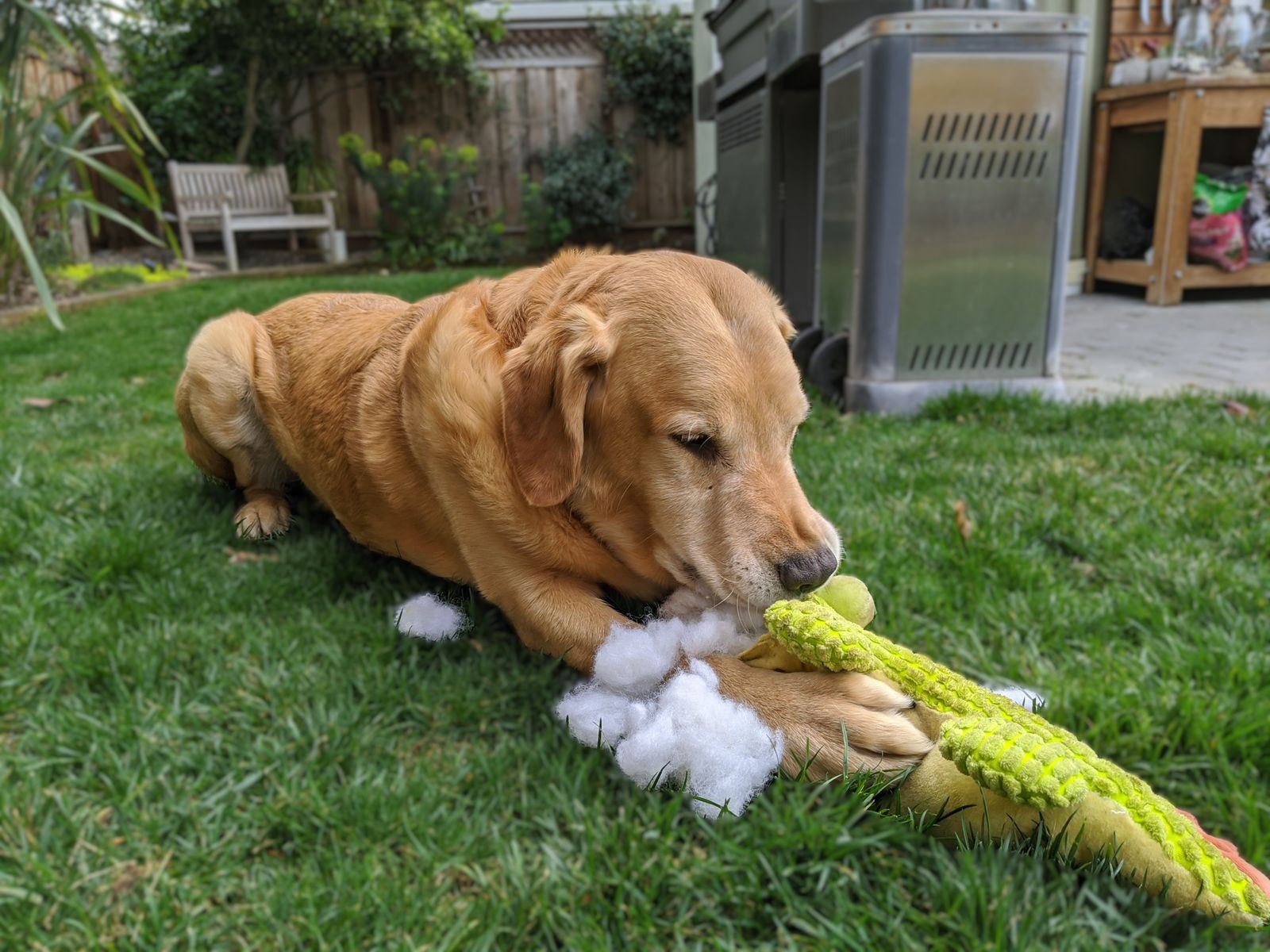
One loose stool in a dog who is still eating, drinking, playing, and asking for walks can usually be watched at home for a day — dietary adventures are the most common culprit, and many pass on their own. Diarrhea stops being a wait-and-see problem when it lasts more than 24 to 48 hours, contains blood, arrives with vomiting or lethargy, or involves a puppy, a senior, or a dog who cannot stay hydrated. Those combinations earn a vet call.
The usual suspects behind a loose stool
Dogs explore the world mouth-first, and their stomachs file the complaints. Rich table scraps, a raid on the trash, a new food switched too quickly, pond water, stress from boarding or visitors, and scavenged finds at the park all commonly cause a day of loose stool. So do some medications, sudden treat changes, and intestinal parasites — which is why a pattern that repeats deserves investigation rather than another shrug.
Ask yourself what changed in the last 48 hours. The answer often names the cause, and it is exactly the kind of detail your vet will ask for if you end up calling.
Watching safely at home
For a bright adult dog with a single episode and no other symptoms, sensible home monitoring looks like this:
- Keep fresh water available at all times and watch that he is actually drinking.
- Feed smaller, simpler meals rather than one large one; your vet's office can advise if you call.
- Track frequency and appearance — note blood, black tarry color, mucus, or straining.
- Skip rich treats, chews, and table food until stools firm up.
- Watch his energy: normal playfulness is reassuring; withdrawal is not.
Dehydration is the main risk, especially in small dogs. Dry or tacky gums, sunken-looking eyes, and skin that stays 'tented' when gently lifted are warning signs. Puppies dehydrate remarkably fast, which is why the home-watch window for them is hours, not days.
The red-flag list: call the vet
Call your veterinarian if diarrhea continues beyond 24 to 48 hours, and call promptly — same day — if you see blood, black stool, repeated vomiting alongside it, refusal to eat, marked lethargy, abdominal pain or bloating, or signs of dehydration. Puppies, seniors, tiny dogs, and dogs with existing conditions like diabetes or kidney disease should be seen earlier on principle. If you suspect he ate something toxic, a foreign object, or medication not meant for him, skip monitoring entirely and call immediately or contact an emergency service. Bring a fresh stool sample to the appointment if you can; it genuinely speeds up answers.
Keeping everyone informed during a messy 48 hours
A sick dog in a busy household generates logistics: who saw the last bad stool, who is calling the vet, who can leave work for the appointment? KinsLe Messenger is the per-pet communications hub — one thread on your dog's profile where family members can log symptoms as they happen, share a photo for the 'is this worse?' debate, and coordinate the vet plan without digging through unrelated group chats. That running record, timestamps and all, doubles as the history you hand your vet.
KinsLe Messenger holds the timestamped stool log, the symptom photo, and the decision about who drives to the veterinarian, all tied to this dog alone.