
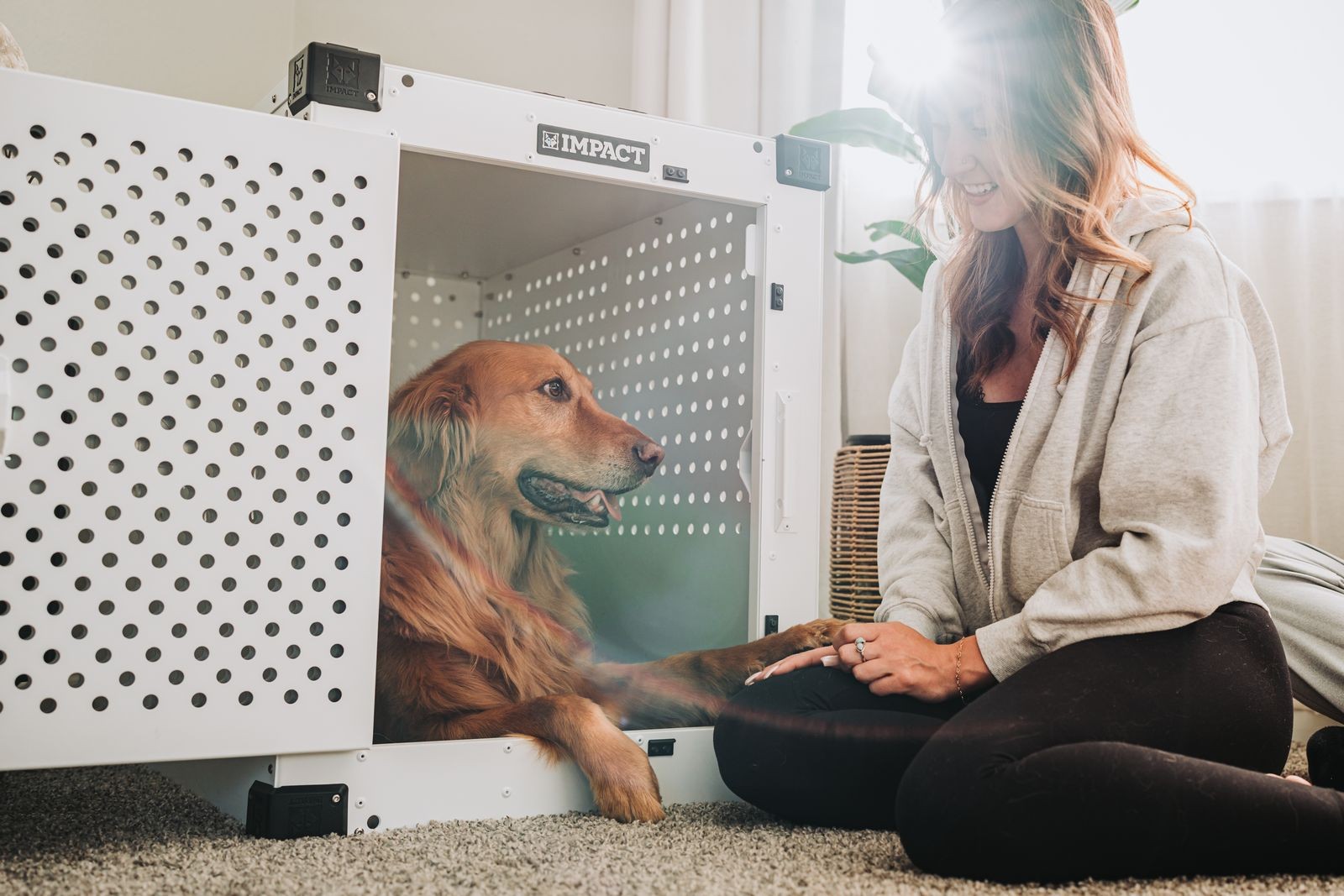
Give your dog space instead of letting the kids play with him any time he is eating, chewing something he values, sleeping, unwell, or showing stress signals — a tucked tail, whale eye, lip-licking, or a body that's gone suddenly still. In those moments, playtime is over with no exceptions and no negotiations, because nearly every preventable bite happens when a dog's earlier, politer requests for space were missed or overruled.
The non-negotiable rest zones
Some situations always mean space, regardless of how relaxed your dog seems. Meals and long-lasting chews top the list: guarding food is a normal, ancient dog behavior, and a child wandering into it creates risk out of thin air — feed in a quiet spot the kids don't enter. Sleep is second: startled dogs can snap before they're fully awake, which is why the old saying "let sleeping dogs lie" is literal safety advice. Add his crate or bed at any hour — that's his room, and children never follow him into it — plus any time he's hurt, recovering from surgery, or just off his food and unusually quiet.
Reading the "not now" signals
Dogs rarely go from fine to biting without a staircase of warnings in between. Teach yourself and the kids to watch for:
- Turning the head or whole body away, or walking off mid-game
- Yawning, lip-licking, or panting when it's not hot or tiring
- Ears pinned back, tail tucked, or the whites of the eyes showing
- A hard stare, stiffening over a toy or chew, or a low growl
A growl deserves special mention: never punish it. A growl is a smoke alarm, and punishing it doesn't remove the fire — it removes the alarm, leaving a dog who may skip straight to a bite next time. Thank the dog, move the kids, and figure out what he was protecting or enduring.
Why the rule actually improves the friendship
Here's the part that surprises parents: dogs who can trust that their "no" will be honored relax more around children overall. A dog who knows he can retreat, keep his chew, and sleep undisturbed has nothing festering — so his voluntary time with the kids becomes genuinely cheerful instead of endured. Kids benefit too: reading a dog's signals and respecting them is empathy practiced in real time, and it transfers to every animal they'll ever meet.
When space needs professional backup
If your dog guards aggressively, can't settle around children even with distance, or has snapped, keep everyone separated with gates and get help: your veterinarian first, to rule out pain or illness driving the change, then a certified professional behavior consultant for a management and training plan. There's no shame in it — it's the same category as calling a pediatrician. Until you have that plan, space isn't a phase; it's the system.
Passing the boundaries to every caregiver
These rules only protect your family if the babysitter and visiting relatives enforce them identically. KinsLe's Care Pass helps: it's a temporary, scoped link you can share with a sitter or babysitter so they see your dog's key information and boundaries — no account or app needed on their end. The "leave him alone while chewing" rule arrives with them, not as a forgotten sticky note. When you head out for one evening, you can send your regular babysitter a Care Pass on KinsLe that lays out the boundaries they must hold: no play while he is eating or chewing a valued item, no following him into his crate, and no waking him once he has settled to sleep.