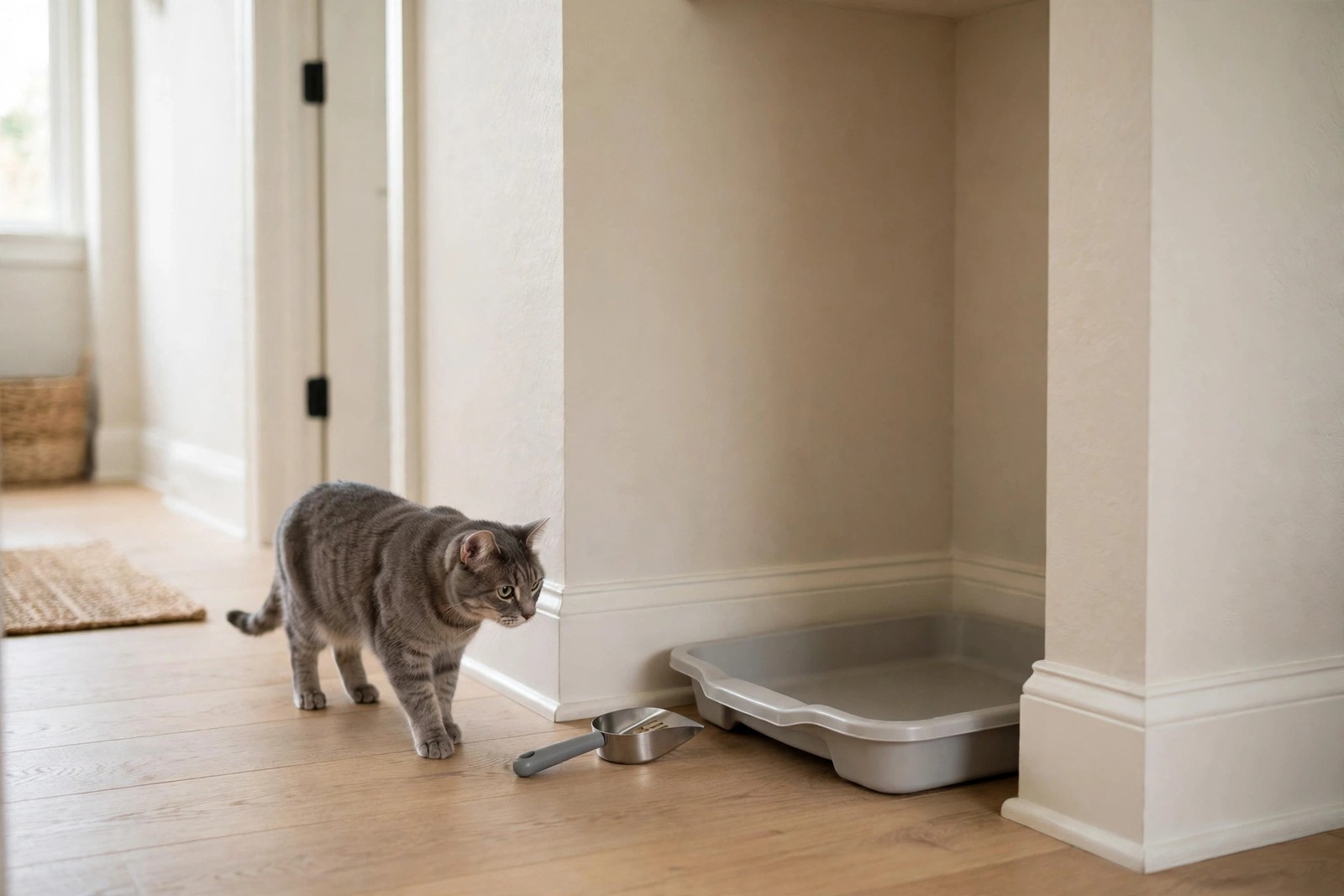
Cats are particular about toilets for reasons built into them: they are both hunters and prey-sized animals, so they want a spot that feels private and safe, with a clear view of anything approaching and an easy escape route. The best litter tray location in most homes is a quiet, low-traffic corner that your cat can reach day and night without asking anyone to open a door, set well away from the places your cat eats, drinks, and sleeps.
Away From Food, Water, and Noise
Never set a tray beside food or water bowls. Cats strongly prefer to keep toileting and eating apart, and a tray in the feeding area is a common hidden reason behind a cat suddenly toileting elsewhere in the house. Appliances are the other frequent mistake. A tray beside a washing machine, tumble dryer, boiler, or furnace sits quietly for hours and then erupts into noise and vibration while a cat is at its most vulnerable, and one fright like that can teach a cat to avoid the tray permanently. Utility rooms work only if the machines are behind a closed door or at the far end of the room from the tray.
Reachable at All Hours, on Every Floor
A perfect tray behind a door that gets shut at night is not perfect. Trace your cat's actual route: can a kitten reach it without stairs, can an arthritic older cat reach it without a long trip, and is it still reachable when guests close doors or a hallway is blocked? In multi-storey homes, place at least one tray on each floor your cat uses, because distance alone causes accidents in the very young, the elderly, and cats recovering from illness. Garages and distant basements fail this test for many cats, and garages add cars, antifreeze, and tools to the risk list. One tray per cat, plus one extra, spread across suitable spots beats several trays lined up in a single room, which cats read as one large shared toilet.
Privacy Without a Trap
Cats want privacy, not isolation. A corner with two ways out suits a multi-cat home far better than a tray tucked into a dead-end cupboard where another cat can block the entrance and ambush the user, a pattern that quietly produces toileting beside the tray instead of in it. Keep the tray out of busy walkways, away from the dog's favourite resting place, and not directly beside a cat flap or external door where strange cats may be visible through the glass. Covered trays hold smells in as much as they hide them, so an open tray in a genuinely quiet corner often wins where a hooded tray in a thoroughfare loses.
Moving a Tray Without Losing the Habit
Once a location works, leave it alone; cats navigate to the tray by memory and smell, and a sudden move across the house can strand the habit. If you must relocate a tray, move it a short distance each day toward the new spot, or set up the new tray while the old one stays in place for a week or two, then remove the old one once the new spot is in regular use. Scoop daily wherever the tray sits, since a clean tray in a decent spot outperforms a neglected tray in an ideal one. Households that share daily scooping and weekly full cleans through KinsLe's Care Teams can see exactly when each tray was last cleaned, which turns the commonest litter problem, simple dirtiness, into one that never gets a chance to start.