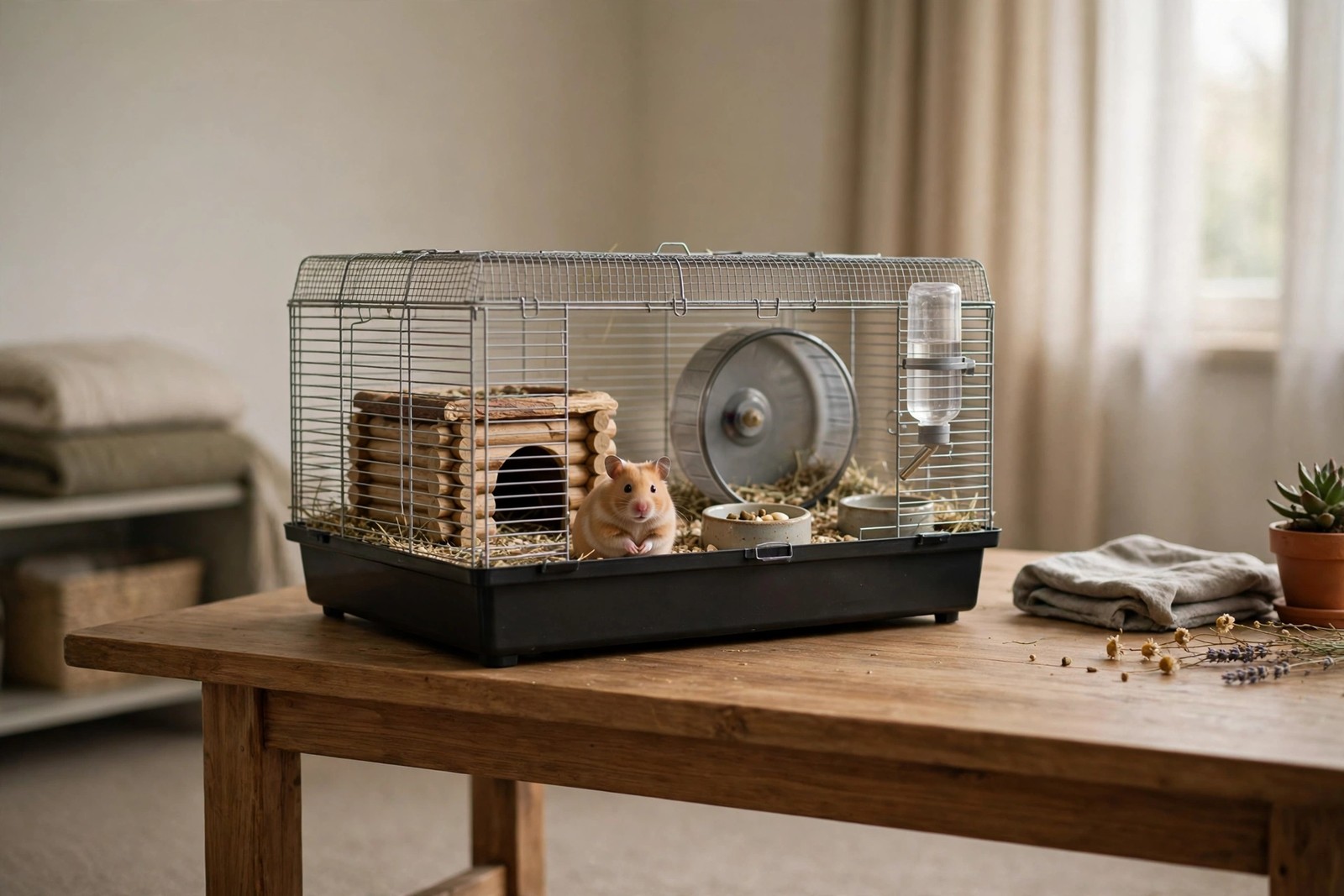
The best room for a hamster is chosen around one fact owners often get backwards: your hamster sleeps through the day and lives at night. A cage spot that looks perfect to a diurnal human, bright, busy, and central, can mean a hamster trying to sleep through television, conversation, and slamming doors, then running its wheel beside your bed at the hour you least appreciate it. Choose for the hamster's day first, then check the nights honestly.
Protect Daytime Sleep: Quiet, Dim, and Undisturbed
Place the cage in the quietest room you have during daylight hours. A spare room is ideal; a calm corner of an adult bedroom often works well, because bedrooms tend to empty out during the day. A living room is usually a poor choice, since it concentrates daytime noise, visitors, music, and the family dog's comings and goings around the cage. A child's bedroom is a gamble: it can be quiet on school days and chaotic with daytime play at weekends, and young children find a sleeping hamster very hard to leave alone.
Keep the cage out of direct sunlight, including sun patches that creep across a room during the day. A hamster in a sunlit cage cannot leave the enclosure to cool down, and a glass or plastic enclosure warms quickly; a spot that is shaded at noon can still cook at four if the sun reaches it then. Curtains and distance from the window both help, but a wall the sun never reaches is the surer fix.
Hold a Steady Temperature: No Radiators, Windows, or Drafts
Hamsters are comfortable in a room that stays roughly 65 to 75°F (18 to 24°C), and stability matters as much as the number itself. Keep the cage away from radiators and portable heaters, where the air beside them runs far hotter than the rest of the room and swings on and off, and away from windows and external doors, where drafts and night-time cold concentrate. Cold, drafty spots are a real risk for a small animal with little body mass, and a cage on the floor sits in the coldest, draftiest layer of air in the house.
Set the cage instead on a level, sturdy surface, a solid table or stand at about waist height, where the temperature is steadier, cleaning and feeding are easy, and the cage is out of reach of dogs, cats, and small children. Check the surface does not wobble when the hamster runs at full speed at night, because a rocking cage on a narrow stand is a fall waiting to happen.
Weigh the Night-Time Side of the Choice
The bedroom trade-off deserves honesty: the room that gives a hamster the quietest day often gives the human the noisiest night, because wheels, water bottles, and determined digging are loud at close range in a silent house. If you are a light sleeper, a spare room, a study, or a quiet landing corner away from bedrooms can suit everyone better, provided daytime noise there stays low. Avoid kitchens in either case, because cooking brings heat swings, steam, and cleaning fumes, and avoid bathrooms, where humidity and temperature jump with every shower.
Once the spot is chosen, keep it chosen. Hamsters navigate largely by scent and habit, and repeatedly moving the cage around the house unsettles the routine you have just built. With KinsLe Family Sharing, you can note the cage's agreed room, its 65 to 75°F (18 to 24°C) comfort range, and its care details in the shared profile, so the whole household protects the same quiet corner instead of improvising a new one.