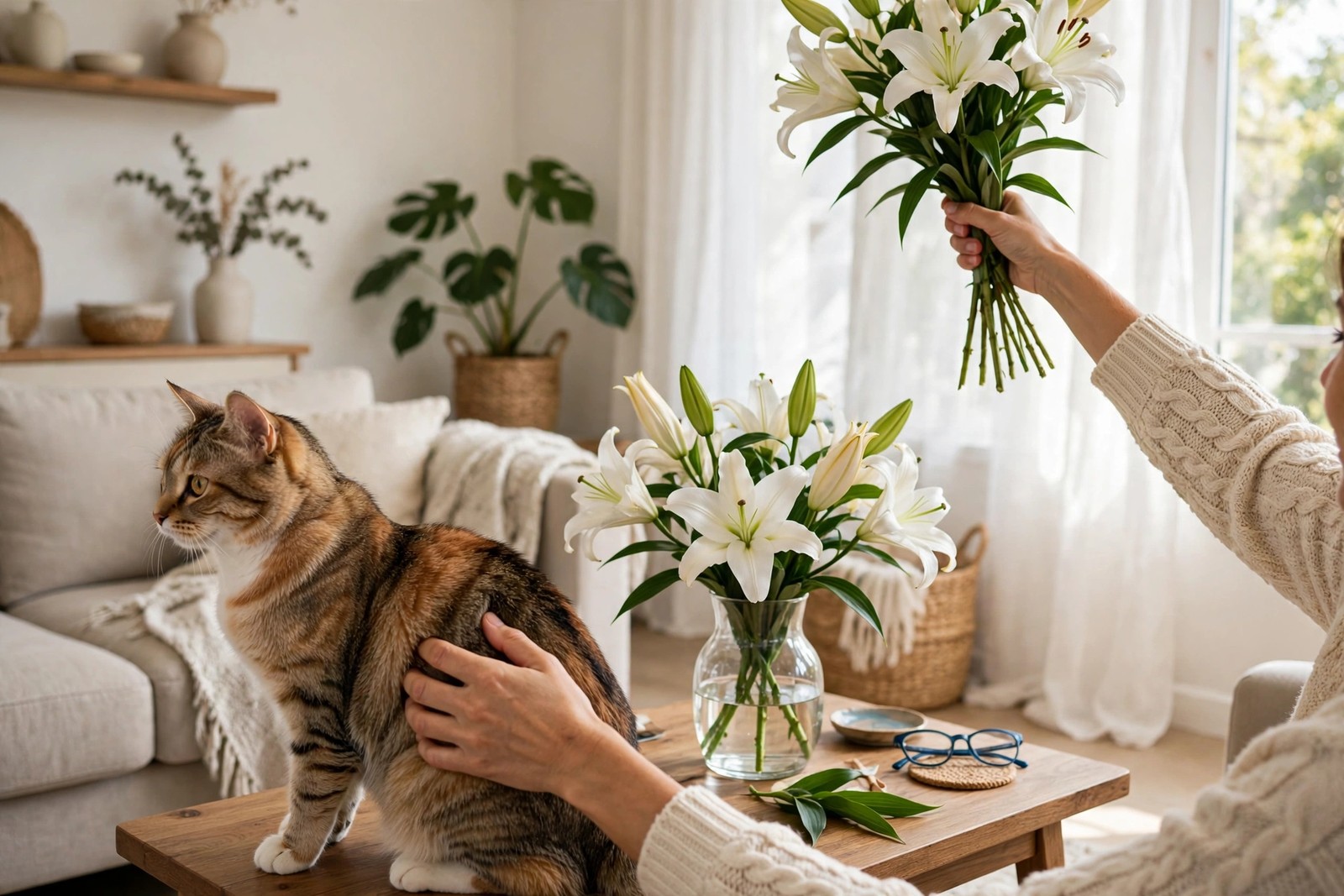
One group of flowers outranks everything else for cats: the true lilies, including Asiatic, Easter, Oriental and tiger lilies, together with daylilies. Every part of these plants is dangerous to cats, the petals, leaves, stems, pollen and even the water in the vase, and the outcome vets fear is acute kidney failure, which can develop within a few days of exposure. A cat does not have to sit down and eat a lily: brushing past a flower, getting pollen on the coat and grooming it off is enough. Treat any lily contact as an emergency, contact a vet immediately rather than waiting for sickness, lethargy or loss of appetite to appear, because treatment works best when it starts before those signs do, and never give a cat anything or try to make it vomit unless a vet tells you to.
The Other Dangerous Flowers in Bouquets and Gardens
Beyond lilies, a familiar cast recurs in florist arrangements and spring gardens. Lily of the valley, a common bouquet filler with tiny white bells, affects the heart. Tulips and daffodils concentrate their toxins in the bulb, but their flowers, leaves and vase water still cause sickness, drooling and stomach pain, and a dug-up bulb chewed in the garden is a serious exposure. Hyacinths carry similar irritants, autumn crocus is highly toxic to the gut and organs, and oleander, sometimes used as cut greenery, is dangerous to the heart in small amounts. Azalea and rhododendron branches in arrangements can cause severe sickness and weakness. Chrysanthemums, the workhorse of mixed bouquets, usually cause a milder reaction of vomiting, drooling and wobbliness, unpleasant rather than life-threatening in most cases, but still worth a vet call. When you cannot identify a plant your cat has chewed, treat it as dangerous until a vet says otherwise.
Why Mixed Bouquets Are the Real-World Trap
Most poisonings do not come from a cat owner knowingly buying a lily; they come from a mixed bouquet received as a gift, where two lily stems sit inside a cheerful bunch of safer flowers, or from pollen drifting onto a table the cat walks across. Build habits that close that route. Check every incoming bouquet stem by stem before it goes in a vase, remove any lily outright rather than relying on keeping the vase out of reach, since cats climb and pollen falls, and place all arrangements in a room the cat cannot enter until you have verified every stem. Ask florists for lily-free arrangements and say the reason plainly, because it is a common request. Grow and buy with the risk in mind: roses, sunflowers, orchids and snapdragons are generally considered safer choices for a cat household, though no flower should be treated as a cat snack, and any plant material can cause an upset stomach if eaten in quantity.
What To Do in the First Minutes
Act on exposure, not on symptoms. Move the cat away from the plant, gently brush loose pollen off the coat before it can be licked, and stop the cat grooming if you safely can. Note the plant's name from the bouquet label or take a clear photo of the flower and leaves for identification, and keep any chewed pieces to show or describe. Then call your vet or an emergency veterinary service at once and follow their instructions exactly, including bringing the cat in even if it looks perfectly well, which is the usual and correct outcome with lilies caught early. Write down what was eaten or licked, how much, and when, because that timeline shapes the vet's decisions. Prevention stays the real cure: a house rule that lilies never cross the door protects a cat far better than vigilance after they are already in a vase. KinsLe's Pet Passport keeps your cat's health records and vet contact details gathered in one packet you can pull up and share in minutes, which is exactly what an emergency like a lily exposure demands.