
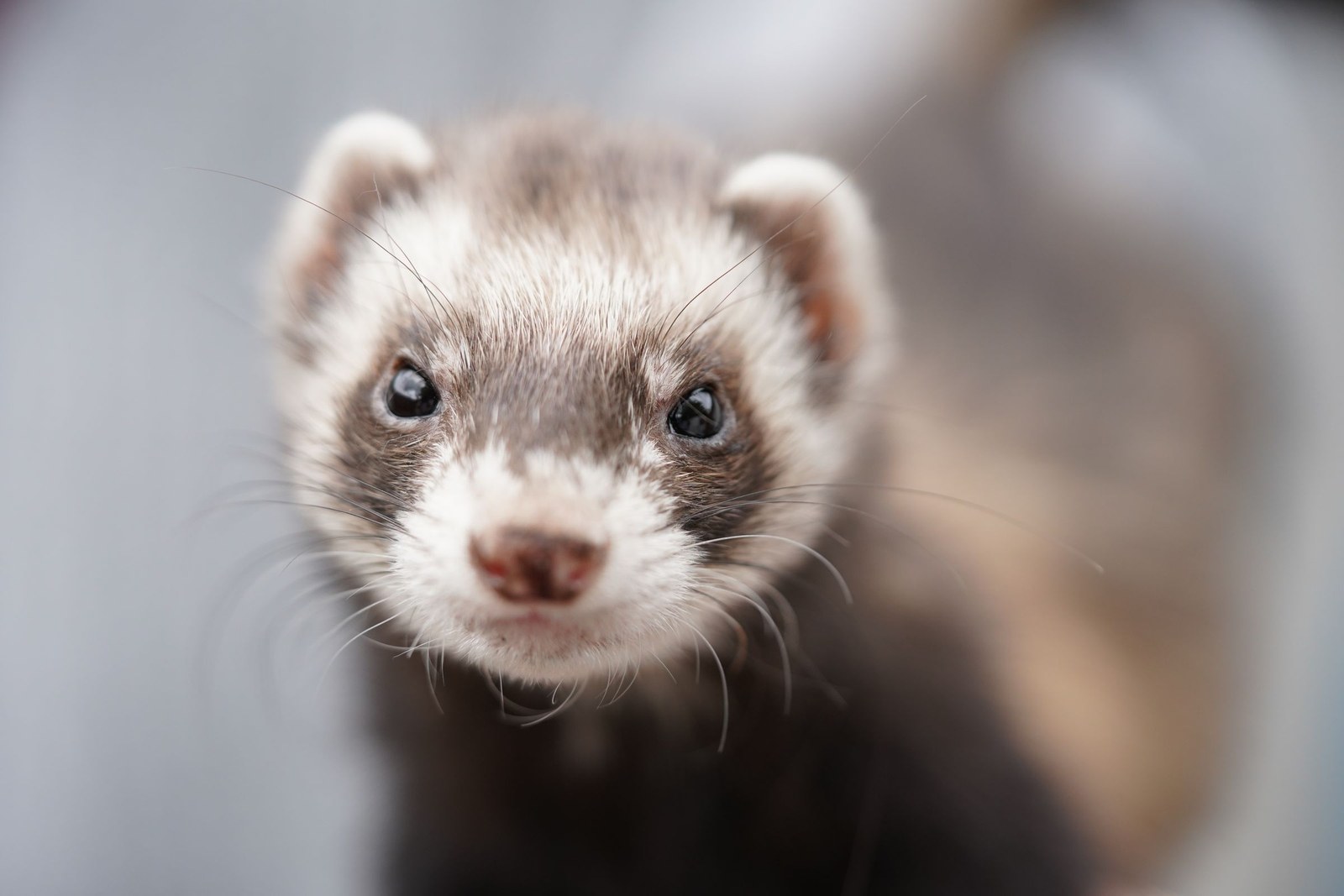
Ferrets need a high-protein, meat-based diet because they are obligate carnivores: animals built to run almost entirely on other animals. Their digestive tract is short, their transit time is fast, and they lack the gut setup to extract much nutrition from plants, fiber, or carbohydrates. A proper ferret diet is rich in animal protein and animal fat, low in fiber, and built around meat ingredients — not grains, peas, or fruit.
Built to Eat Meat, and Only Meat
A wild polecat, the ferret's ancestor, eats whole prey: muscle, organs, fat, and bone. Domestic ferrets inherited that blueprint almost unchanged. Their stomach acid is strong, their intestines are short, and food passes through in just a few hours, so every mouthful has to be dense and easily absorbed. Plant material mostly passes through unused, and a diet bulked out with it can leave a ferret full but undernourished — eating plenty, yet short on the amino acids and energy his body actually needs.
What to Look For on the Label
Choose a ferret-specific food, or a high-quality food that meets the same carnivore profile, with meat or meat meal as the first ingredients. As a general guide, owners look for protein roughly in the mid-thirties percent or higher, fat around fifteen to twenty percent, and fiber kept very low, with the first several ingredients animal-based. Short ingredient lists heavy on named meats are a good sign; long tails of peas, lentils, potatoes, and sweeteners are not. Avoid foods sweetened with sugars or syrups, and be cautious with fish-heavy formulas if smell matters in a small home.
Little and Often Suits Their Metabolism
Ferrets graze by nature. Because food moves through them quickly, many owners keep a measured daily amount of dry food available around the clock rather than serving one or two large meals, topping up fresh food daily and discarding stale leftovers. Fresh water should always be alongside it, in a heavy bowl or bottle that a playful ferret cannot easily tip. Wet or raw-style diets exist, but they spoil fast and need careful hygiene and balance — if you go that route, build it with guidance from a ferret-savvy veterinarian rather than improvising.
Watch the Waistline and the Coat
A well-fed ferret is sleek, bright-eyed, and muscular, with a coat that feels dense and smooth. Seasonal weight shifts are normal — many ferrets bulk up for winter and slim down in spring — but steady gain outside that pattern, a dull coat, or low energy are worth a vet conversation. Ferrets also imprint on food young, and adults can be famously stubborn about switching diets, so transitions should be gradual, mixing new into old over days to weeks. Never let a ferret go long without food if he refuses a change; go back a step instead.
Keep the Carnivore Rule in the Pet Passport
The meat-first rule is exactly the kind of thing a sitter, relative, or new household member can get wrong with the best intentions — offering fruit, cereal, or a low-protein food because it looks wholesome. KinsLe's Pet Passport keeps your ferret's records packet together, including diet essentials, medicines, allergies, and documents, in a form you can share with vets and sitters. Put the diet front and centre: what he eats, how much, and what never to feed. Anyone caring for your ferret then sees the carnivore rule straight away instead of guessing. Inside the Pet Passport packet on KinsLe, keep dated notes on his weight, coat, and any food change, so a veterinarian can read that record alongside the meat-first rule at his next visit.