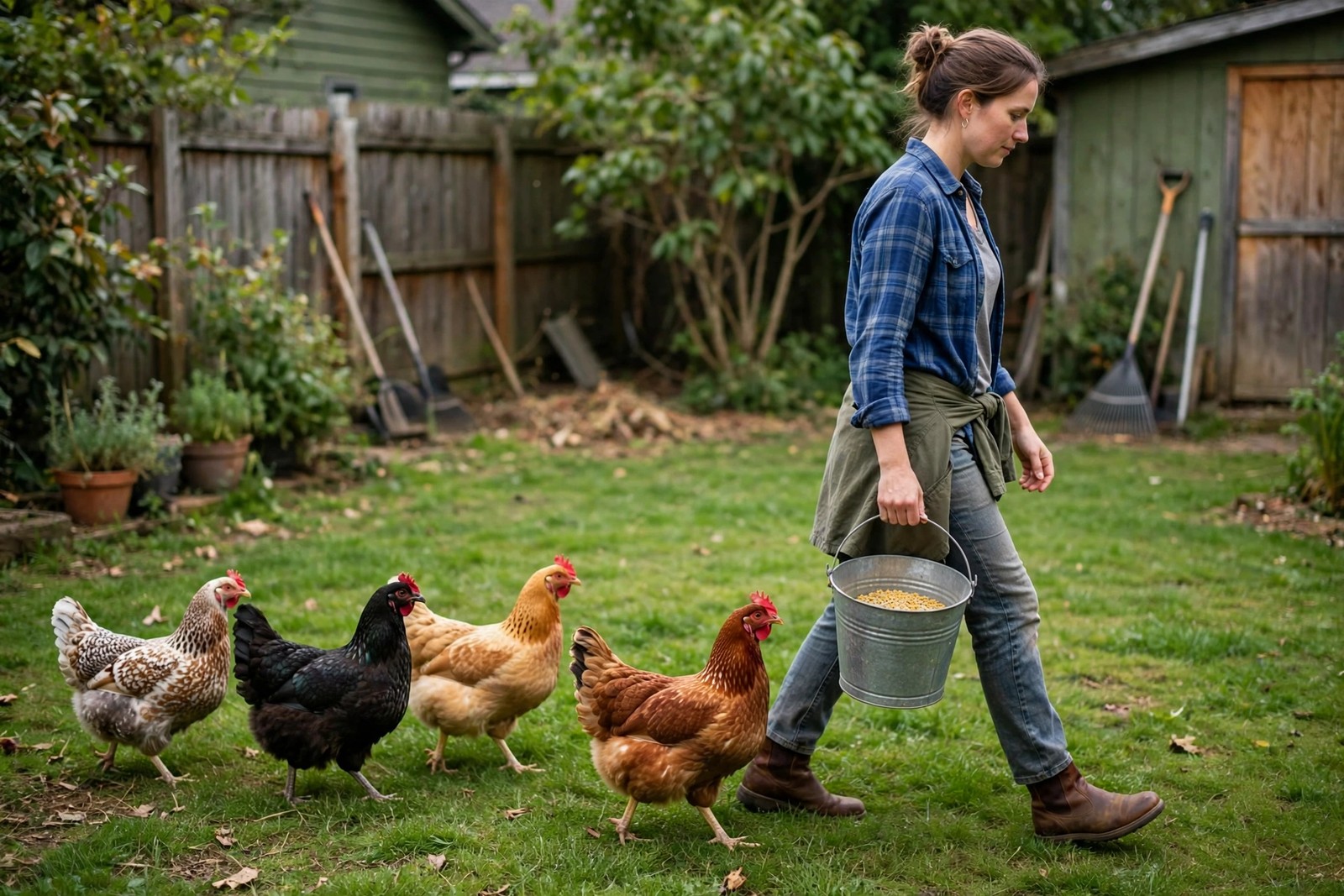
A flock streaming across the yard behind you is not confused, and it is rarely short of food in any real sense. Chickens are sharp learners with excellent memories for who and what predicts a meal, and you — the feeder, the treat-scatterer, the opener of doors — are the strongest prediction they know.
Learned Association, Built Feed by Feed
Every visit that ended in grain, kitchen scraps, or a handful of something interesting taught the flock that following you pays. Chickens recognise individual people, respond to familiar voices, and notice details such as the bucket you carry or the boots you wear, so the parade often starts the moment you appear rather than when food does. Scattering feed as you walk, or calling the birds in each evening, strengthens the habit further: you have effectively trained a recall, one handful at a time.
Curiosity and the Stirred-Up Ground
Food history is not the whole story. Chickens are social foragers who investigate anything new, and a walking person disturbs the ground, flushes insects, and turns leaves and soil in a way worth inspecting. Gardeners know the pattern well: start digging and the flock gathers at your heels to harvest what the fork uncovers. Following also keeps the flock near a large, watchful companion, which feels safer than foraging exposed at the far end of the yard. Young pullets learn the route fastest of all, copying the older hens and attaching themselves to the procession within days of joining the flock.
Living With a Feathered Shadow
Enjoy it, but manage the practical edges. Watch your footing, since a hen underfoot at the coop door is easily stepped on, and teach children to move slowly through the flock rather than running with birds chasing. Keep treats a small extra rather than the flock's real diet, give the birds their main feed first, and keep following rewarded mainly at set times so the flock still spends its day scratching, dust-bathing, and ranging on its own. A bird that follows while bright, eating, and laying as usual is simply being a chicken; one that trails you but stops eating, isolates herself, or looks unwell needs a closer check and veterinary advice if signs continue.
The routine the flock has memorised works best when everyone follows it the same way. KinsLe's Care Teams lets you assign morning feeding, egg collection, and coop lock-up to whoever is home, so the hens get one consistent pattern no matter who they are following that day.