
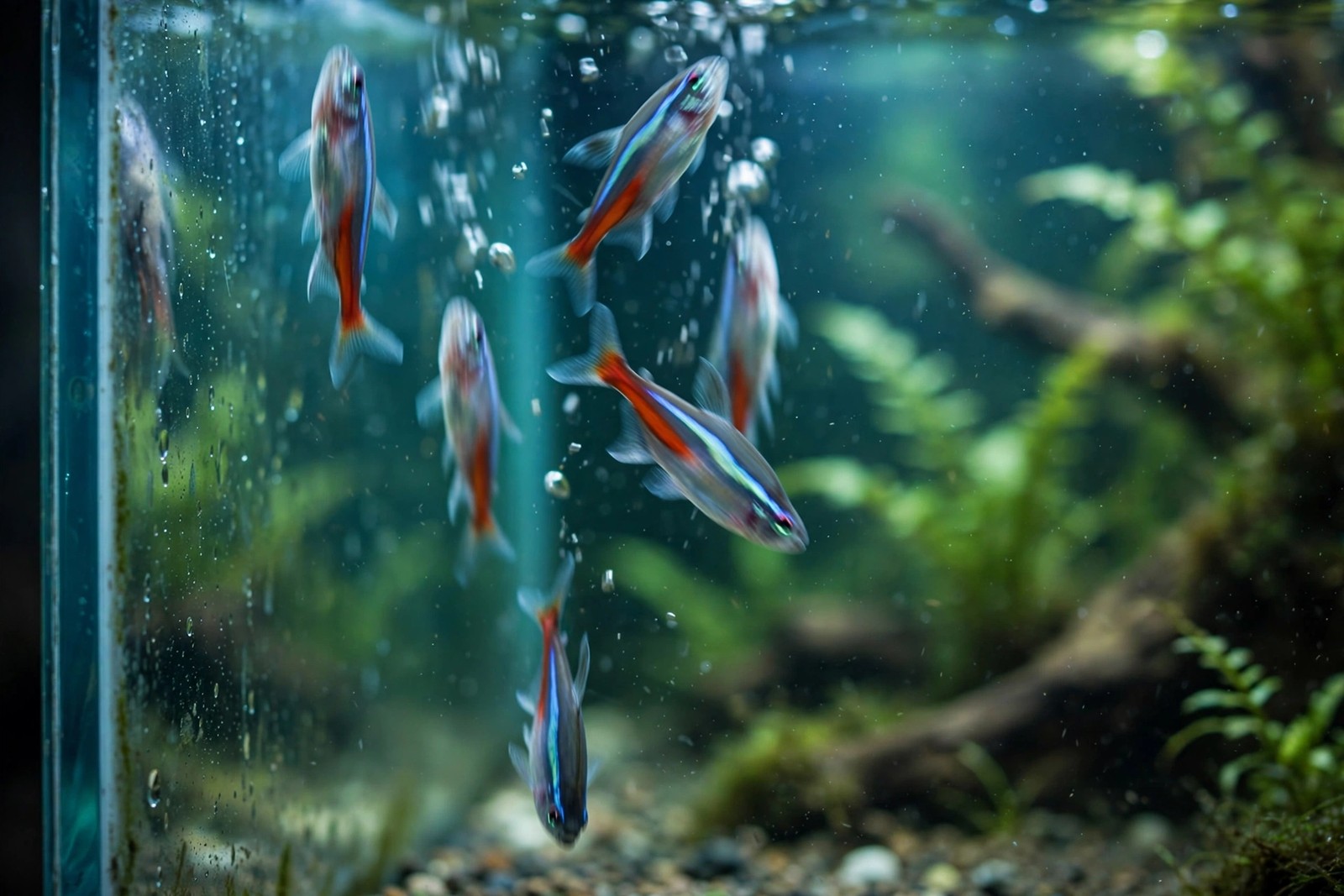
That repetitive up-and-down pacing along the glass — keepers call it glass surfing — almost always means something about the tank is bothering your fish. The usual suspects are a new or changed environment, visible reflections, boredom in a bare tank, or water conditions that deserve a double-check. It's your fish's way of saying the setup isn't quite right yet.
The most common triggers
New tanks are trigger number one. Fish moved into unfamiliar surroundings often pace the walls for a few days while they map their territory, and it usually fades as they settle. Reflections are a close second: bright room lighting against dark tank glass turns the walls into mirrors, and territorial species like bettas will posture at their own reflection for hours. A bare tank with no plants, caves, or visual interest leaves active species — danios, barbs, rainbowfish — with nothing to do but patrol the perimeter. And poor water quality, especially elevated ammonia or nitrite, makes fish restless; glass surfing that starts suddenly in an established tank always warrants a test. Note that some surface species genuinely cruise the top looking for food, so occasional top-glass attention at feeding time is normal behavior, not distress.
How to calm it down
Start with the environment. Add plants — live ones are ideal — and a couple of hiding spots like caves or driftwood so the tank feels three-dimensional and secure. Stick a dark background on the back and sides of the glass; it kills reflections and gives shy fish confidence. If the behavior flares at a specific time of day, check the lighting: a lamp aimed at the tank in an otherwise dark room is a reflection factory, so try softening it or adding ambient room light. Keep a consistent light schedule with a real dark period — constant light stresses many species.
Rule out water issues by testing and logging parameters, then give changes a few days to work. Rearranging decor can briefly restart the pacing as fish re-explore, which is normal. If the surfing continues for a week or more, spreads to other fish, or pairs with appetite loss or clamped fins, it's time to ask an aquatic vet or a trusted local fish shop for advice.
Ask Kimmy about glass surfing
The trickiest part of glass surfing is figuring out when it happens and what changed at the same time. KinsLe's Kimmy, the built-in AI assistant, can take questions about the pacing — whether reflections off dark glass are driving it, whether a bare layout leaves your fish restless, or whether the timing points back to a recent water change. Kimmy inside KinsLe can field follow-up questions about reflections, a bare layout, or restlessness that starts after a water test, with responses shaped by the library behind KinsLe Answers.