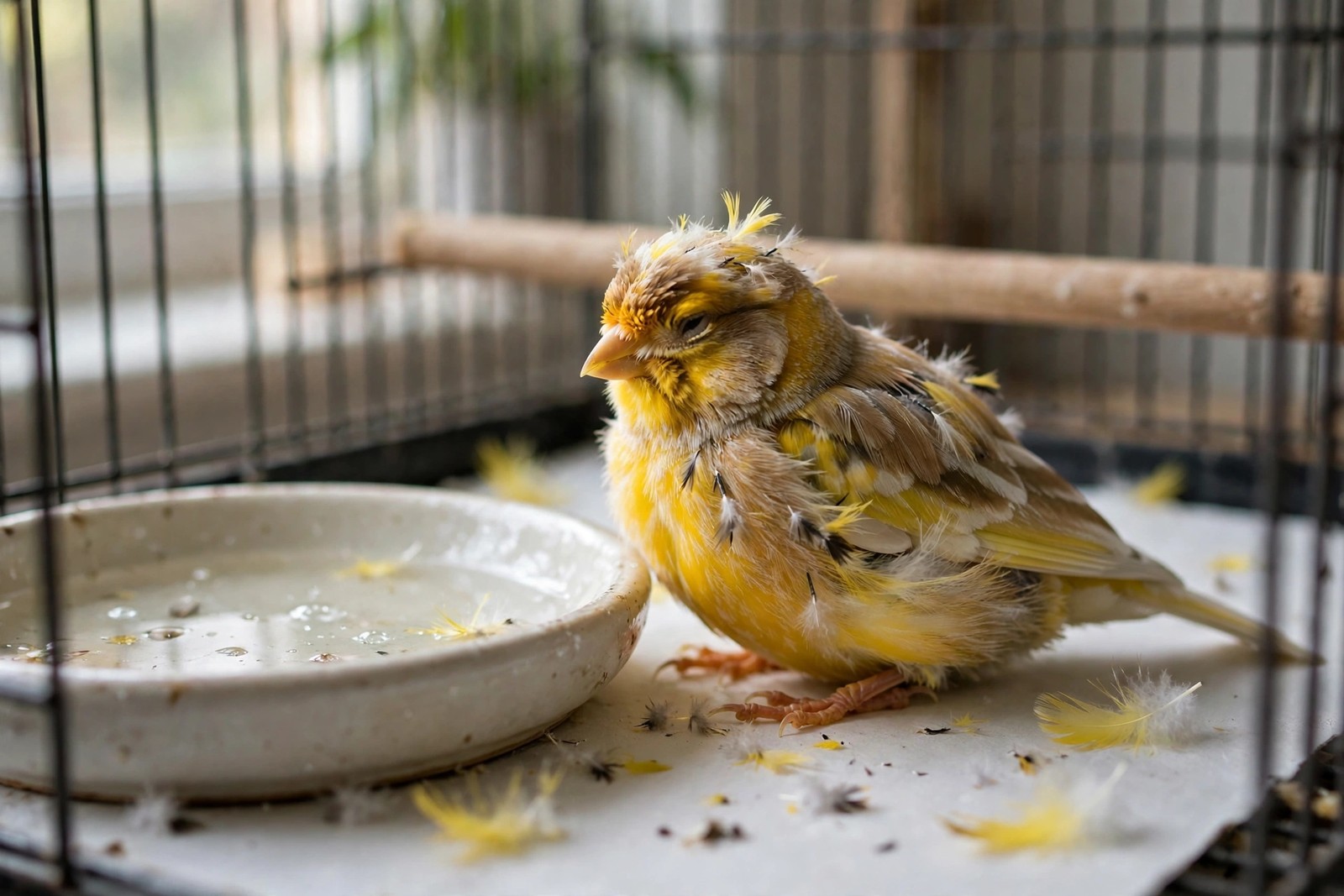
A canary's silence during the molt is planned, not a failure. Singing in a male canary is driven by breeding-season hormones, and it is one of the first things switched off when the molt begins. At the same time, the molt itself is demanding: a canary replaces essentially its whole plumage over several weeks, and feathers are made mostly of protein, so energy and nutrients that powered hours of song are redirected into growing pinfeathers. A bird cannot rebuild its coat and hold a concert on the same budget, so it chooses the coat.
What a normal molt looks like
Feathers come out gradually rather than all at once, so a molting canary looks scruffy in patches, with loose feathers in the cage each morning and spiky pinfeathers appearing on the head and body. He will be quieter in every sense: less singing, less flying about, more resting and more eating, and he may seem touchy because emerging pinfeathers are sensitive and handling is uncomfortable. Most molts run their course over roughly six to eight weeks, after which the song typically returns in fragments first, short phrases practised quietly, before building back to full volume as hormones rise again. A first-year male may take longer to return to song, because he is still maturing his repertoire as well as his feathers.
Feeding, bathing, and rest during the molt
Support the feather factory rather than trying to restart the song. Offer protein-rich foods alongside the usual seed or pellets, such as egg food or a small amount of cooked egg, plus leafy greens, so the bird has building material for new growth. Provide a shallow bath dish most days: bathing softens the sheaths on pinfeathers, eases the itch of new growth, and encourages preening, which is how a canary zips new feathers into place. Keep the cage somewhere calm and draft-free, keep daylight hours steady rather than artificially long, and skip handling and major cage rearrangements until the molt is done, because rest is a genuine nutrient here.
When silence needs a second look
A molt explains quiet weeks, but it does not explain everything. See a veterinarian if feathers fall without new ones growing in, if bald patches spread, if the molt stretches on for months, or if the silence comes with weight loss, laboured breathing, or a bird sitting fluffed on the cage floor, because those signs suggest something beyond molting. Likewise, a canary who finishes the molt in full new plumage and stays silent through the following singing season deserves a check rather than another wait. For the ordinary case, patience is the whole prescription: quiet bird, good food, daily baths, and time. Noting when the molt started, and when the first phrases of song return, in KinsLe's Care Teams gives you a dated record to compare against next year's molt and to show a veterinarian if the pattern ever looks wrong.