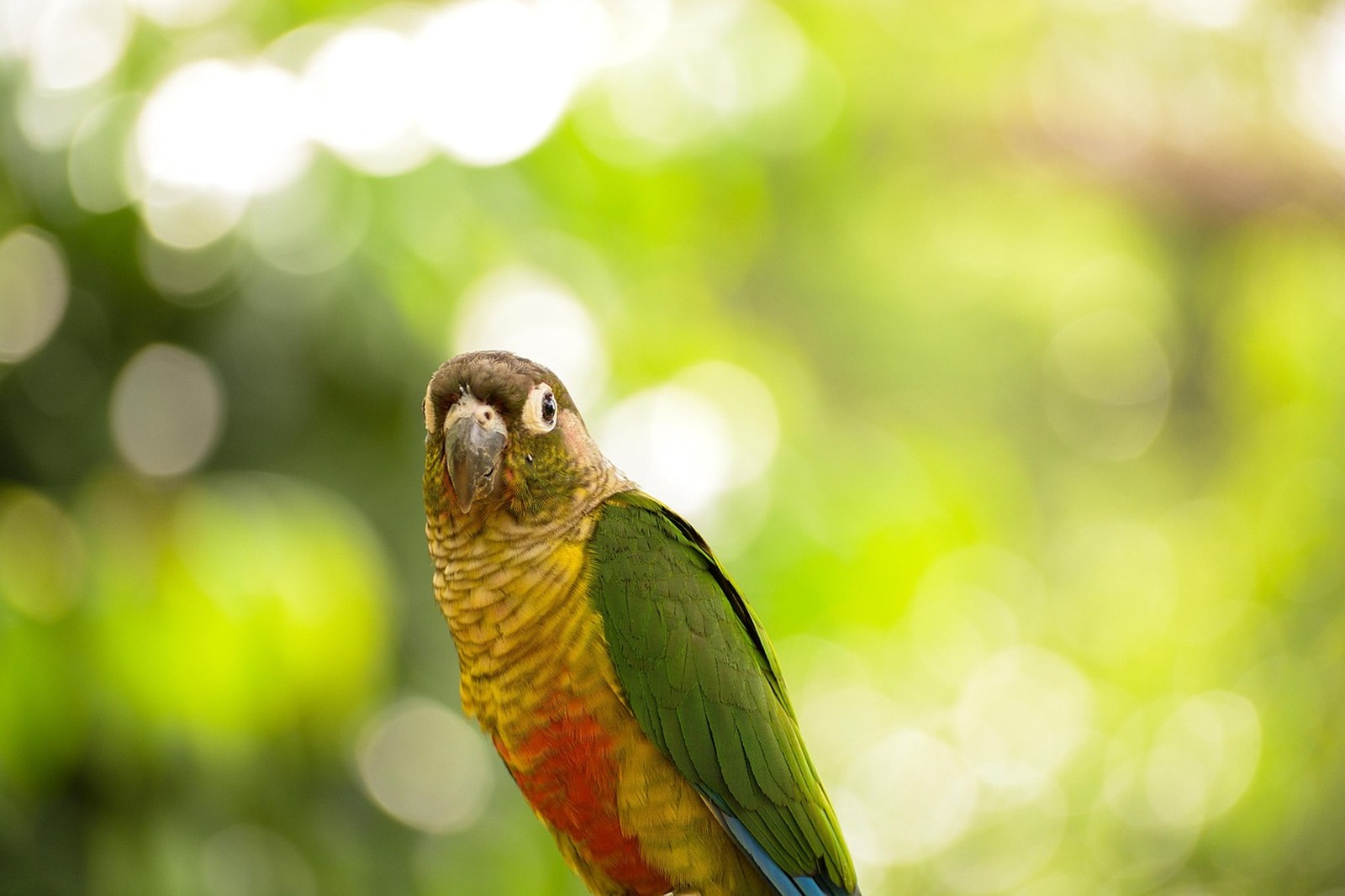
Green-cheeked conures typically live 25 to 30 years in captivity, and a well-kept bird can pass 30. That surprises many buyers, because this small, playful parrot is often sold as an easy first bird. In reality you are taking on a companion who may still be with you in three decades, through house moves, children growing up, and your own retirement, and who needs planning more like a dog or cat than a small pet.
Why Some Conures Fall Short
Diet is the most common reason captive conures die in their teens. A seed-only diet is high in fat and low in vitamin A and calcium, and over years it drives fatty liver disease, poor feather quality, and weakened immunity. Most avian vets suggest a quality pellet as the base, daily chopped vegetables and leafy greens, and seed kept as a training treat rather than the bowl's main content. Converting a seed-lover takes weeks of patient mixing, not a sudden swap.
Sleep is the quiet second factor. Conures need roughly ten to twelve hours of uninterrupted darkness and quiet to keep hormones and mood stable. A bird kept up under living-room lights and television until midnight, night after night, becomes nippy, screamy, and chronically stressed, and that stress shortens life as surely as poor food.
Safety is the sudden factor. Green-cheeked conures are strong fliers and relentless chewers for their size. The classic household killers are non-stick cookware fumes, scented candles and aerosols, ceiling fans, open water, and toxic houseplants or metals. A bird-proofed room and supervised out-of-cage time are lifespan care, not fussiness.
Care Across the Decades
A young conure needs daily social time, training in short cheerful sessions, and a varied environment: rotated toys, foraging opportunities, and regular showers or misting. Through the middle years, annual or regular avian vet checks catch the slow problems, weight creep, beak and feather changes, and early liver strain, while they are still reversible. Senior conures may develop arthritis or vision changes; lower perches, softer landing spots, and keeping food and water within easy reach keep an old bird comfortable and confident.
Because the bird will likely outlive several routines, write down what works: favourite foods, bedtime, words and cues, vet details, and handling preferences. If you are ever ill, travelling, or rehoming, that record is the difference between continuity and a frightened bird starting over.
A Lifespan Shared Across a Household
No single person should carry thirty years of cage cleaning, chop preparation, bedtime covers, and play sessions alone, and a conure bonds with the whole household when everyone takes part. KinsLe's Care Teams lets you assign those duties per pet to family members, with completed tasks marked by a timestamp, so the daily work behind a 30-year lifespan is shared, visible, and never silently dropped when one person is busy.