
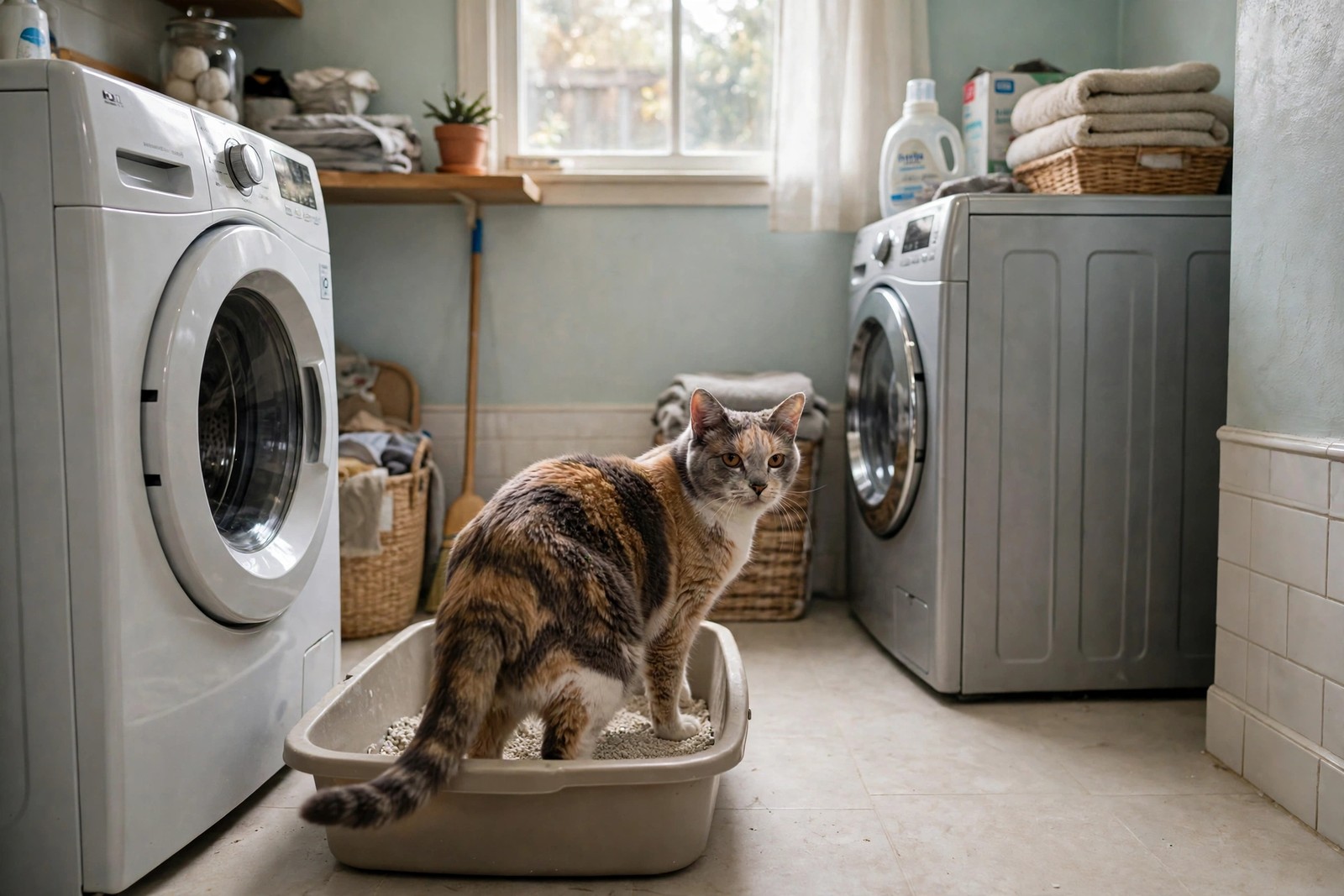
If your cat cries, meows, or howls while using the litter box, assume it may hurt or feel difficult and contact your veterinarian promptly — do not wait it out. Cats are famously good at hiding discomfort, so a cat who vocalizes during urination or while passing stool is giving you a clear, deliberate signal. Whether the problem involves peeing, pooping, or straining with nothing coming out, it deserves attention the same day you notice a pattern, and sooner if the crying is intense or repeated.
Sorting out what is happening in the box
Try to observe, without hovering in a way that stresses your cat, which job is difficult. Is she crying while squatting to urinate, producing small or frequent clumps, or visiting the box many times an hour? Is she straining to pass stool that looks very hard, dry, or unusually small? Is there any blood on the stool, in the urine, or on her fur afterward? Does she lick her belly or rear more than usual, scoot, or leave the box suddenly mid-attempt?
Write down dates, times, and exactly what you saw. "Cried twice Tuesday evening, tiny urine clump, then licked her belly for ten minutes" is far more useful to a veterinarian than "she seems uncomfortable sometimes." If you have more than one cat, note how you know it was this cat — catching her in the act or separating boxes temporarily can matter for accuracy.
Common threads a vet will explore
Your veterinarian may ask about water intake, diet changes, new stressors at home, recent medications, and whether appetite and energy are normal. Straining can stem from urinary discomfort, constipation, intestinal upset, or pain elsewhere in the body, and those possibilities cannot be separated reliably by sound alone. An examination, and sometimes samples or imaging arranged by the clinic, help narrow it down. Avoid labeling it a behavior problem early; cats rarely cry in the box for attention, and treating a painful issue as stubbornness delays relief.
Also consider the box itself after medical causes are on the vet's radar: a box that is hard for an arthritic senior cat to step into, a location beside a noisy appliance, or litter changed abruptly can add stress — but these factors do not explain away crying.
What to do before and after the visit
- Keep fresh water available and note roughly how much she drinks.
- Do not give human painkillers or leftover medicines.
- Keep the box clean and accessible, and avoid switching litters repeatedly while you wait to be seen.
- Seek emergency care the same day if she strains without producing urine, cries continuously, vomits, or becomes lethargic.
How Care Teams keep the story straight
In many homes, one person hears the crying at night and another cleans the box in the morning, so details get lost. With KinsLe's Care Teams, you can assign feeding, litter checks, and other duties and record timestamped completions, while noting who noticed the crying and when — the whole household tracks symptoms consistently instead of relying on memory. That shared log gives your veterinarian a cleaner timeline at the appointment. Your Care Teams log in KinsLe pairs every crying episode with a date, an assigned litter check, and a timestamped completion, so the veterinarian reads one clear timeline.