
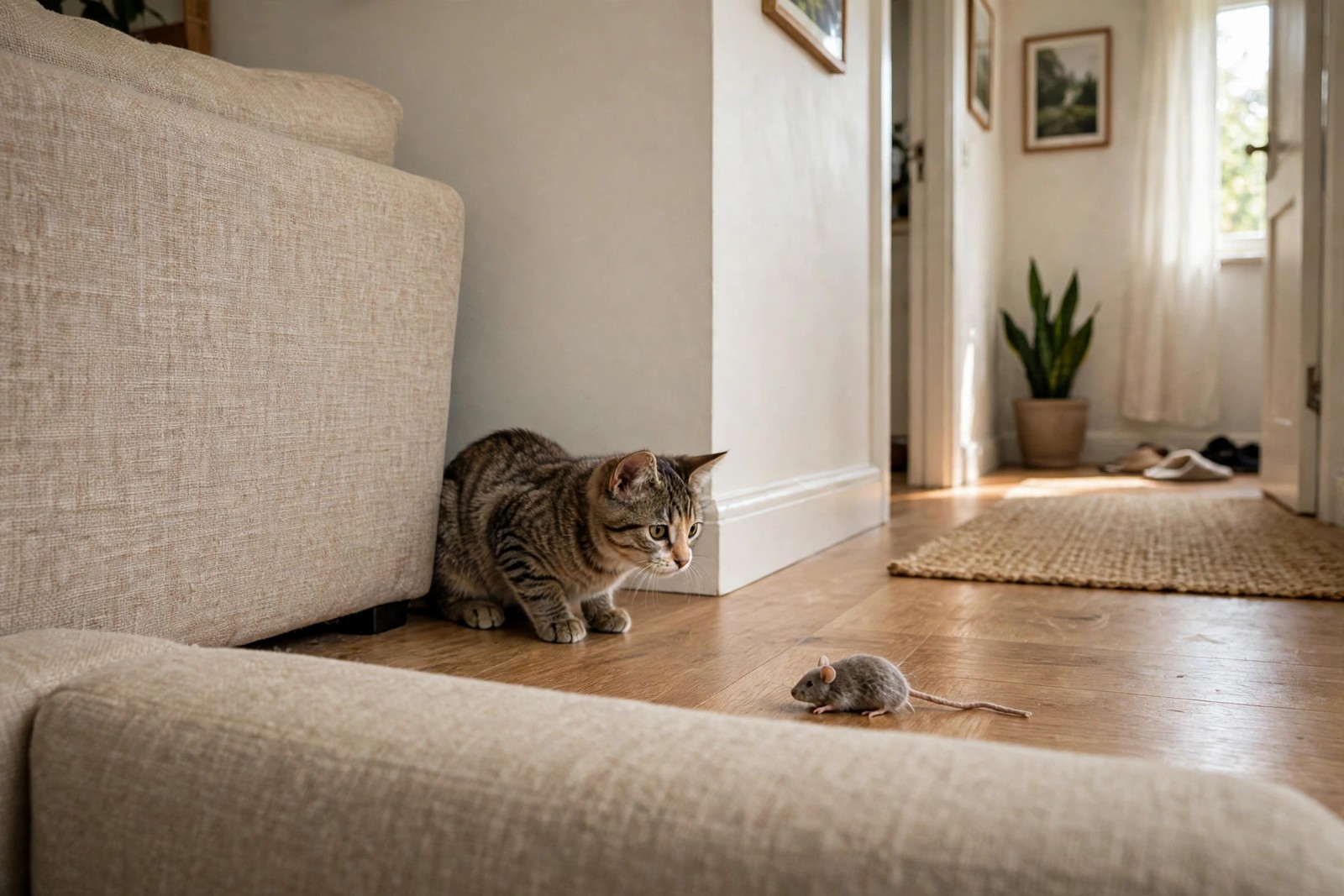
Your cat grabs your ankles because moving feet are the most prey-like things in the house — they dart around corners, disappear behind furniture, and react dramatically when caught. An ankle ambush is usually a sign of under-stimulated predatory play, not spite or true aggression, and it fades when your cat gets enough legal hunting in her day.
Reading the Ambush
True play ambushes have a recognizable script. Your cat crouches low behind a doorframe or sofa, pupils wide, bottom wiggling, tail twitching at the tip. She launches, wraps her front paws around your ankle, may give a soft bite, then bolts away or flops over. Ears stay mostly forward and the whole performance looks gleeful rather than tense.
Contrast that with a cat who grabs ankles with flattened ears, hard biting, hissing, or who only does it when you approach a particular room or resource. That pattern can signal fear, pain, redirected frustration, or territorial stress, and it deserves a different response — starting with a veterinary check if it is new or escalating.
Most hallway hunters, though, are simply bored. Indoor cats, young cats, and single cats with no feline playmate are the classic ankle specialists, especially in homes where everyone is out all day and play happens rarely or only when the cat demands it.
Burn the Hunting Energy Legally
The cure is scheduled hunting, not scolding. Aim for two or three interactive sessions a day, 10 to 15 minutes each, built around toys that let her complete the full sequence — stalk, chase, catch, and 'kill':
- Wand and feather toys dragged around corners and under furniture mimic escaping prey far better than a toy tossed in a straight line.
- End each session with a catch and a small meal or treat, so the hunt feels finished rather than frustratingly endless.
- Add solo options for the hours you are busy: puzzle feeders, a rotating selection of kick toys, paper bags with the handles removed, and a window perch for bird-watching patrol.
Notice her ambush schedule and pre-empt it. If she always strikes when you walk to the kitchen at 7 a.m. or down the hall after work, play first at exactly those times. A tired hunter has little interest in your ankles.
Defuse Her Favorite Ambush Spots
While the new routine takes hold, make the hallway less thrilling. Toss a crinkle ball or toy mouse ahead of you as you pass her known hiding spots, so she chases the decoy instead of your feet. Wear shoes or thick socks for a week if she is drawing blood — not as a long-term answer, but to keep you from yelping and dancing, which is half the reward.
Never kick out, stamp, spray her, or chase her afterward. From her side, a big reaction makes the game bigger. Calmly freezing, then redirecting to a toy, teaches her ankles are boring and toys are where the action is.
When It Is More Than Play
Seek veterinary or behavior help if ambushes come with hard, skin-breaking bites that seem angry rather than playful, sudden personality change, sensitivity when touched around the hips or back, or attacks directed at one person or pet in particular. Pain — especially arthritis or an old injury — can turn a playful grab into a serious one.
Keep Play Going When You Are Away With KinsLe
If work or travel is why play sessions keep getting skipped, a sitter found through the Pet Services Directory on KinsLe can keep the hunting games going in your home — search local sitters, groomers, vets, and trainers in one place and choose someone who understands play-driven cats. Consistent play, even from a stand-in, protects your ankles. The Pet Services Directory listings on KinsLe point you to local sitters who will run the same wand-toy hunts at home while work or travel keeps you out.