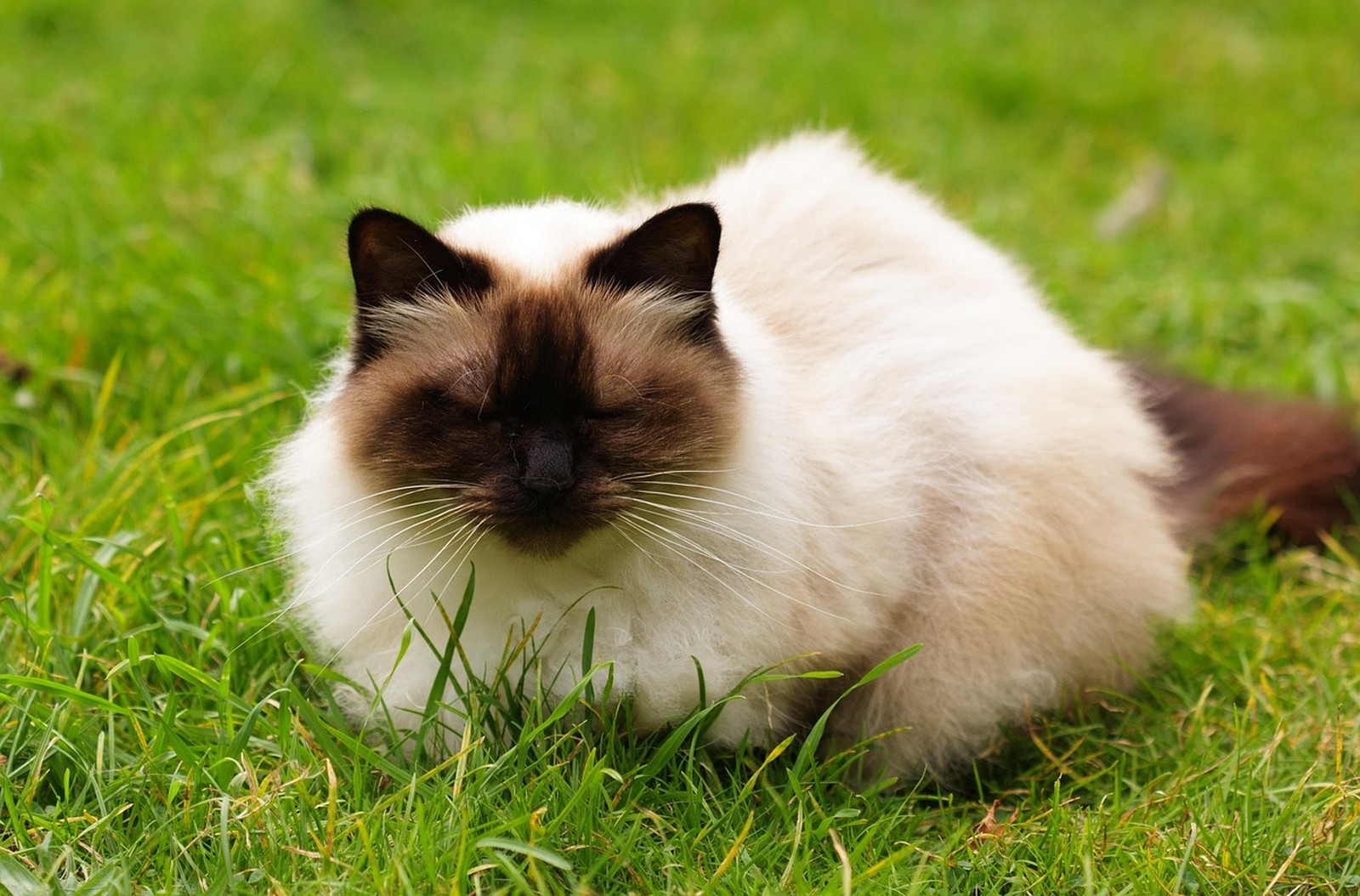
A cat that purrs through brushing along her back and then grabs your hand at her belly is not being inconsistent. She is drawing a line that most cats draw, and it sits exactly where her body is most vulnerable. Understanding why that line exists makes grooming calmer for both of you, because you stop trying to win access she was never going to enjoy giving.
The Part She Is Built to Protect
A cat's underside covers her stomach, intestines, liver, and other vital organs with far less muscle and bone shielding them than her back has. In a fight, cats rake with their hind claws at an opponent's belly, so instinct treats contact there as a threat until proven otherwise. The loose skin hanging along the lower belly, called the primordial pouch, is part of that design. It gives her organs a layer of protection, lets her hind legs stretch to full length when she runs and leaps, and gives her stomach room to expand after a large meal. The pouch is normal on slim cats as well as round ones, and the skin over it is thin and sensitive, so brush bristles that feel pleasant on her shoulders can feel sharp and alarming there.
Overstimulation Arrives Fast
Belly fur is fine, the skin moves easily, and repeated strokes over the same spot build sensation quickly. Watch for the early warnings that she has had enough anywhere on her body: the skin along her back rippling, her tail beginning to flick or thump, ears rotating sideways or flattening, pupils widening, and her head turning sharply toward the brush. Those signals usually come a few strokes before a swat or a bite, and ending the session when you see them teaches her that she does not need to escalate to be heard.
A sudden change is different from a lifelong preference. A cat that used to tolerate belly contact and now flinches, cries, or guards one spot may be sore, and pain, a skin problem, or a lump under the skin all warrant a veterinary examination rather than more determined brushing.
Brush Where She Actually Invites You
Most cats offer clear zones if you let them lead. Cheeks and chin carry scent glands and many cats push into the brush there. The top of the head, the shoulders, and along the back suit a soft brush or a fine comb worked in the direction the coat lies. Let her rub against the brush in your hand for the first sessions, keep the whole session to a couple of minutes, and finish while she is still relaxed, ideally before a meal or a favourite treat so grooming predicts something good. For long coats, work in sections and tease tangles apart gently with your fingers first; never drag a brush through a mat, and have mats that sit tight against the skin removed by a groomer or the clinic, where the skin can be protected properly.
If her belly coat genuinely needs attention, for example loose shedding fur in spring, try one or two light strokes with a damp hand while she is standing and free to walk away, and accept a short session as a success. A cat standing can leave; a cat held on her back cannot, and restraint is what turns tolerance into a struggle.
Write down her map of welcome and unwelcome zones, because sitters and groomers cannot read it from her face the way you can. KinsLe's Care Pass lets you pass that map to a groomer or sitter as time-limited care instructions, belly firmly off limits and first tail flick meaning stop, so her boundaries travel with her to every appointment.