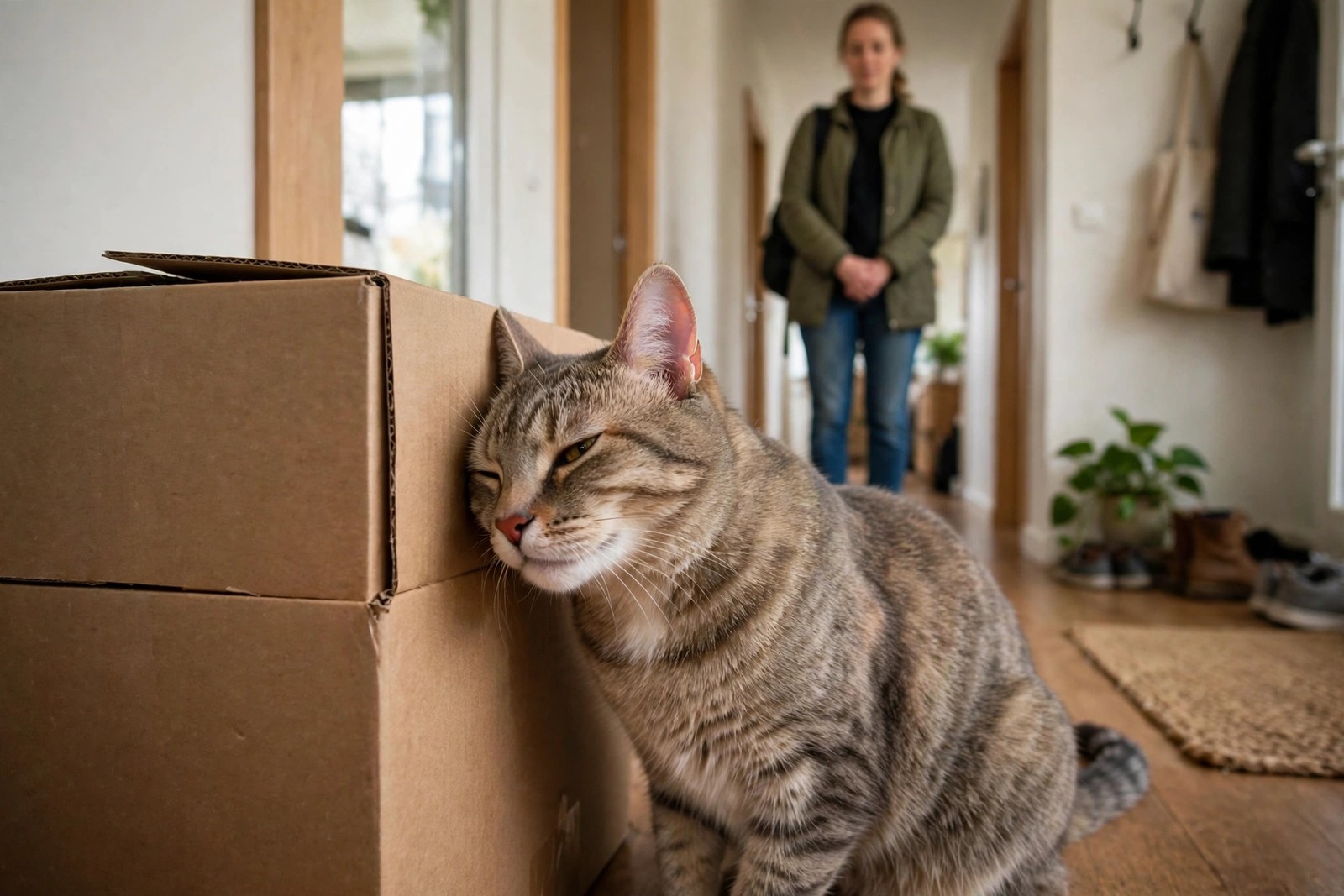
Every new thing that crosses her threshold gets the same ceremony. A delivered box, a guest's bag set down in the hall, the guest herself: your cat approaches, presses her cheek and chin along the surface, and rubs with slow, deliberate strokes, sometimes circling back for a second pass. It looks like inspection, and in a sense it is, but the tool she is using is not her eyes. She is scenting. This behavior, called bunting, is one of the friendliest things a cat does, and understanding it changes how a household should receive both the objects and the people she honors with it.
The Scent Glands in Her Cheeks and Chin
Cats carry scent glands across the cheeks, chin, and forehead, and pressing and rubbing those areas against a surface transfers her scent onto it. The mark she leaves is a familiar, friendly one, closer to a signature than a warning. When she rubs a new object, she is blending its strange smell with her own until it stops smelling foreign and starts smelling like home and like her. When she rubs a person, the same transfer runs as an acceptance gesture: she is including that person in the scent profile of the household. It is social marking, not possessive jealousy, and a cat that bunts freely is usually a cat that feels secure in her territory.
Why New Things Get the Full Treatment
A resident object already carries layers of her scent and needs only an occasional top-up as the mark fades. A new object arrives smelling entirely wrong, of warehouses, other houses, other animals, and strangers' hands, so it earns the thorough version: repeated passes, chin and cheek both, sometimes with her whole flank following through. People arriving from outside carry the same problem in her terms, redolent of the street and other pets, and her rubbing is her editing that smell back toward home. Expect the ceremony to repeat across a visit as scents fade and refresh, and expect favorite visitors to be re-scented at every arrival like furniture that keeps being replaced.
A Compliment, Not a Problem to Train Away
Nothing about bunting needs correcting. She is not damaging the object, claiming it against you, or showing stress; she is doing maintenance on a home she considers hers and yours. The kind responses are small ones: let her finish, offer a cheek-level hand only after she has rubbed, and do not pull objects away mid-ceremony or scoop her up before she has completed it, because an interrupted scenting often just restarts later with more determination. Children and guests do best with a simple briefing, since a cat advancing with her face is asking to mark, not necessarily asking to be grabbed, and letting her set that order keeps the greeting calm for everyone.
The Rare Versions Worth a Vet Conversation
Ordinary bunting is relaxed, unhurried, and spread across many surfaces. The versions that change the response are rubbing that becomes frantic or constant, pressing and rubbing paired with skin sores, hair loss along the cheeks or chin, drooling, or a cat that seems unable to settle. Those signs move the behavior out of the social column and deserve a veterinarian, who can investigate possibilities such as skin irritation, dental discomfort, or other causes a behavior explanation cannot cover. Frequency plus distress is the pattern to act on, not face rubbing itself.
Brief the Household Once, in Writing
Guests go smoother when nobody improvises her greeting. Care Teams holds that briefing as a written arrival plan for the household: named people let her scent new objects first before unpacking or moving them, nobody forces holding or picking her up before she has rubbed a new person, and visitors are told the same sequence at the door so she meets consistency instead of a different greeting from every arrival. New arrivals go smoother once the greeting steps are written in KinsLe as the Care Teams plan for visitors, with her rubbing always coming before any hands reach out.