
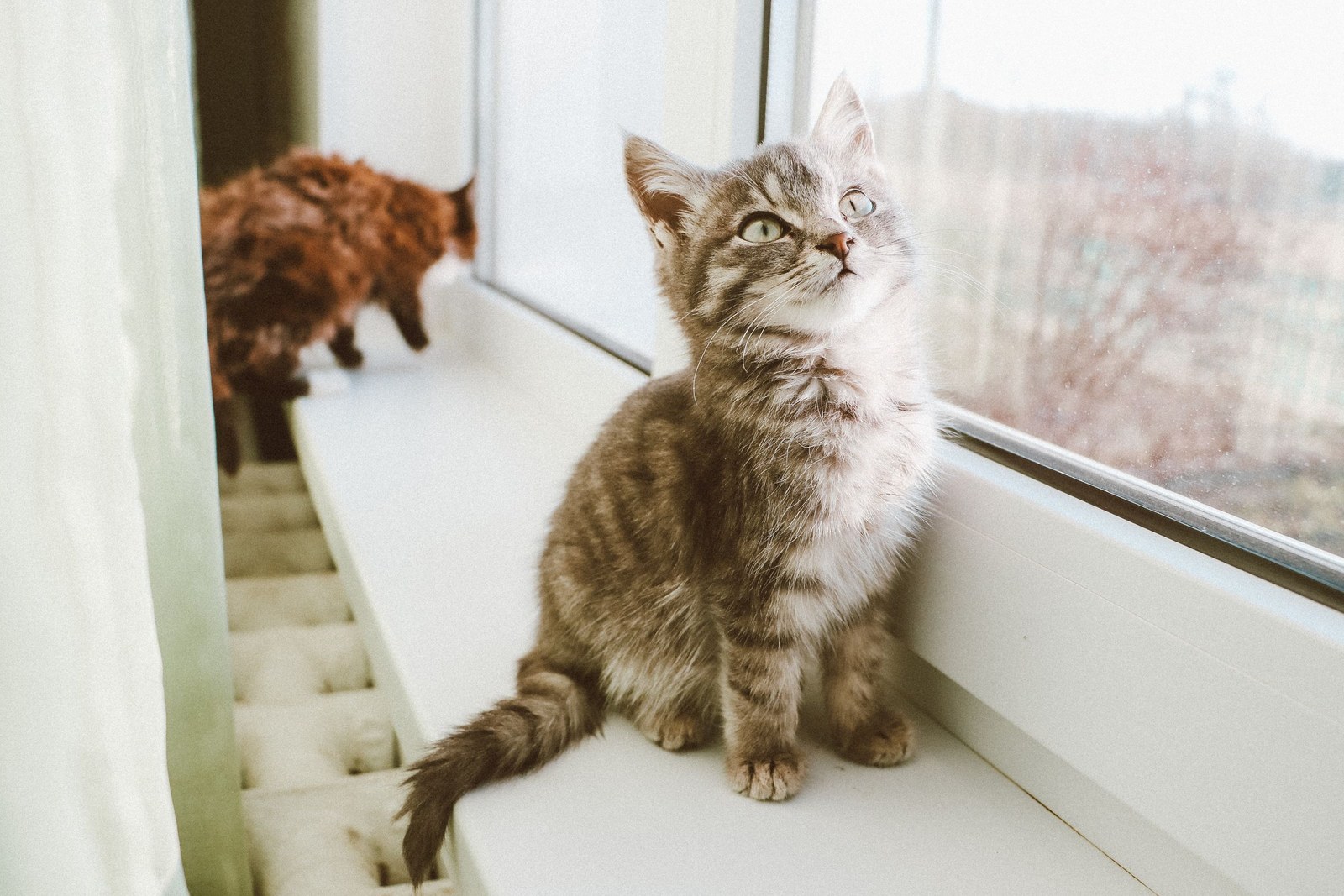
Your cat is sitting at the front door and meowing because something out there has her attention — an outdoor cat passing the porch, interesting smells drifting under the door, birds on the step, or a routine she has learned if she has ever been carried outside, walked on that threshold, or slipped out before. She is not necessarily begging to become an outdoor cat. For most indoor cats, the front door is simply the most exciting square foot of the house: it is where the outside world leaks in.
What she is probably reacting to
Cats experience the doorway through scent and sound long before they see anything. A neighborhood tom spraying near the porch, a delivery driver dropping a package that smells like another household's pets, or the evening rustle of a raccoon can all park a curious cat at the door for an hour. Timing matters too. If her meowing peaks at dawn or dusk, she is syncing with peak outdoor animal activity. If it happens when you grab your keys, she may have learned that the door opening is a daily event worth supervising — and if dashing out once earned her an exciting chase and a treat-filled return, she remembers that payoff vividly.
Watch what her body says alongside the meow. A chirpy, tail-up cat who looks back at you is inviting interaction — she wants you to investigate with her. A cat who crouches low, pupils wide, tail lashing, and yowls toward the door is more likely aroused or frustrated by an animal outside, and opening the door "so she can look" is the last thing to do.
Redirecting the door obsession
Give the doorway competition. A tall window perch or cat tree near a front window gives her the view and the smells through glass, safely. Schedule a vigorous play session — ten minutes with a wand toy she can chase, pounce on, and "kill" — at the times she usually camps at the door, then follow it with a small meal. That hunt-catch-eat sequence satisfies the exact urge pulling her toward the outside.
Make the door itself boring and manage your traffic:
- Never greet, fuss over, or feed her right at the door, so it stays a low-value spot.
- Slip out sideways and keep a foot gently blocking the gap during busy comings and goings.
- Ask visitors to text before knocking, and put her in another room with a treat during deliveries or parties.
- If outdoor cats trigger her, motion-activated deterrents on the porch and keeping outdoor food bowls away from your door can reduce the visitors she is reacting to.
Safety at the threshold
Door-dashers get out eventually, no matter how careful a household is, so plan for the slip as well as the prevention. Keep a well-fitted collar with ID on her even indoors, microchip her and keep the registration current, and know her hiding geography — most escaped indoor cats stay within a few houses, silent and tucked under porches or shrubs, especially in the first hours.
This is where her KinsLe profile does quiet, serious work. Every KinsLe pet profile is free for your first pet, and Lost Pet Alerts are free in every profile. Should a dash succeed, that profile gives you a ready route back: the alert appears on the map, and anyone who spots her can reach you by direct message through her profile, without printing a phone number on her tag and without depending on a shelter's opening hours. Prepare that fallback in KinsLe while she is still only singing at the door: her Lost Pet Alert System entry stays visible to anyone viewing the map; a person who spots her can send you a direct message through her profile.