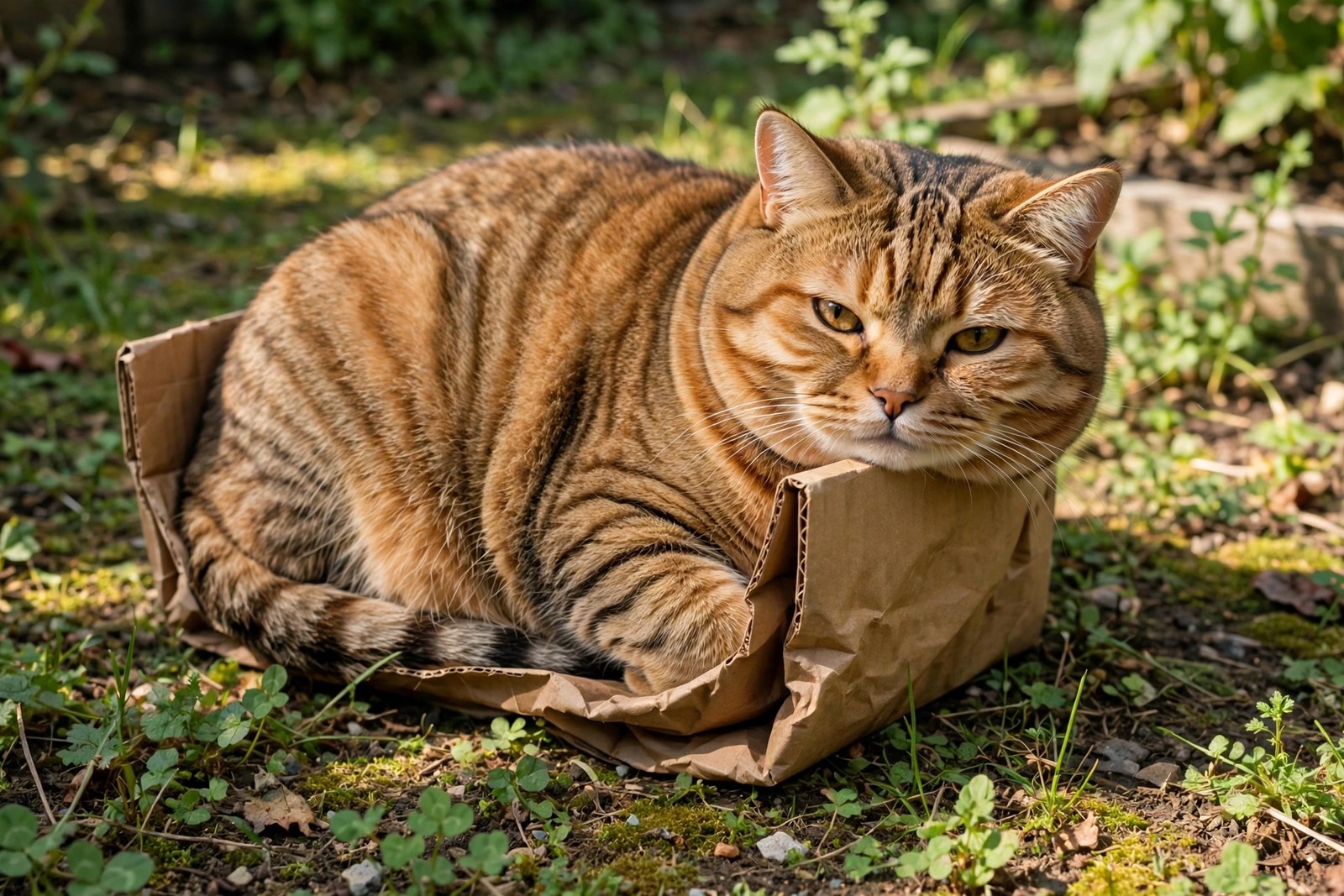
Given a king-size cat bed and a box she can only enter by pouring herself in like batter, your cat chooses the box every time. The comedy hides a serious set of preferences. For a small animal that is both hunter and potential prey, a tight cardboard space is not a compromise at all. It is close to the perfect room, and the smaller it looks to you, the better it often scores with her.
Walls on Every Side Mean Safety
A cat resting in the open has to monitor every approach, and cats are light, broken sleepers for exactly that reason. A snug box solves the surveillance problem with architecture: walls touching her flanks tell her nothing can reach her unseen, one entrance is easy to guard, and the sides support her body so she can fully relax her muscles. That contact on all sides seems to be a large part of the draw, since many cats will sit in a taped outline of a square or on a flat piece of cardboard when no real box exists, settling inside the boundary as if the walls were there. A tight fit also suits a cat's flexible spine and compressible ribcage, which let her fold into spaces that look physically implausible and feel, to her, like being held.
Cardboard Is a Heating System
Cats maintain a higher body temperature than people and are most comfortable in surroundings warmer than the rooms we keep, which is why they chase sunbeams and laundry straight from the dryer. Cardboard is a good insulator, and a small box traps a pocket of air that her body heats quickly and the walls hold in. A large box or an open bed leaks that warmth; a tight box functions like a well-fitted coat. In a cool house you will notice the preference sharpen, with small boxes outranking big ones until summer evens the contest.
A Hide With a View
The same box that hides her from threats also hides her from targets. Cats are ambush hunters that strike from cover, and a box at floor level beside a household traffic route is a front-row seat she can erupt from onto a passing toy, ankle, or another cat. Sitting in the box is rarely only sleeping; it is also being stationed somewhere interesting, which is why a box in a quiet spare room loses to a smaller box in the middle of the living room.
Keeping the Habit Safe and Working for Her
Curate the supply rather than fighting the preference. Offer two or three boxes of different snugness, one in a warm spot and one where the household gathers, and rotate in a fresh one when the old is soiled or collapsing. Check delivery boxes before she claims them: remove staples, loose tape, plastic windows, and any small packets tucked inside, and retire boxes that carried chemicals or strong-smelling goods. Keep boxes away from heaters and open flames, since dry cardboard and a determined napper are a poor pairing near a heat source.
Age changes the specification. A senior cat or one with stiff joints may love the security but struggle to step over a high side, so cut a low entrance into one side or offer a snug, low-sided bed with raised edges that gives the same held feeling without the climb. Never tip or drag a cat out of a box to clean around her; wait her out, because a refuge she can be extracted from stops being a refuge. Put the upkeep on the household rota instead of relying on memory: KinsLe's Care Teams lets you assign the weekly box safety check and rotation to a named person, marked done with a timestamp, so her tight little strongholds stay clean, sound, and exactly as small as she likes them.