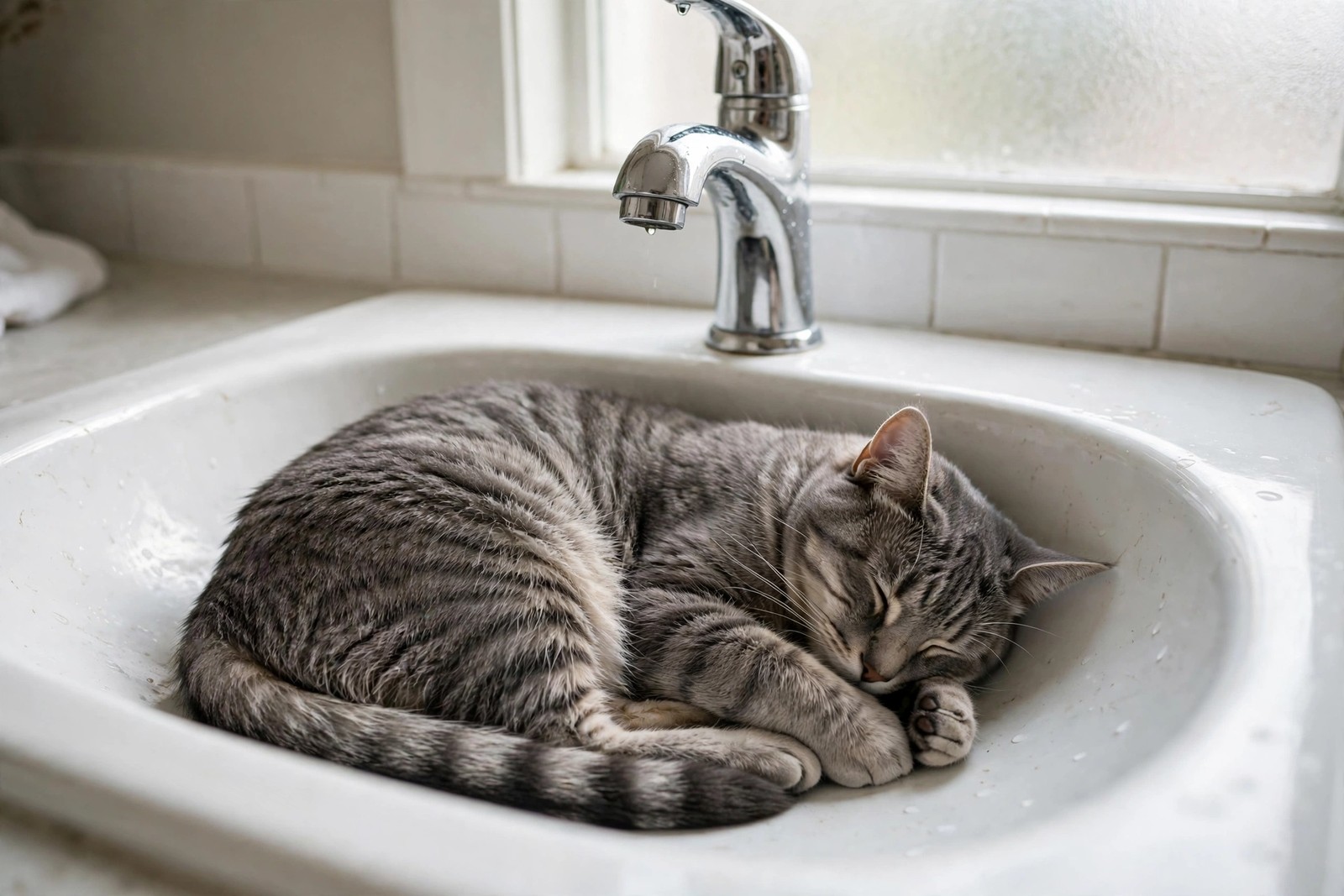
A cat asleep in the bathroom sink looks like a joke about stubbornness, but the sink is actually a well-designed cat bed from your cat's point of view. Porcelain and ceramic stay cool to the touch and draw heat away from a warm, fur-covered body, which matters most on warm afternoons and in heated homes. The bowl's curve matches the tight circle a cat naturally sleeps in, supporting the back and hips all the way round, and the solid sides block drafts while still letting your cat lift a head and survey the room.
Cool, Curved, and Quietly Defensible
Cats seek out sleeping spots that combine temperature control, enclosure, and a good vantage point, and a sink delivers all three. The enclosed bowl gives the same protected feeling as a box, but raised off the floor, away from foot traffic, dogs, and vacuum cleaners. Bathrooms also tend to be quiet, predictable rooms with the door often left ajar, so the spot rarely gets disturbed. Many cats add a fourth reason: water. A tap that drips occasionally, or the smell of fresh water in the basin, holds a cat's interest, and some sink sleepers will drink from a slow drip before settling down.
Temperature explains the season pattern many owners notice. The same cat who claims the sink all summer may abandon it in winter for a radiator bed or a sunny windowsill, because the cool surface that felt good in August feels cold in January. Long-haired cats and cats in warm flats often choose sinks year-round, while a cat who only recently started may simply have discovered it after a door was left open once.
Making the Arrangement Livable
There is no need to evict a sink sleeper, but a few adjustments keep it hygienic and safe. Rinse the basin well before and after use by people, because cats dislike, and should not lie in, residue from cleaning sprays, bleach-based products, toothpaste foam, or hair treatments. If the bathroom is mid-renovation or strong cleaners are in use, shut the door and offer an alternative until everything is rinsed and aired.
Give the alternative a fair chance by copying what the sink offers: a round, high-sided bed placed somewhere quiet and slightly raised, in a cool spot away from direct sun. A bed that is flat, exposed, or beside a noisy appliance is not a like-for-like swap, and most cats will walk past it straight back to the porcelain. Blocking the sink without providing an equal option usually just moves the problem to the bath, which offers the same cool curve at larger scale.
When Sink Sleeping Is a Signal Instead
Enjoy the habit, but notice changes around it. A cat who suddenly spends hours at the sink and drinks far more than usual, urinates more, loses weight, or seems restless and off food should see a veterinarian, because increased thirst changes the meaning of the behaviour entirely. Likewise, a cat who has abandoned every usual bed and hides in the bathroom all day may be seeking quiet because something hurts or because a new pet, guest, or building noise has unsettled the house.
For the ordinary, healthy sink sleeper, though, this is simply good taste in furniture. Households adapt quickly once everyone agrees whose turn it is to wipe the basin, move the cat gently before a shower, and keep the dripping tap decision consistent. KinsLe's Care Teams keeps that small rota fair by letting you assign basin rinses, water-bowl refreshes, and litter duties to different family members for your cat, so the sink routine runs smoothly even when the house is busy.