
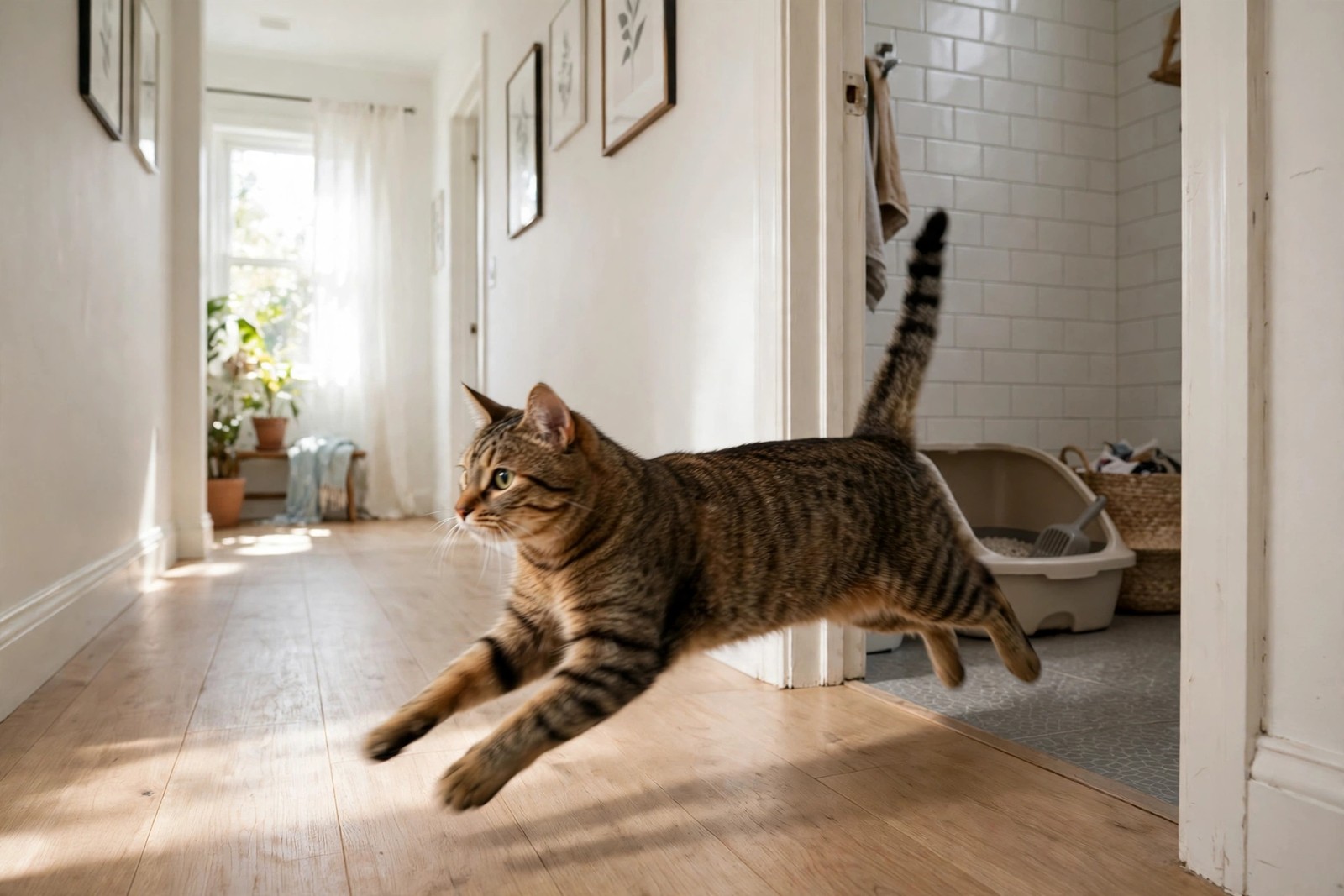
The sprint itself is, for many cats, completely normal. A cat comes out of the litter box, pauses, and then tears down the hallway at full speed, sometimes with a victory lap around the furniture and a brief wrestle with a toy before flopping down as if nothing happened. Nothing needs fixing in a cat that toilets comfortably, zooms, and then returns to its ordinary day.
Why cats bolt from the box
Several ordinary explanations overlap. Relief is the simplest: passing a stool or emptying a full bladder feels good, and the lightness that follows releases a burst of energy, much as a cat erupts into play after a long nap. Instinct may add to it, since a wild cat leaves its scent and waste behind and moves away from the spot rather than advertising where it has been, and many house cats keep a version of that brisk departure. Kittens do it most extravagantly, and most cats mellow the performance with age while keeping a modest gallop.
The pattern to learn is your own cat's version: how often it happens, how long the dash lasts, and how the cat behaves in the box beforehand. A cat that walks in calmly, toilets without fuss, and zooms afterward is showing you its normal. That baseline is what makes later changes visible.
The signs that are not normal
Toileting behavior changes character completely when discomfort enters it, and these signs route to a veterinarian rather than to a behavior plan: straining in the box, crying in the box, frequent tiny trips that produce little or nothing, and blood in the urine. A cat returning to the box again and again within the hour, crouching a long time for a few drops, licking itself afterward, or toileting outside the box after a history of reliability is asking for an examination. So is a cat whose post-box sprint is paired with flattened ears, vocalizing, or hiding rather than play.
One situation outranks all the others. A male cat who cannot pass urine is an emergency: a blocked bladder fills painfully and becomes life-threatening, and the cat needs a veterinary clinic immediately rather than a night of watching. Do not press on the belly, do not wait for morning, and do not be reassured because a little urine appeared an hour ago. Female cats can also obstruct and males can strain for other reasons a veterinarian investigates, so straining of any kind earns a prompt appointment, but the male cat producing nothing is the one that cannot wait.
Living with the zoomies
For the healthy version, the management is mostly hospitality. Keep the hallway the cat favors reasonably clear, accept that a rug runner may migrate, and resist the urge to chase or grab the cat mid-dash, which can turn a joyful sprint into a startle. A play session at another time of day gives the energy a second outlet, and kittens in particular will spend some of the charge there, but a cat that keeps its post-box gallop despite good play is not a problem awaiting a cure.
Recording the pattern so a vet can use it
Because the difference between normal and not normal is a change from baseline, a brief written pattern is genuinely useful. Note over a couple of weeks when the dash follows the litter box, how toileting looked, and whether anything from the warning list ever appeared, with the warning episodes described in the most detail. This pattern belongs in the cat's health packet rather than in your memory: on KinsLe, the Pet Passport file for the cat carries the noted routine and any red-flag history together, and you bring that file to the appointment so the veterinarian reads the timeline instead of reconstructing it from guesses. KinsLe's Pet Passport keeps each red-flag note beside the routine ones, ready to open on the examination table when minutes matter.