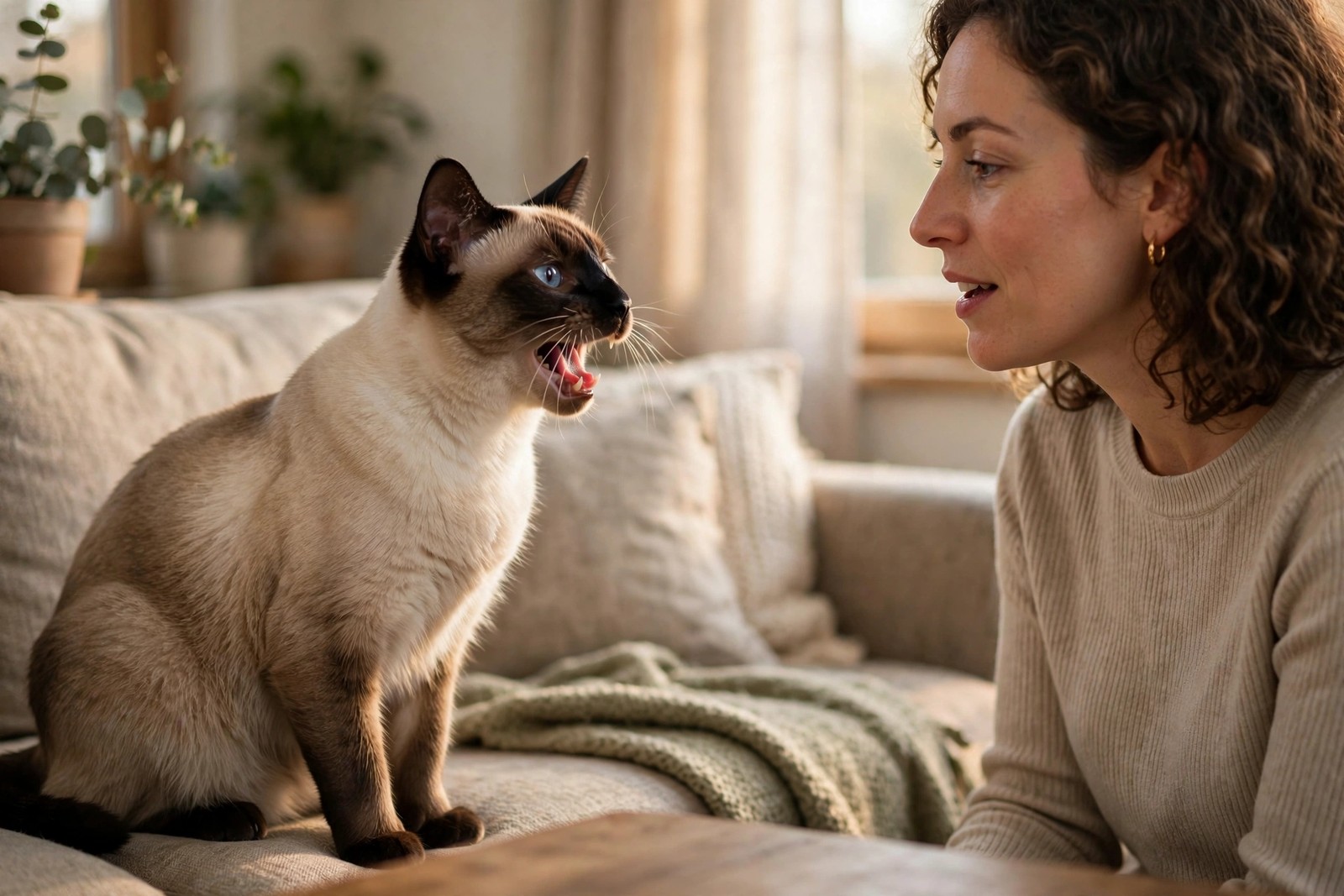
The meow is a people-directed sound. Kittens meow to their mother, but adult cats communicating with each other rely mostly on scent, posture, and a small set of calls such as chirps, trills, and growls. The full, varied meowing repertoire is reserved for humans, and your cat talking back when you speak to her is that system working exactly as it evolved: she hears your voice as an invitation, answers it, and gets a response. From her side of the conversation, this is a successful exchange.
A Habit You Built Together
Cats are precise students of cause and effect. If a short meow when you walk in produces a greeting, a stroke, or eye contact, that meow gets repeated. If a louder, longer one produces food, that becomes the dinner request. Owners who chat to their cats, ask them questions, and answer their answers are, without meaning to, running daily training sessions in conversation. The tone matters too: many cats match the rhythm of a household, answering in the pauses, and some learn household-specific sounds, a particular chirrup for the garden door, a particular complain-yowl for an empty bowl.
Breed and personality set the starting volume. Siamese and Burmese cats are famously vocal, as are other Oriental-type breeds, and will narrate the day unprompted. A rescue cat who spent her early months around chatty people may arrive talkative, while a naturally reserved cat may only ever manage a silent meow, mouth opening with barely a squeak. Both are normal; the useful comparison is always your own cat's usual level.
Enjoying It Without Creating a Demand Problem
Most owners love a conversational cat and there is nothing to fix. Trouble only starts when talking becomes relentless demanding, usually at 5 a.m. outside a bedroom door. The lever is timing: reward the quiet, friendly exchanges freely, but keep feeding and door-opening to a predictable routine rather than paying them out in response to escalating volume. A cat fed at the same times each day, with a play session before your bedtime, has far less reason to run a dawn campaign.
Never punish the talking itself. She cannot connect scolding with the meow, only with you being suddenly hostile mid-conversation, and shy cats may go quiet in ways that hide useful signals later. If you want less noise, answer the soft sounds and go boringly silent for the shouted ones.
When More Talking Means Something Else
A cat who becomes noticeably more vocal, especially a senior, deserves a health check. Hearing loss can make cats louder, because they cannot judge their own volume. Pain, an overactive thyroid, raised blood pressure, and age-related confusion are all on the list a veterinarian will consider for a cat whose voice, sleep pattern, or night-time behaviour has changed. Note when the new vocalising happens, whether it is aimed at you or seems unfocused, and whether appetite or litter habits have shifted too.
The everyday back-and-forth, though, is one of the pleasures of living with a cat, and worth recording before the best exchanges are forgotten. KinsLe Messenger gives her a communications hub of her own inside KinsLe, where family members can share the clips, photos, and funny replies that make up her conversation history in one thread.