
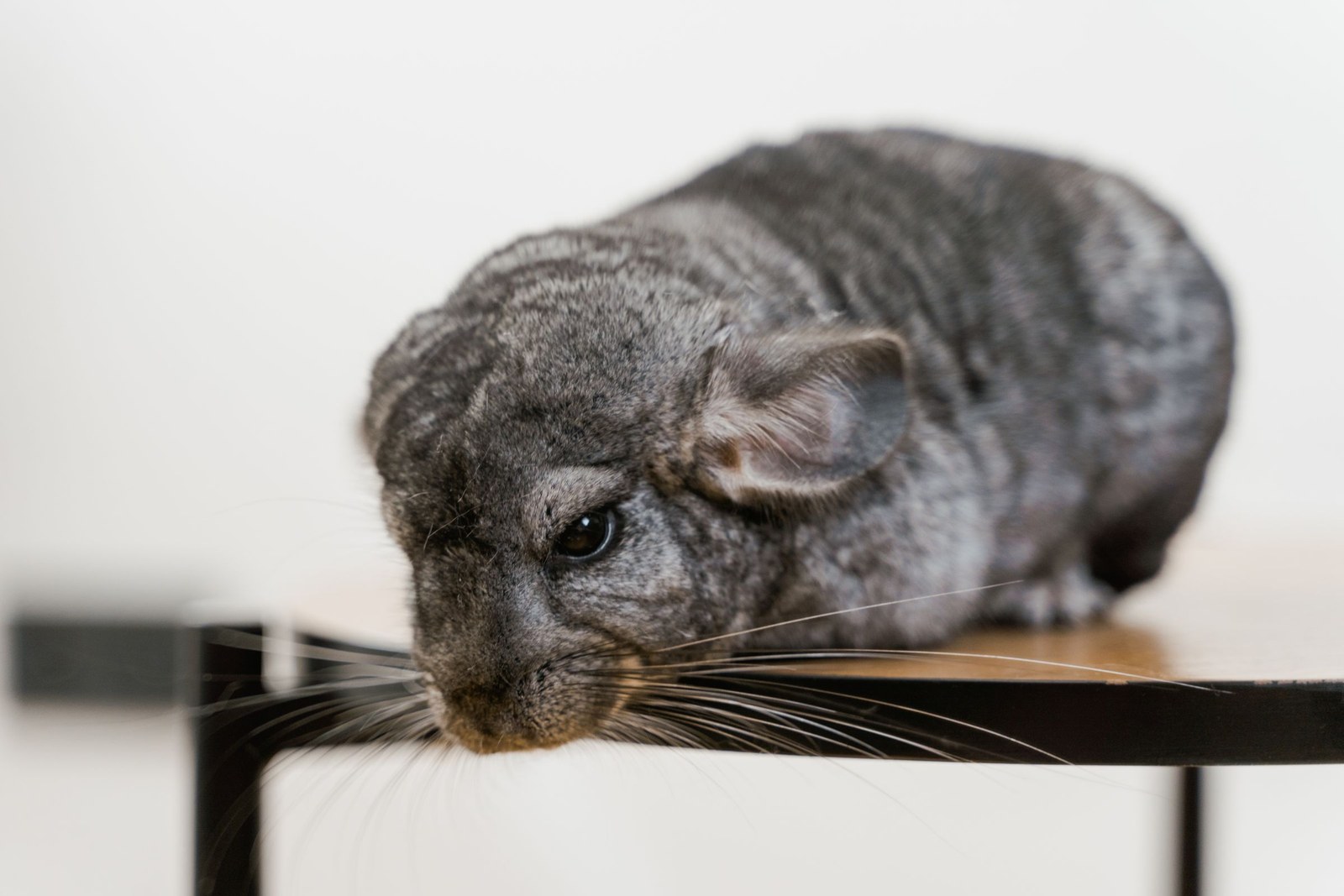
Your chinchilla always needs hay available because hay does two jobs nothing else can: it grinds down teeth that never stop growing, and it keeps a very sensitive digestive system moving the way it is designed to move. Unlimited grass hay should sit in the cage at all hours, every day, with a measured portion of plain chinchilla pellets alongside it. Treats and fresh foods, by contrast, should be rare — a chinchilla's stomach is easily upset by rich, sugary, or wet foods.
Ever-Growing Teeth Need Constant Work
Chinchilla teeth grow continuously throughout life, molars included. The long, grinding side-to-side chew that hay demands wears those teeth evenly; soft foods simply do not require enough chewing to do the job. When teeth overgrow or wear unevenly, the result can be drooling, difficulty eating, weight loss, and painful dental problems that need veterinary care. Long-strand grass hay, such as timothy or orchard grass, encourages exactly the chewing motion that protects against this, which is why hay is closer to medicine than to a snack in a chinchilla's day.
A Delicate Gut That Runs on Fiber
Chinchillas come from the dry Andes, and their digestion is tuned to sparse, fibrous forage. Fiber keeps gut motility going and supports the balance of microbes that ferment their food. Sudden rich foods, sugary treats, or piles of fresh greens can disrupt that balance and cause bloating or diarrhea, which can become serious quickly in such a small animal. This is also why any diet change — a new hay brand, a different pellet — should be made gradually over a week or more, mixing old and new so the gut can adjust.
Pellets Play a Supporting Role
Plain, uniform chinchilla pellets complement hay by filling nutritional gaps, but they are not the main event. Offer a measured amount — often a couple of tablespoons a day — and resist colorful mixes with seeds, dried fruit, and corn pieces, which let a chinchilla pick out the junk food and leave the nutrition. Hay should always be present in greater quantity than pellets, replenished fresh daily, and stored dry so it stays fragrant rather than dusty or musty. If your chinchilla stops eating hay, that is a red flag worth prompt veterinary attention, not a wait-and-see.
Treats: Tiny, Dry, and Rare
Where treats are offered at all, keep them small, dry, and infrequent: a plain oat, a small piece of dried rose hip, or a shred of dried herb. Skip yoghurt drops, seed sticks bound with honey, and fresh fruit. Chinchillas also need constant access to fresh water, and a dust bath several times a week for coat care — dust, never water, which their dense fur cannot handle. Keep the cage cool and dry, too; chinchillas tolerate cold far better than heat and humidity.
Share the Hay-First Rule With a Care Pass
When someone else feeds your chinchilla — a holiday sitter or a visiting friend — the riskiest moment is a kind hand reaching for forbidden treats. KinsLe's Care Pass is a temporary, scoped link you can share so a helper sees your chinchilla's key care instructions without needing an account or the app. Put the essentials up front: hay available at all times, pellets measured, no fresh or sugary foods, water checked daily. The rule stays unmistakable even when you are away. For a four-day holiday break, the neighbor feeding your chinchilla gets those rules from the Care Pass you sent through KinsLe: unlimited grass hay replenished daily, a couple of tablespoons of plain pellets, water refreshed each morning, and never yogurt drops or honey-bound seed sticks.