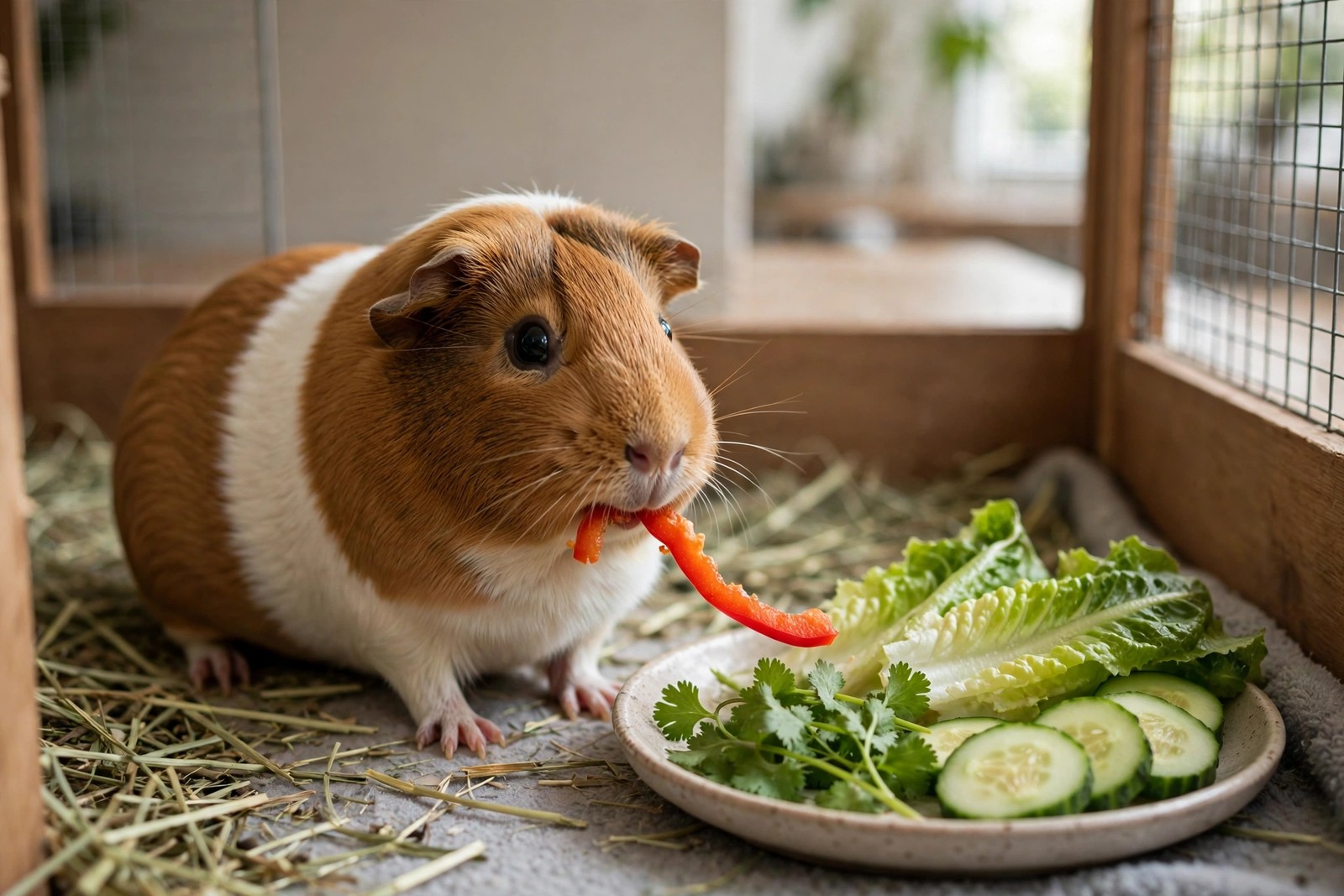
A guinea pig's daily vegetables should add up to roughly a cup of mixed fresh vegetables per pig, built from a short list of genuinely daily-safe choices. Bell pepper of any colour heads that list: red, yellow and green peppers are all well accepted and rich in vitamin C. Alongside pepper, rotate romaine lettuce and other soft leaf lettuces, cilantro, cucumber slices and zucchini, adding small amounts of green beans or a broccoli floret for interest. These vegetables are low enough in calcium and sugar to be fed every day, they provide the water, fibre and variety a guinea pig thrives on, and together they cover the vitamin C requirement that shapes every guinea pig feeding decision.
Why Vitamin C Decides the Menu
Unlike most animals, guinea pigs cannot make their own vitamin C, so it has to arrive in the food, every day. Without it, a guinea pig develops scurvy: rough coat, sore joints, reluctance to move, bleeding gums and a failing appetite, often within weeks of a poor diet. That is why bell pepper earns its daily place rather than appearing as an occasional treat, and why a washed, varied vegetable plate does more than pellets alone, since the vitamin in stored dry food fades with time, light and air. If your pig refuses pepper at first, keep offering small pieces and try another colour before giving up; most pigs come round, and the few that never accept it need their daily vitamin C planned carefully with the other high-C choices and discussed with a vet if intake stays doubtful.
The Few-Times-a-Week List, and What Never to Feed
Some nutritious vegetables are too rich in calcium for daily feeding. Kale, spinach, parsley and other dark, mineral-heavy greens are good foods offered a few times a week in small portions, but served every day they can contribute to painful bladder sludge and stones in a species already prone to them. Carrot, along with fruit, sits in the treat category: tasty and fine occasionally, yet too sugary to anchor a daily plate. Iceberg lettuce is not dangerous, just mostly water with little nutrition, so it should never displace the better lettuces. The true never list is firm: no onion, garlic or chives, no raw potato or its green skin, no rhubarb, and no raw dried beans such as kidney or borlotti beans; fresh green beans are the safe exception. When in doubt about a new vegetable, check before feeding rather than testing it on the pig.
Building the Daily Plate Around Hay
Vegetables are the supplement, not the base. Unlimited grass hay must be available around the clock for teeth and digestion, a measured portion of guinea pig pellets supports the diet, and the vegetable plate arrives once a day, ideally at a consistent time when the pigs are active and expecting it. Introduce any new vegetable gradually over several days, one at a time, so a loose dropping can be traced to its cause, and remove uneaten fresh food after a few hours before it wilts and fouls the bedding. Wash vegetables, serve them at room temperature rather than fridge-cold, and cut them into pieces a pig can manage without a struggle. Watch the pigs' weight and droppings across the week; steady weight and firm, uniform droppings mean the plate is working. With the routine shared through KinsLe's Care Teams, the daily vegetable prep for your guinea pig can be assigned to whoever is feeding that day, and the timestamped task keeps the vitamin-C-rich pepper from being forgotten on a busy morning.