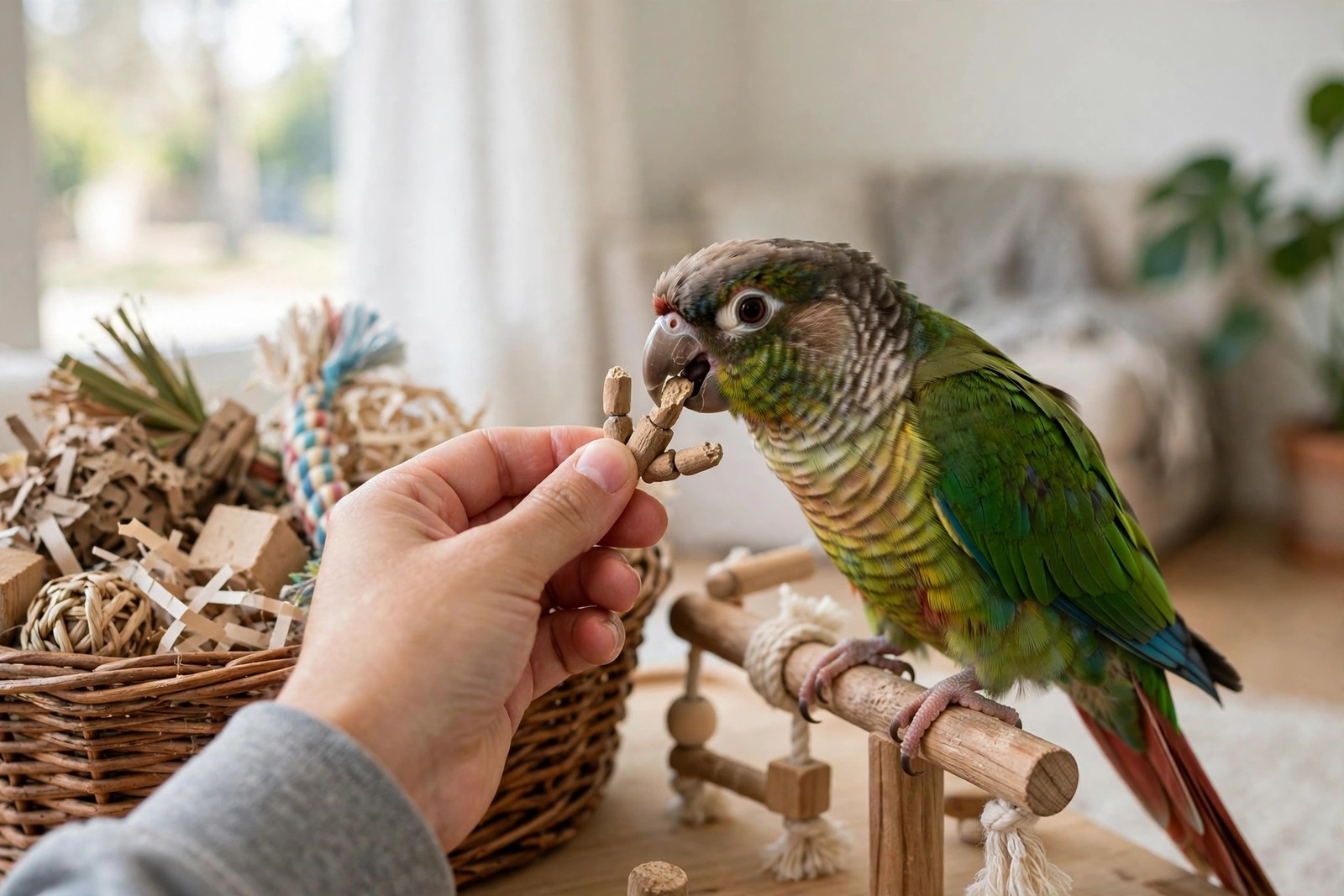
A conure experiences the world beak-first. The beak tastes, tests texture, climbs, steadies the bird as it steps, and delivers opinions, so a certain amount of mouthing is built into owning one. Nipping, meaning frequent quick pinches that may sting but rarely break skin, becomes a problem when the bird uses it constantly, and that pattern usually comes from a few fixable causes rather than from a bad temperament.
Exploration and bite-pressure learning
Young conures in particular nip because they have not finished calibrating their beaks. A juvenile tests everything, including earlobes, freckles, jewellery, and the hand it is standing on, and it learns what is too hard only from feedback. Your job is to give calm, boring feedback: no yelping or dramatic hand-waving, which many conures read as an exciting game and a reason to nip again. Keep your hand still, say a quiet no, and immediately offer a foot toy, a small wooden block, or a shreddable item the beak is allowed to work on. Praise the bird for chewing the toy. A conure whose beak always has a legal target learns within weeks that skin produces nothing interesting and wood produces a party.
Overstimulation, excitement, and tiredness
The second engine of nipping is arousal. Conures rev up fast: rough-and-tumble play, visitors crowding round, loud music, or a long session of being passed from person to person can push a bird from delighted to overstimulated, and the nips arrive faster and harder as the excitement climbs. The warning signs are readable: eyes pinning, feathers sleeked or fluffed in quick succession, lunging at toys, and a bird who cannot settle. End play at the first signs rather than after the first hard nip, return the bird to its cage or play stand for a breather, and keep total handling in shorter bursts with calm gaps. Tiredness does the same work as excitement: a conure kept up late or woken early gets nippy for the same reason a tired child gets unreasonable, so a regular, full-length sleep routine in a quiet area genuinely reduces next-day nipping.
Making your response the household rule
Nipping habits are set by the least consistent person in the room. If one person laughs and wrestles back while another withdraws the hand, the bird keeps experimenting. Agree the sequence out loud: beak on skin means play pauses, a toy is offered, and the bird gets attention again when it is chewing the right thing. Keep nails, rings, and dangling sleeves in mind, because conures nip at objects as much as at skin, and removing the temptation prevents rehearsals. A conure who suddenly nips far more than usual, or whose nips harden into real bites, should be read alongside appetite, sleep, and droppings, and checked by a veterinarian if anything else has changed. Recording the triggers and the toy that worked best in KinsLe's Care Teams notes means a sitter or a teenager follows the same redirect plan instead of inventing a new response your conure has to decode.